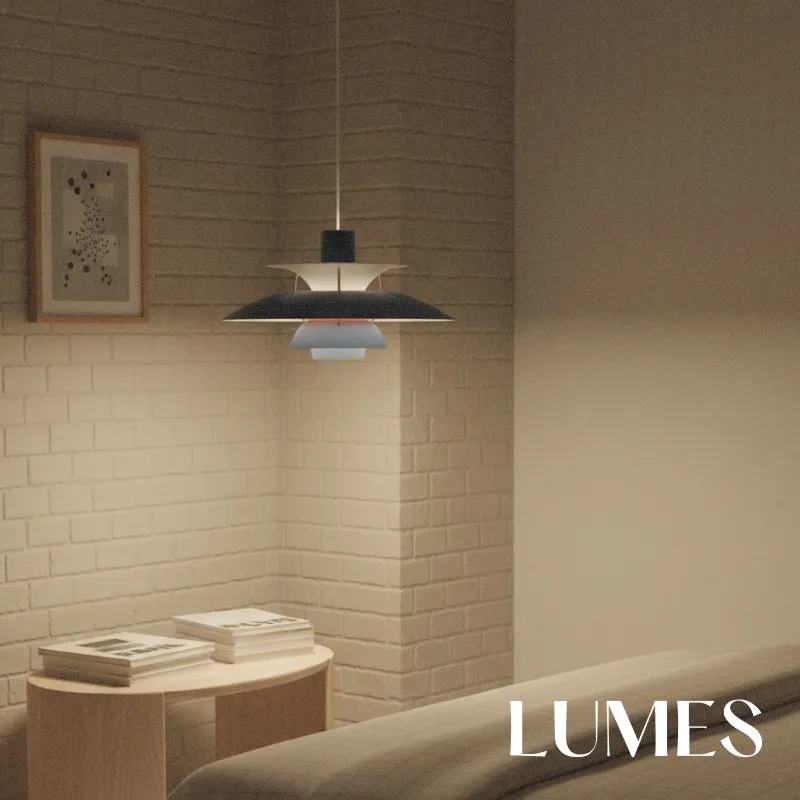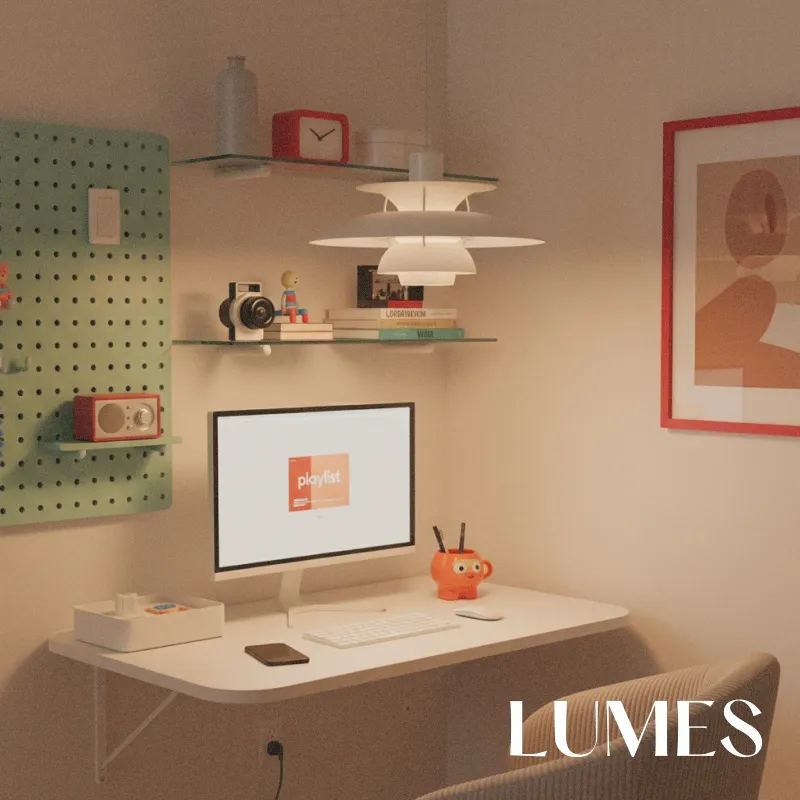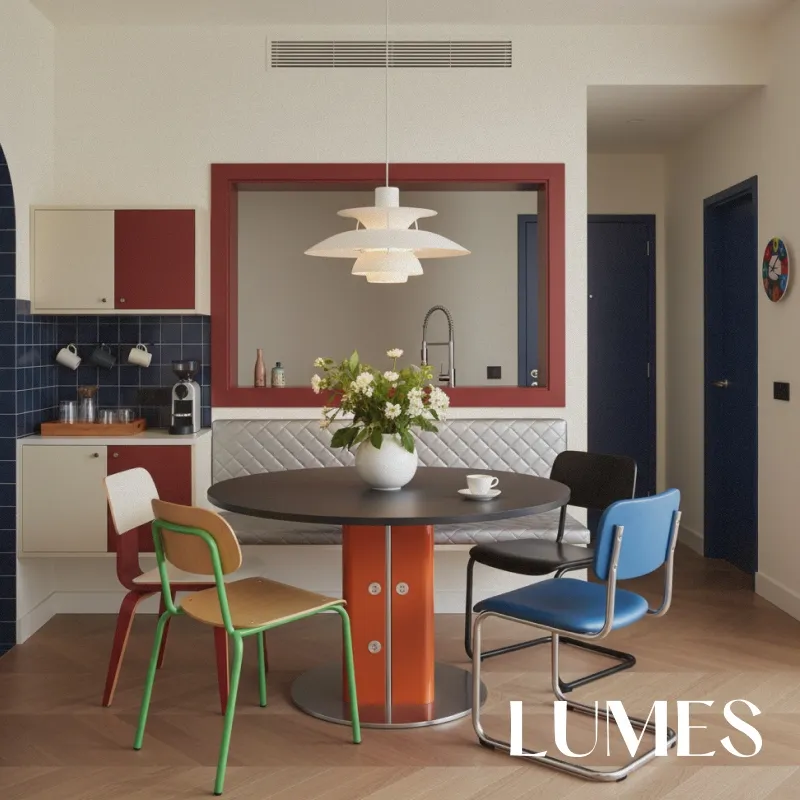



Lumes Design lighting guide
What Size Pendant Light for a Dining Table? 30 cm vs 50 cm Buying Guide
The right pendant diameter gives the table a clear centre without swallowing the people around it. For most dining rooms, a 30 cm pendant is easier for a compact table, lower ceiling, or restrained setting. A 50 cm pendant suits a wider table, open-plan room, or dining area that needs stronger visual weight. Measure the furniture first, then use height, sightlines, and bulb comfort to confirm the choice.
Quick answer: 30 cm or 50 cm?
Choose 30 cm when the table is compact, the room is visually busy, or the pendant sits close to a wall, cabinet, or walkway. Choose 50 cm when the table leaves clear space around the shade and the ceiling can carry a stronger focal point. Neither number is automatically better: the correct size looks intentional from the doorway and feels comfortable from every seat.
At a glance
- 30 cm: compact round or small rectangular tables, two to four seats, smaller rooms, lighter visual weight, and easier use with a low ceiling.
- 50 cm: medium-to-large rectangular, oval, or generous round tables, open-plan dining zones, and stronger sculptural presence.
Start with the table, not the room area
Measure the tabletop's width and length, including extension leaves you use regularly. A pendant should normally stay narrower than the table so the furniture edges remain visible. As a practical styling check, leave roughly 15 to 30 cm of table surface between the widest point of the shade and each long-side edge. Change that margin for shade depth, table shape, and the room's existing visual weight.
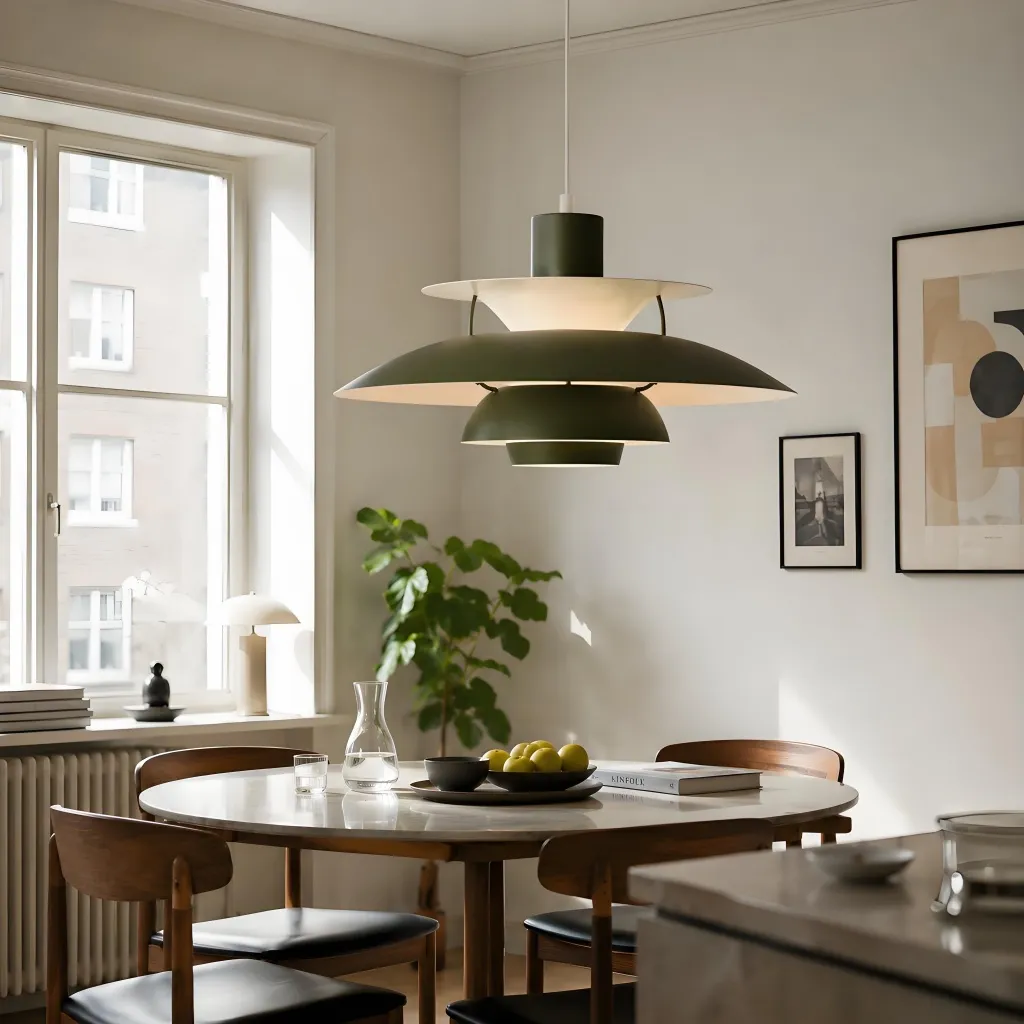
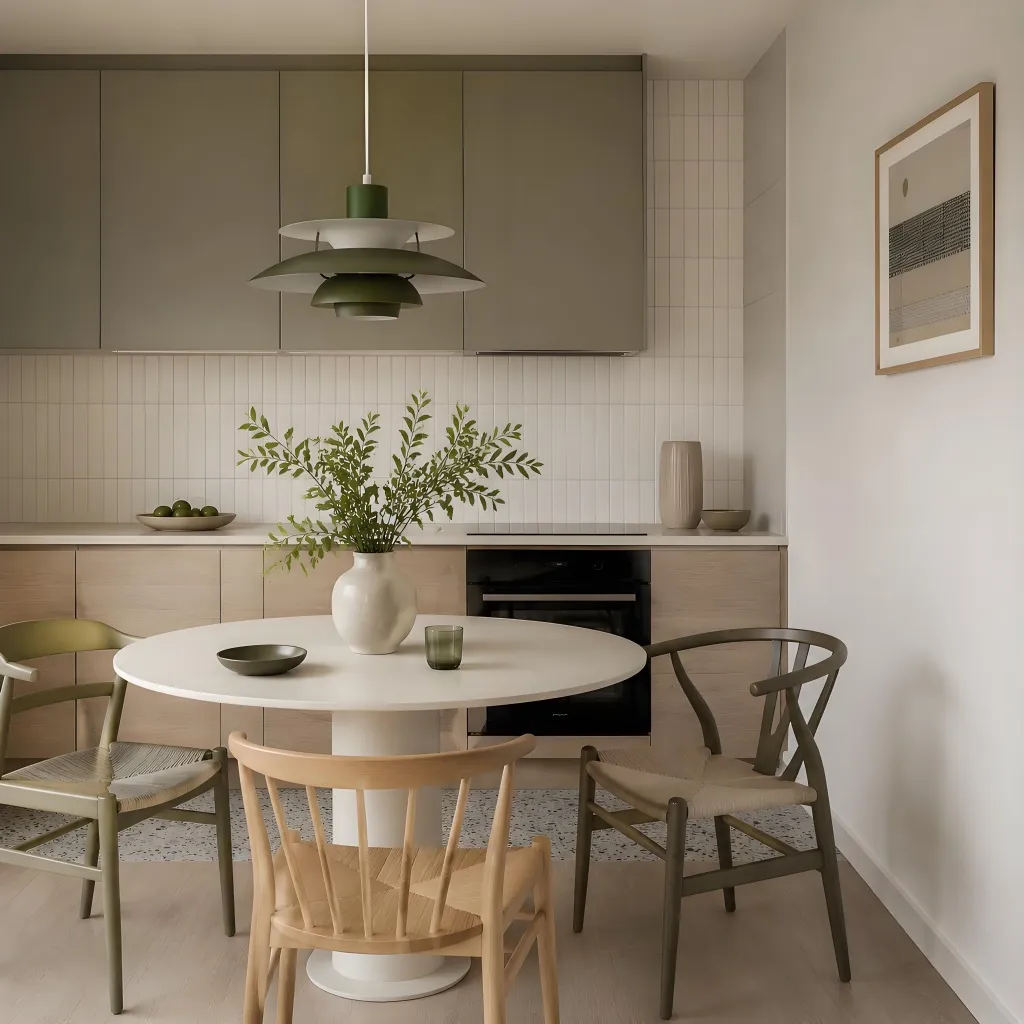
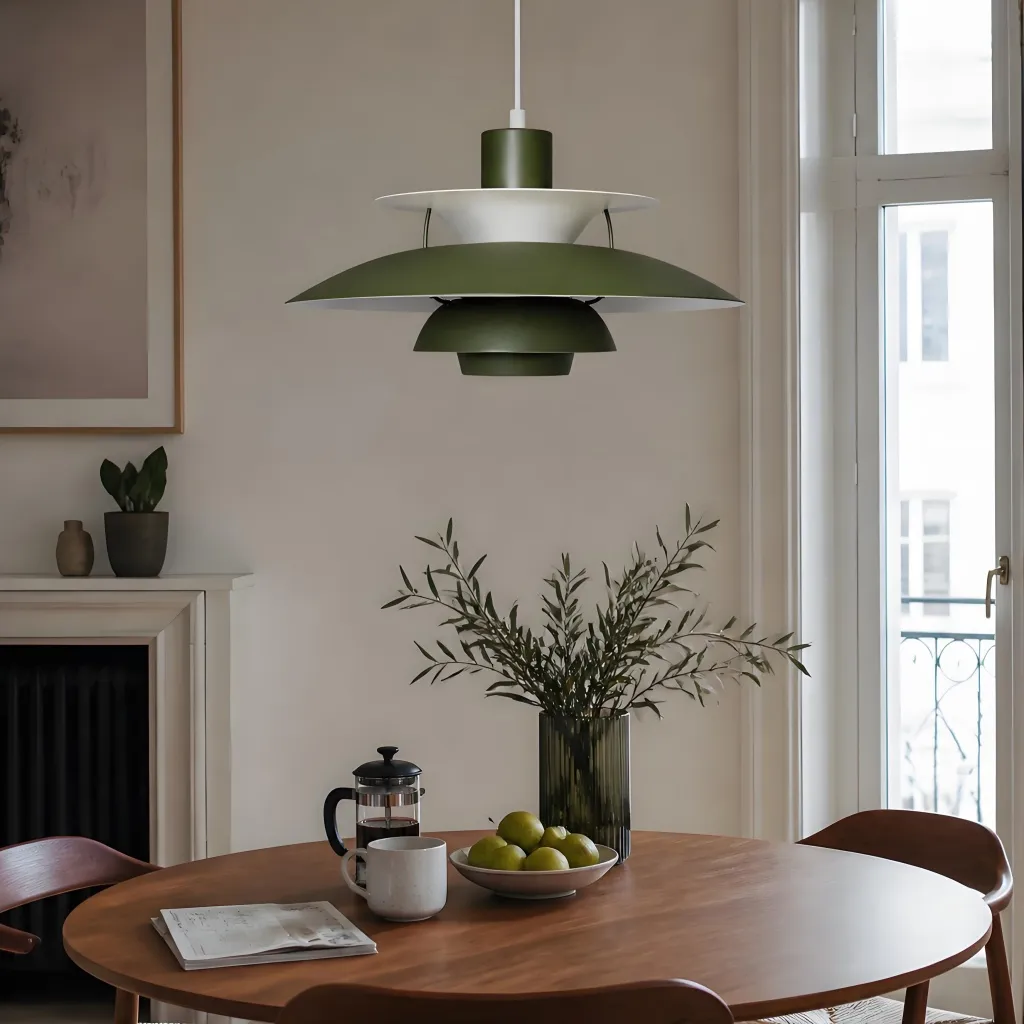
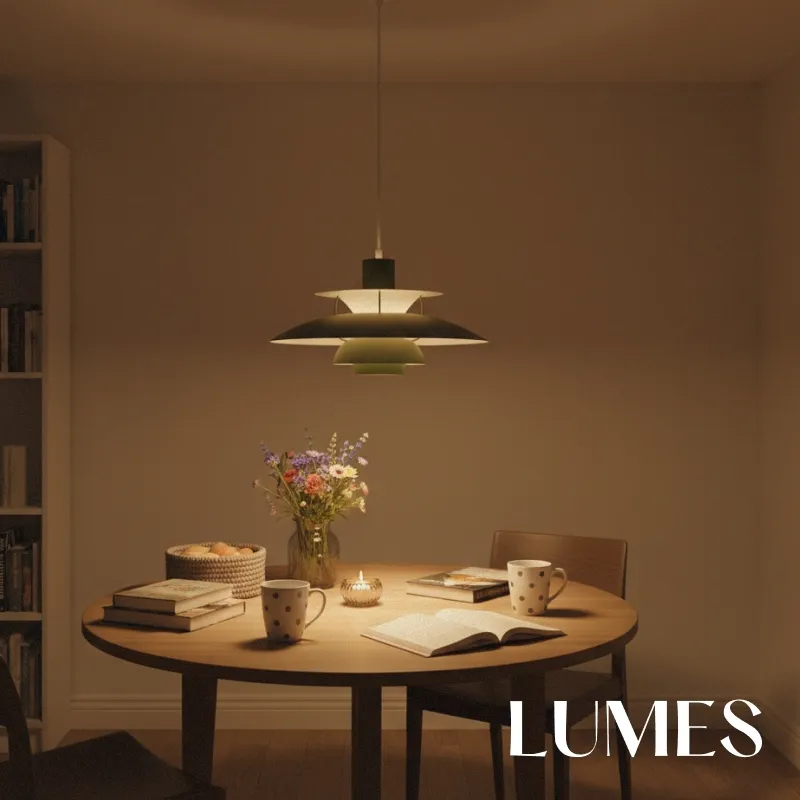
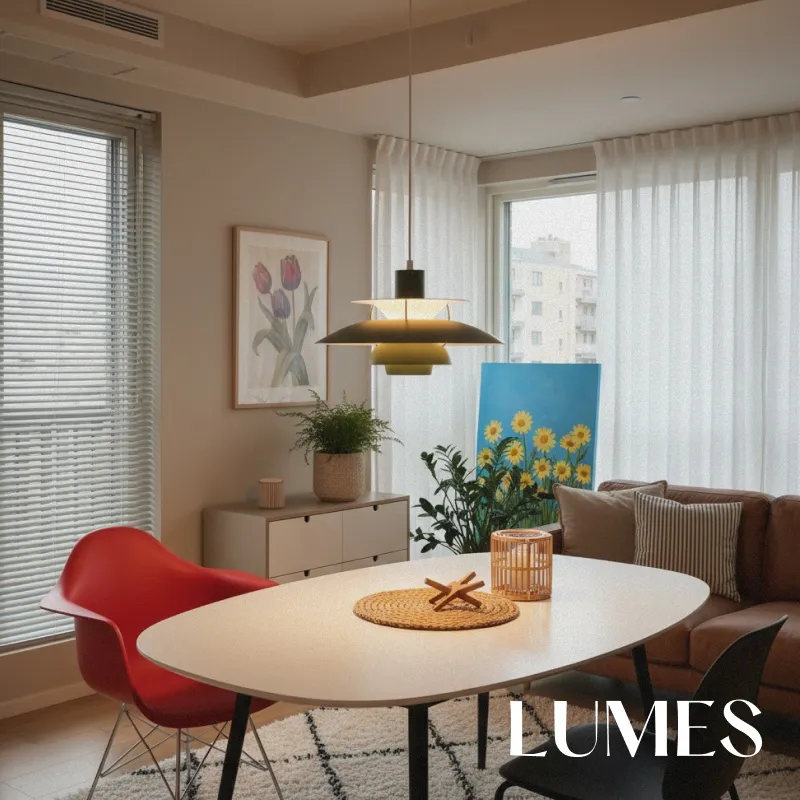
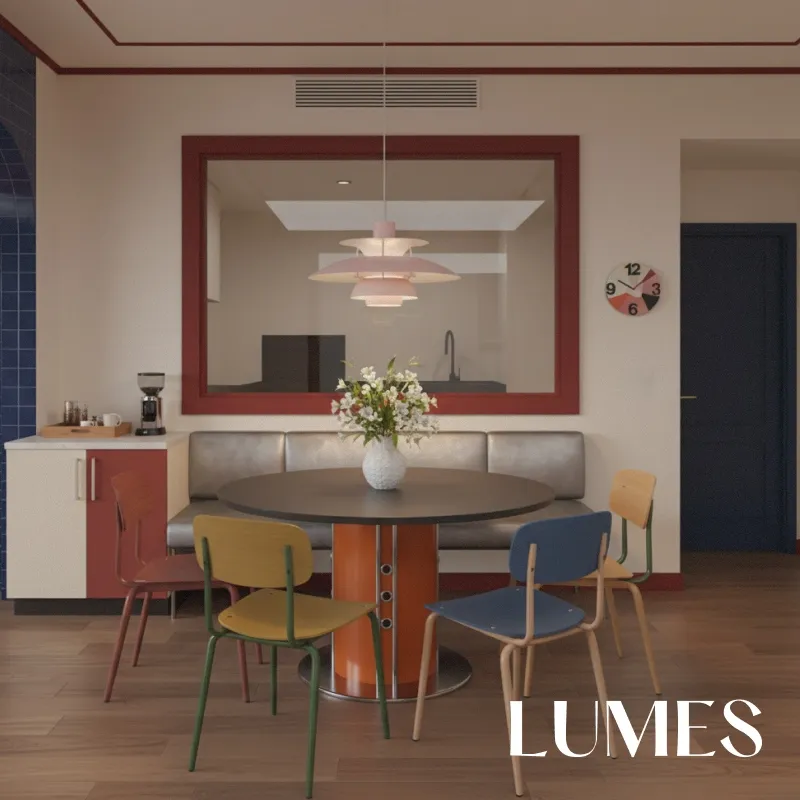
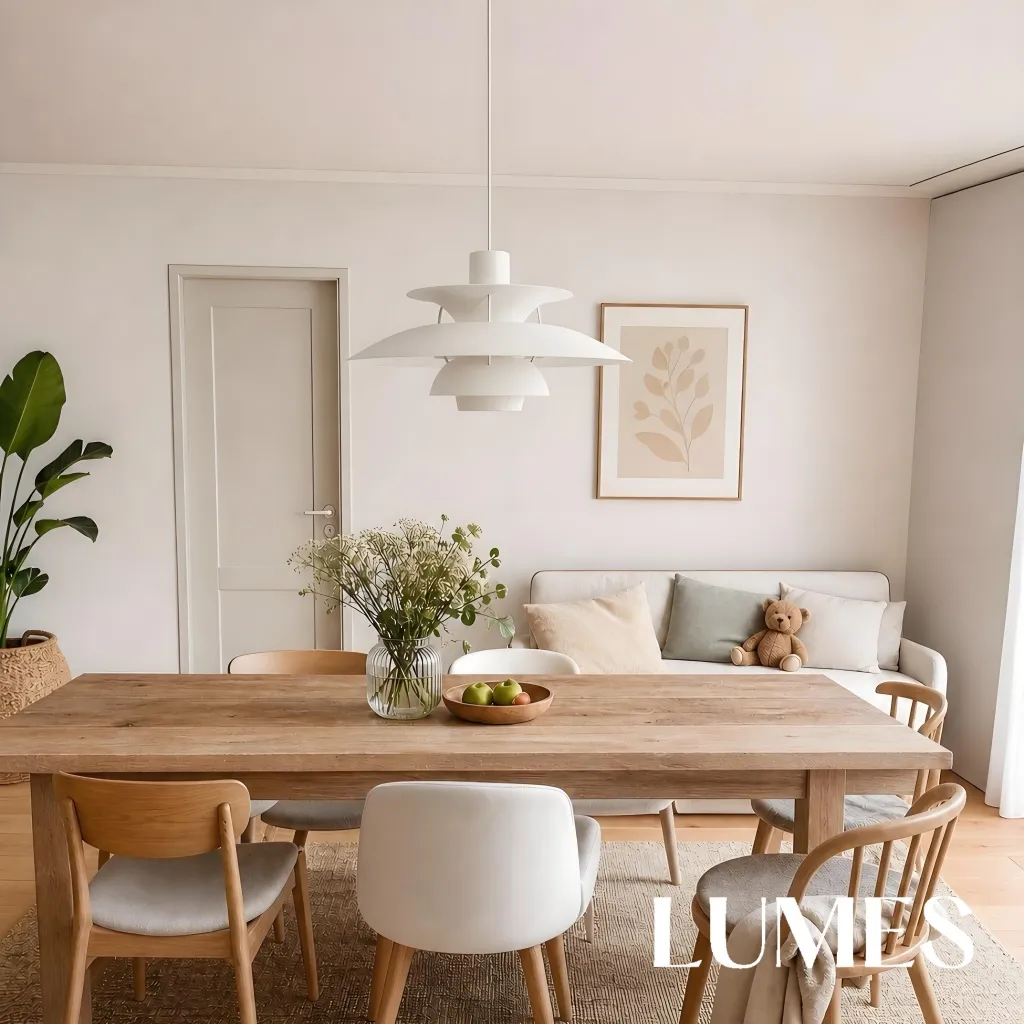
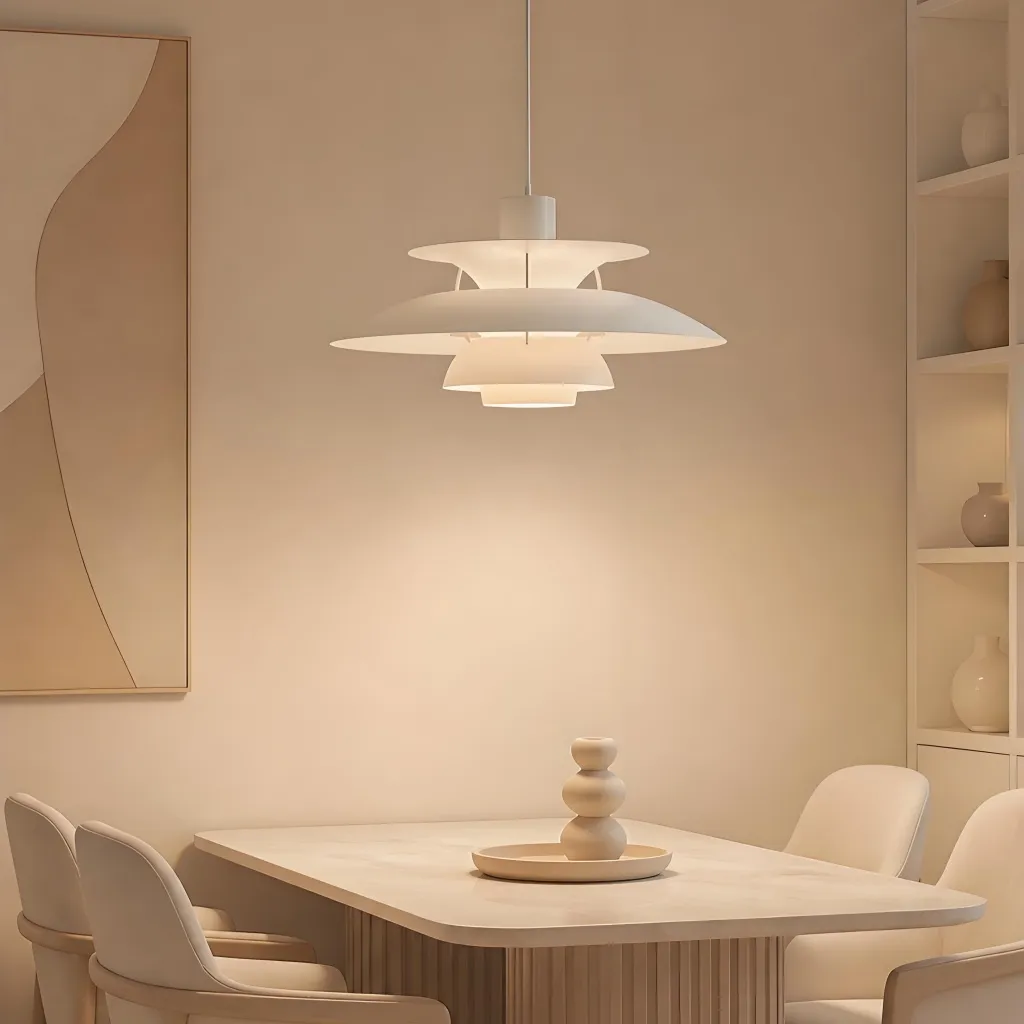
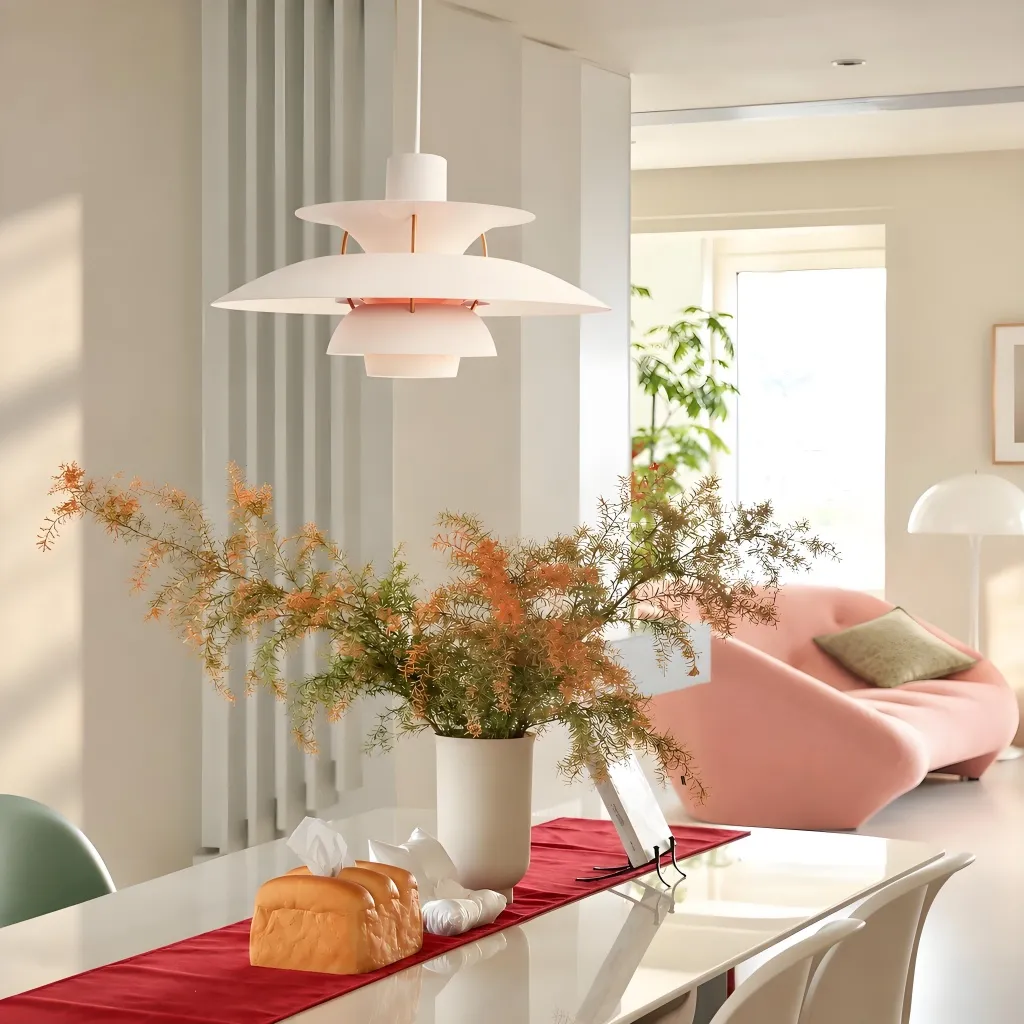
For a round table, compare pendant diameter with table diameter. A 30 cm shade often feels balanced above a small two-to-four-person table, while a 50 cm shade needs a larger top so the furniture does not look overloaded. For a rectangular table, check both the short width and the long axis. A 50 cm shade can work over a six-seat table when it sits centrally and the tabletop is wide enough; a 30 cm shade keeps a narrow table lighter and leaves more room for conversation.
The 30 cm option: when smaller is more useful
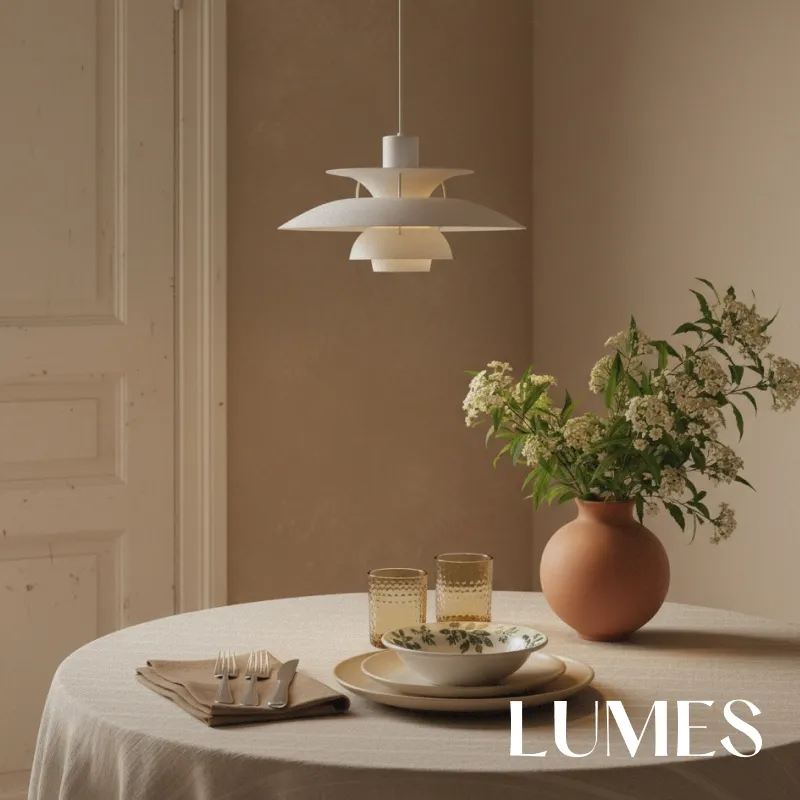
A 30 cm pendant is a sensible starting point for an apartment dining corner, breakfast table, or room with beams, vents, or another central fixture. Its smaller outline keeps the visual field open when the table is close to the kitchen or a circulation route. It is also easier to keep the light source out of a seated diner's direct view.
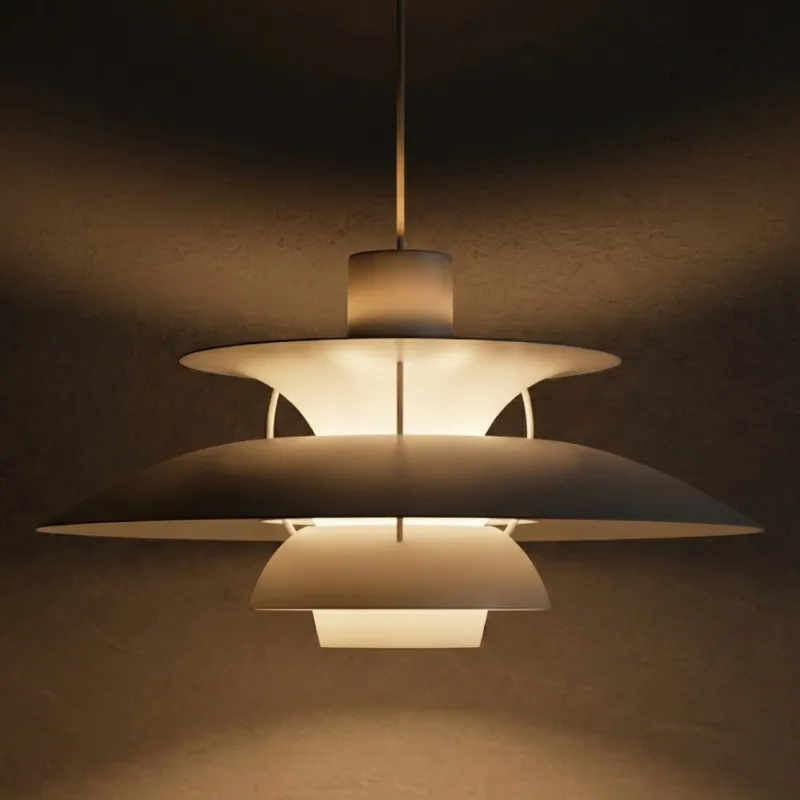
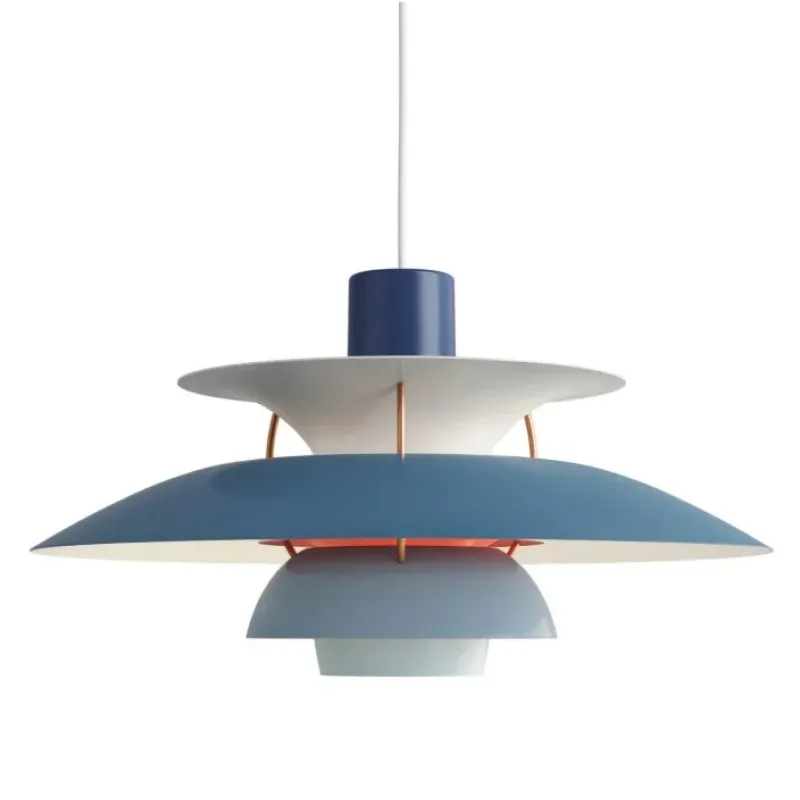
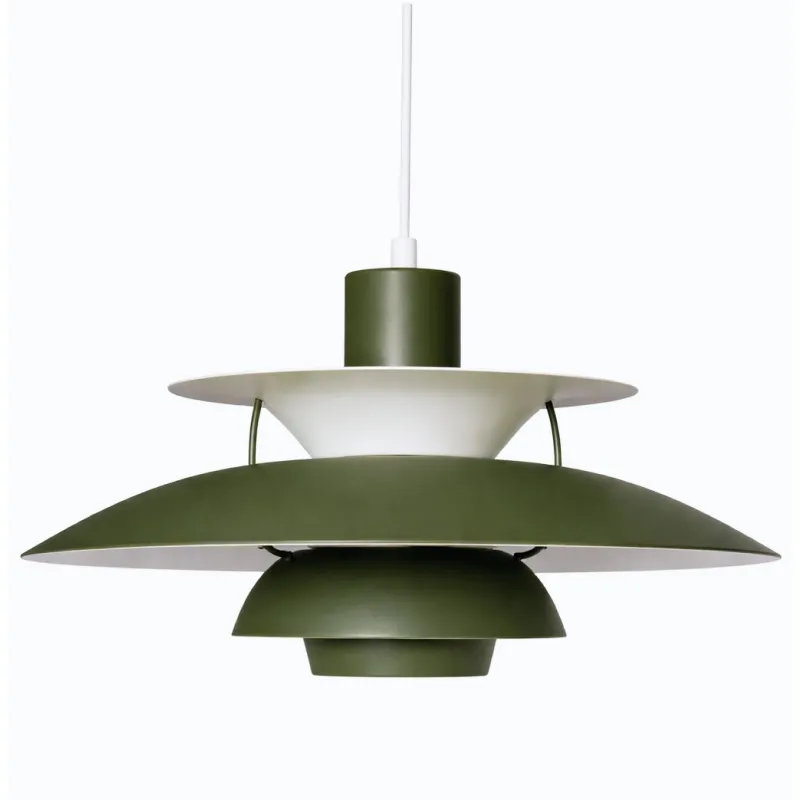
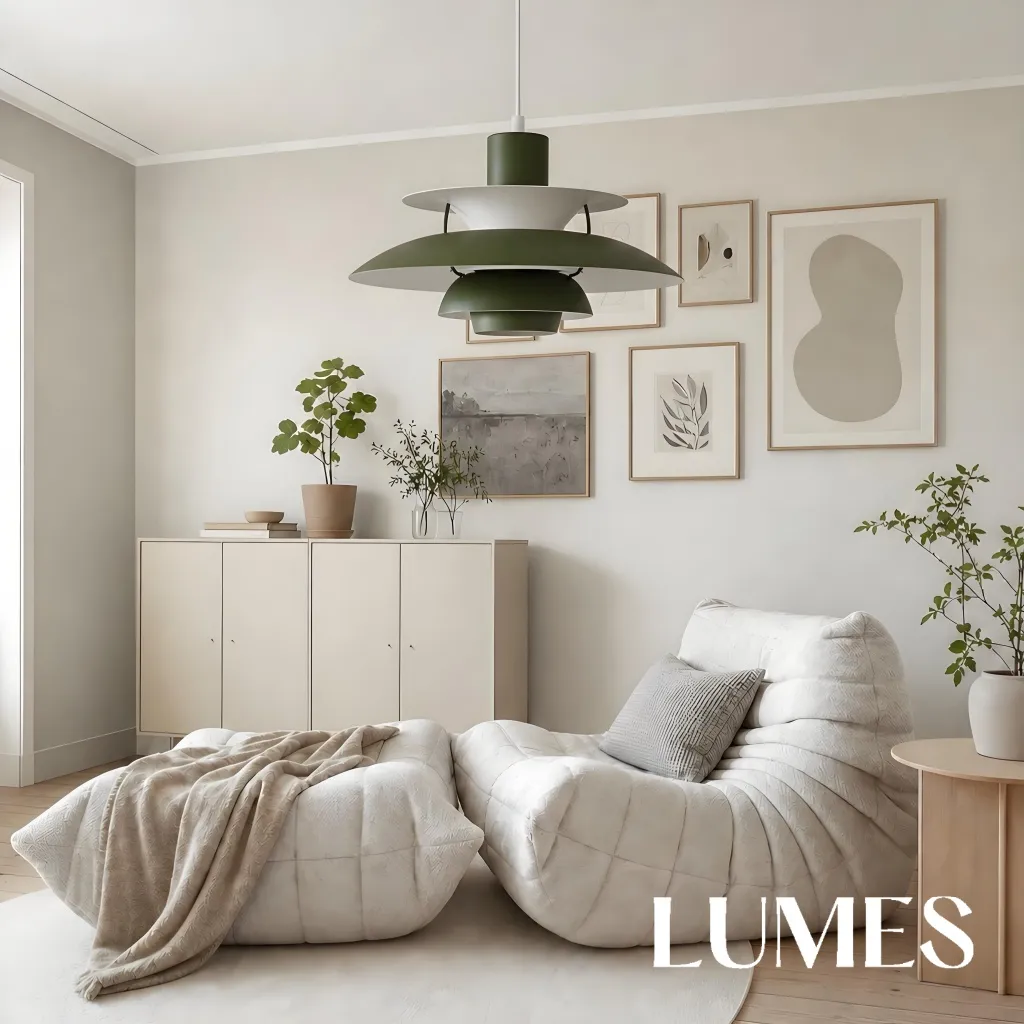
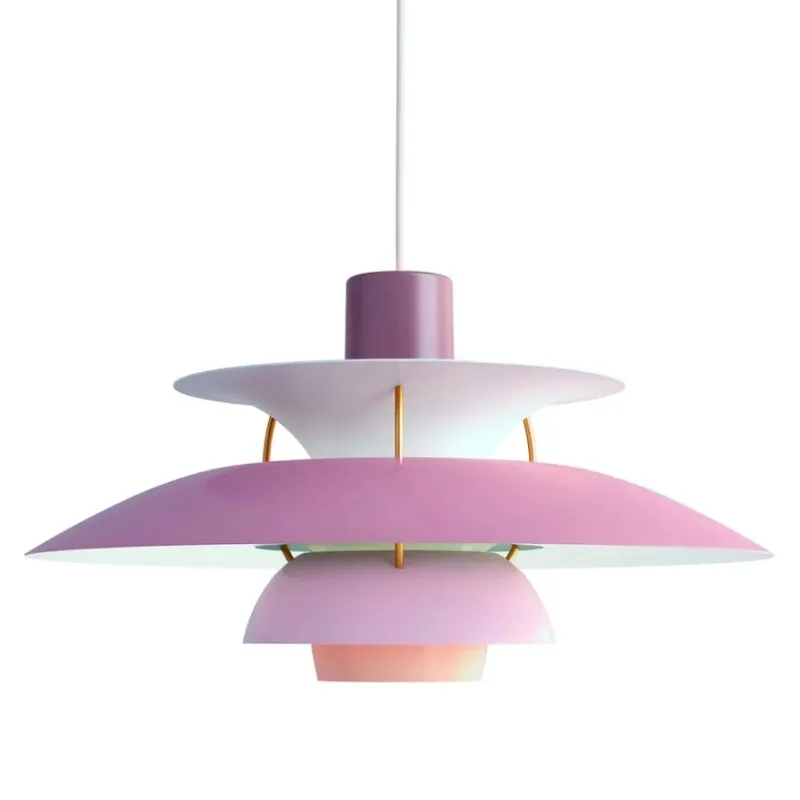
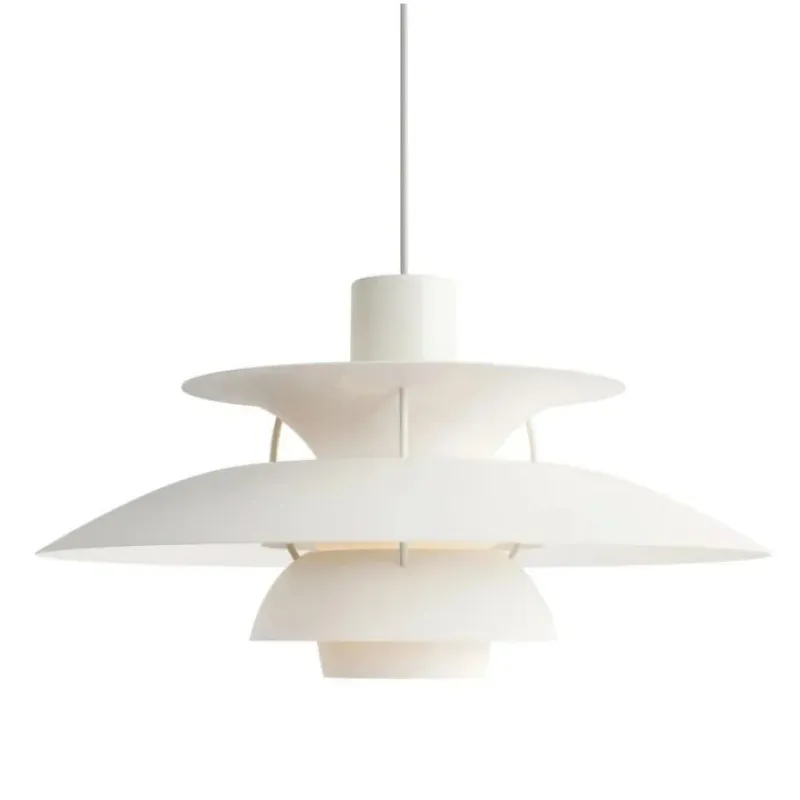
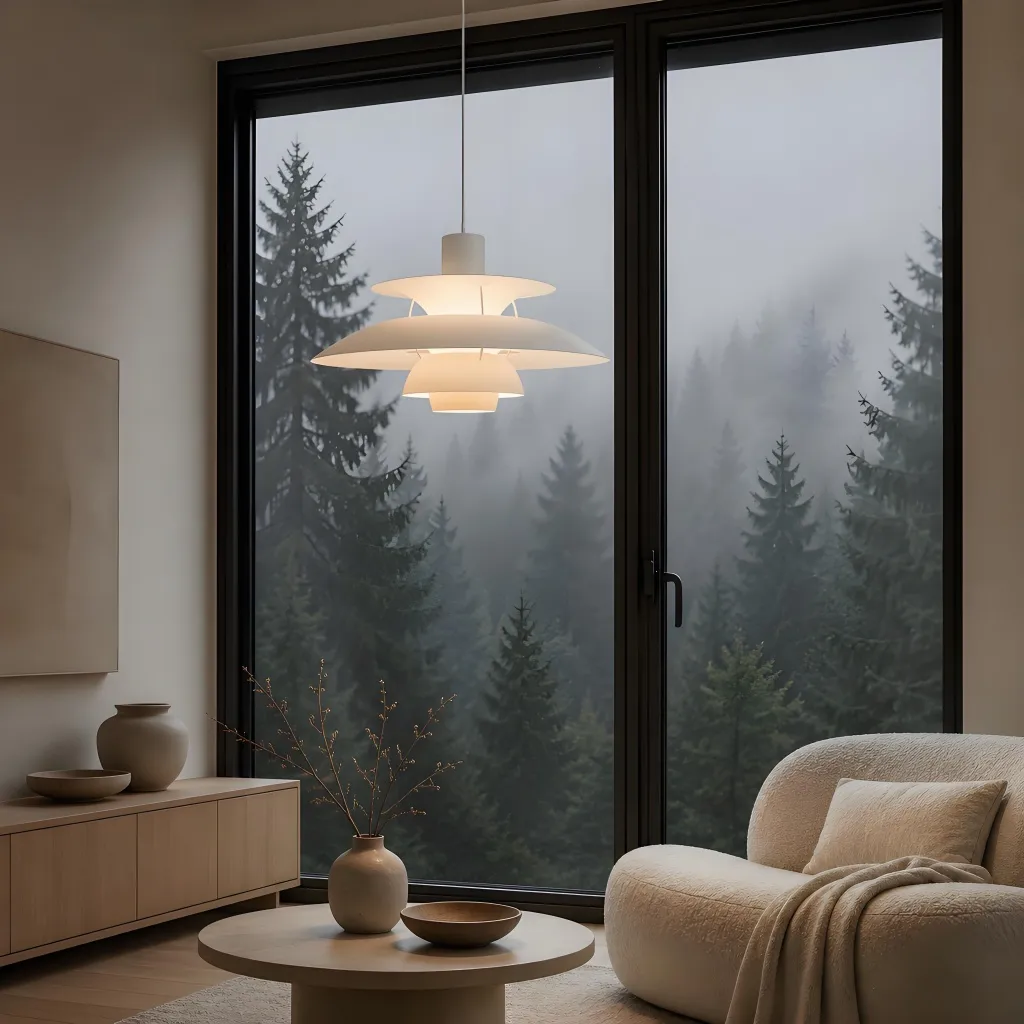
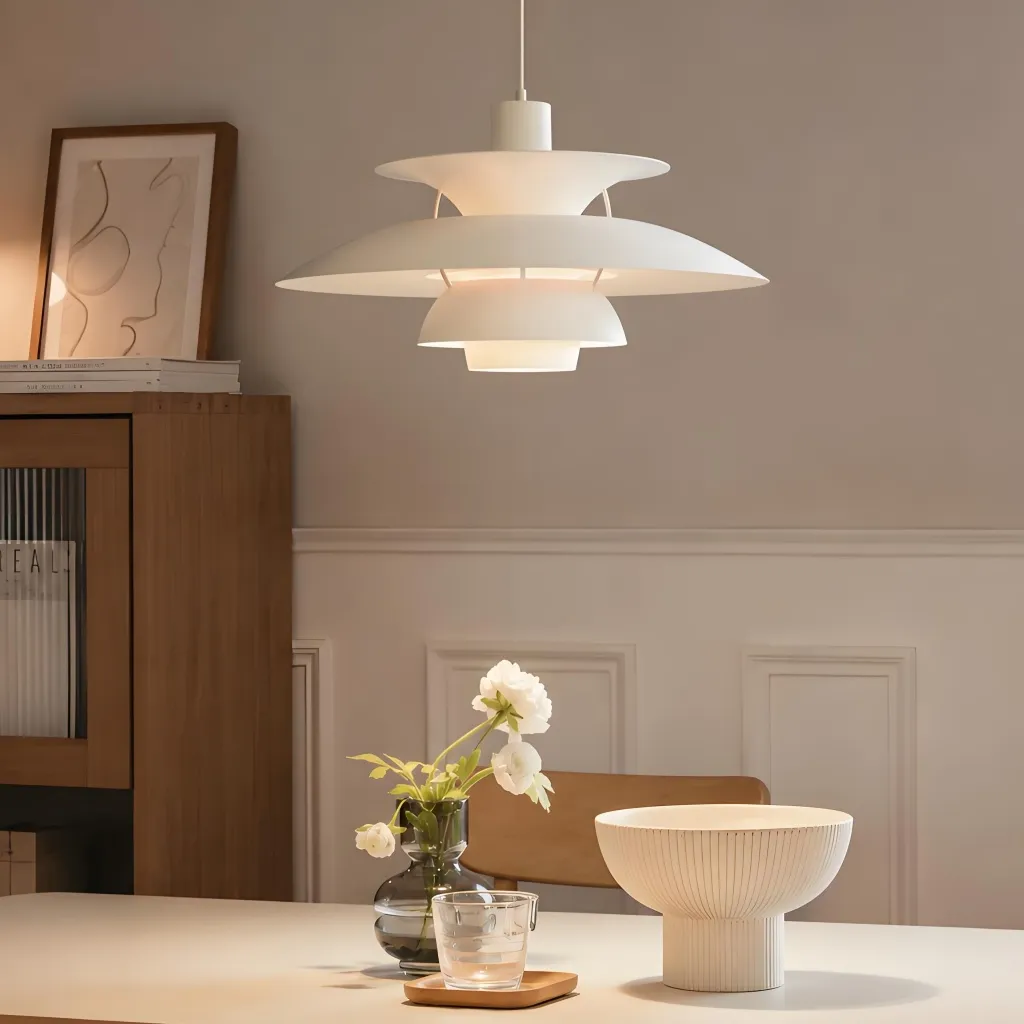
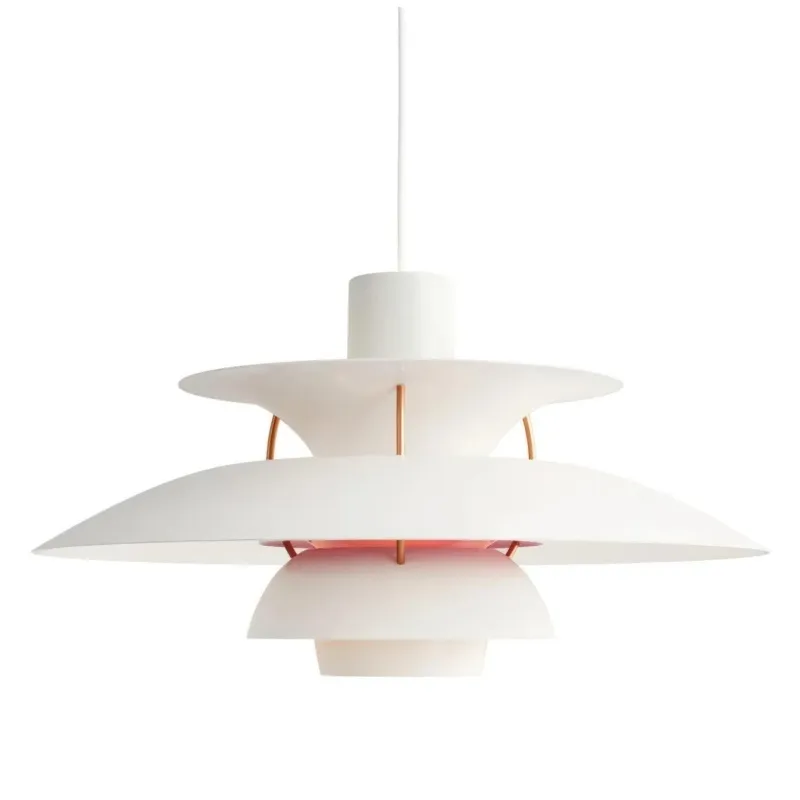
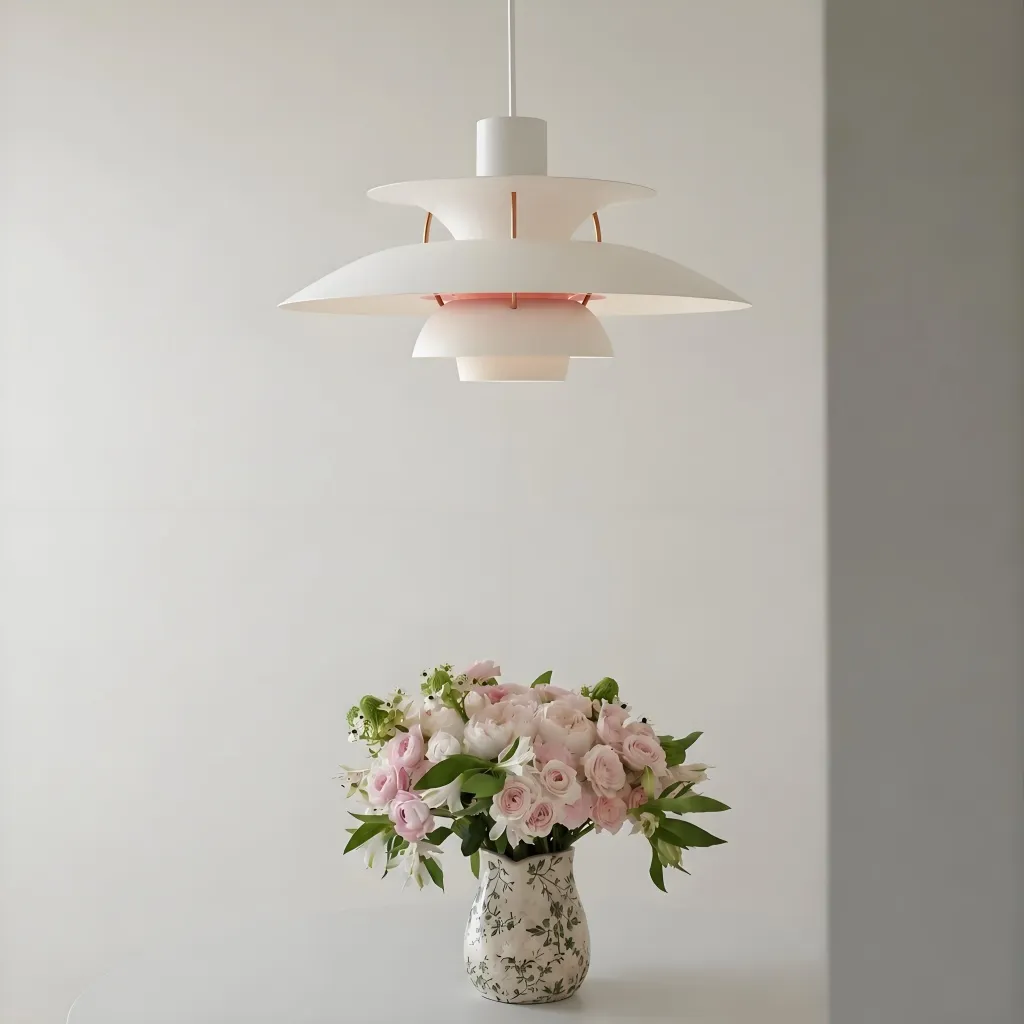
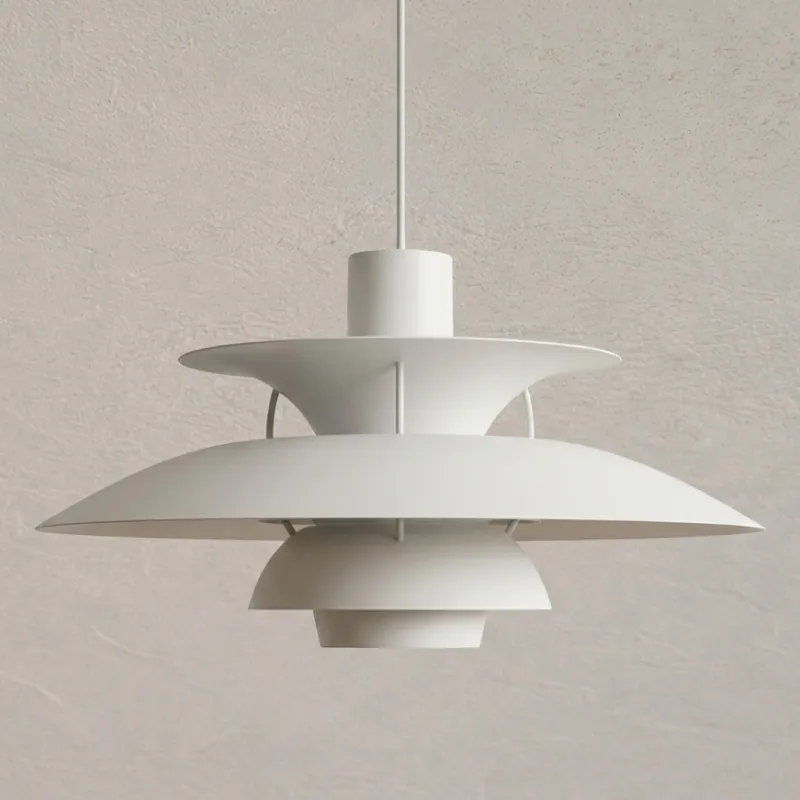
Use the smaller size when the table is round or compact, chairs have tall backs, or artwork and shelving already compete for attention. A layered metal shade can still provide a strong silhouette at this scale; keep the centrepiece low and let the pendant carry the detail above.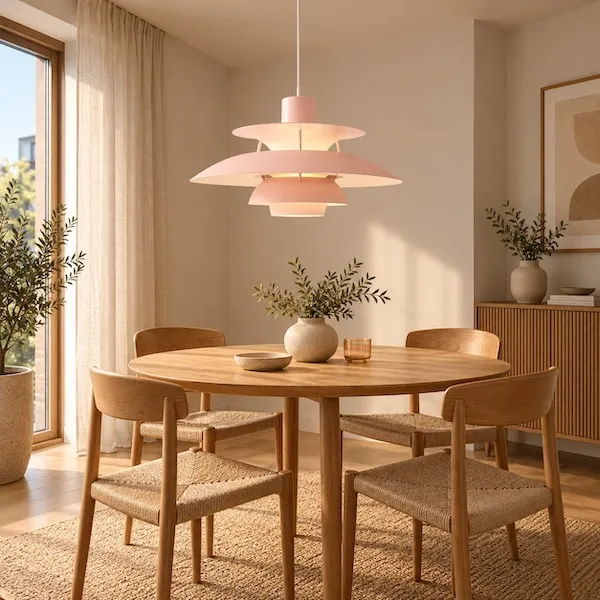
The 50 cm option: when the room needs a centre
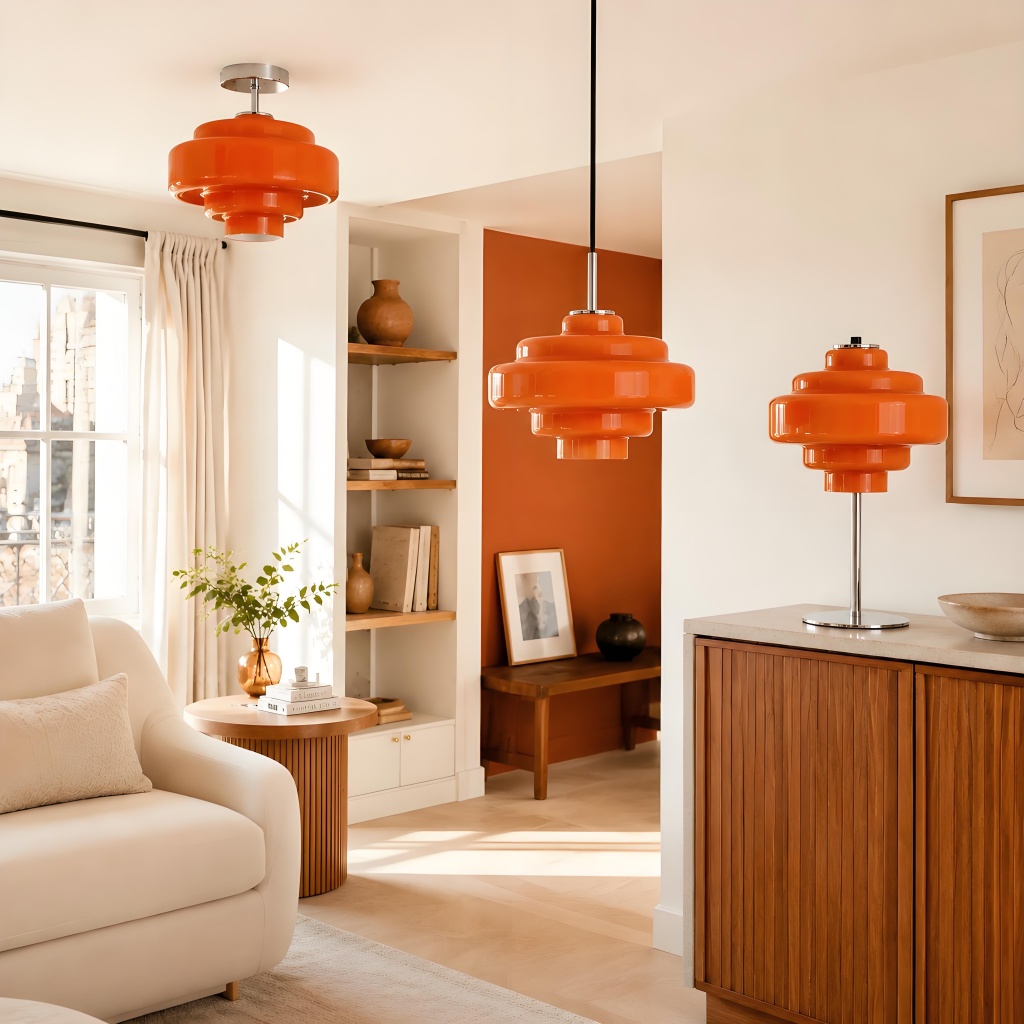
A 50 cm pendant suits a larger dining table, high-volume room, or open-plan layout where a small fixture would disappear. Its extra diameter gives the layered profile enough presence to define the dining zone from the kitchen and living area.
Do not choose 50 cm simply because the room is large. Check the walking route, door swing, tall guests, and nearby seating. A large shade hung too low can break conversation and crowd the table. If the tabletop is narrow but long, compare the shade width with the short side first; 50 cm may overhang visually even when the length seems adequate.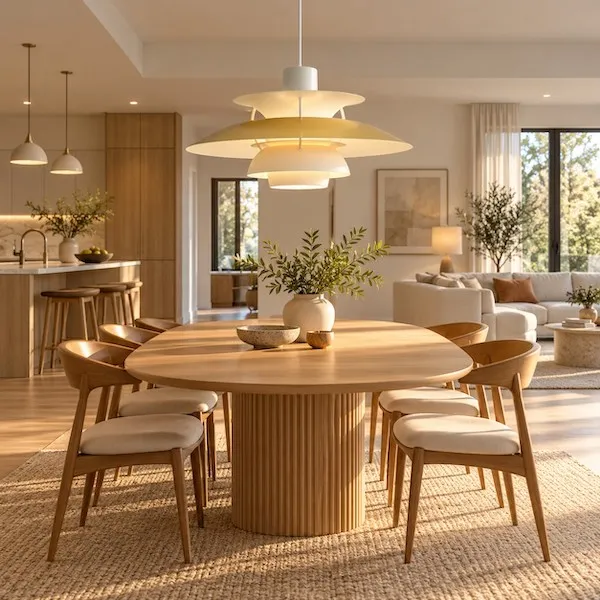
Height and sightline are the tie-breakers
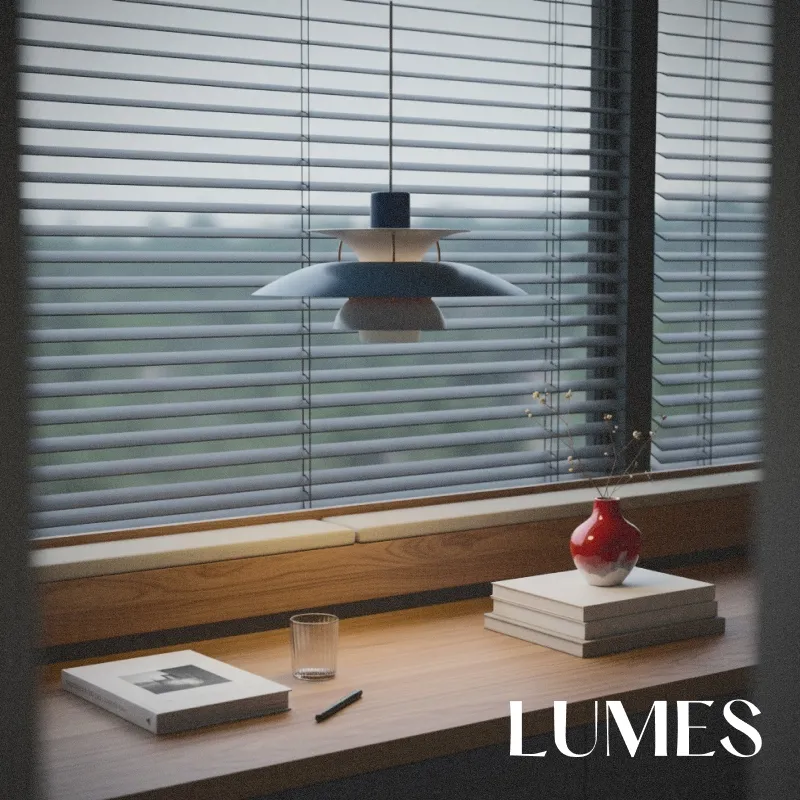
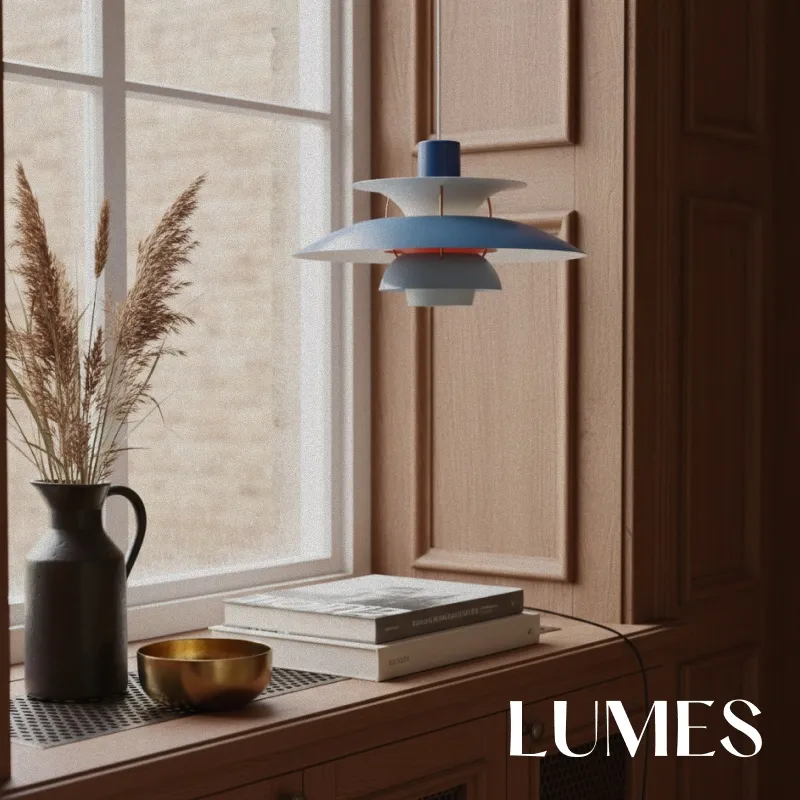
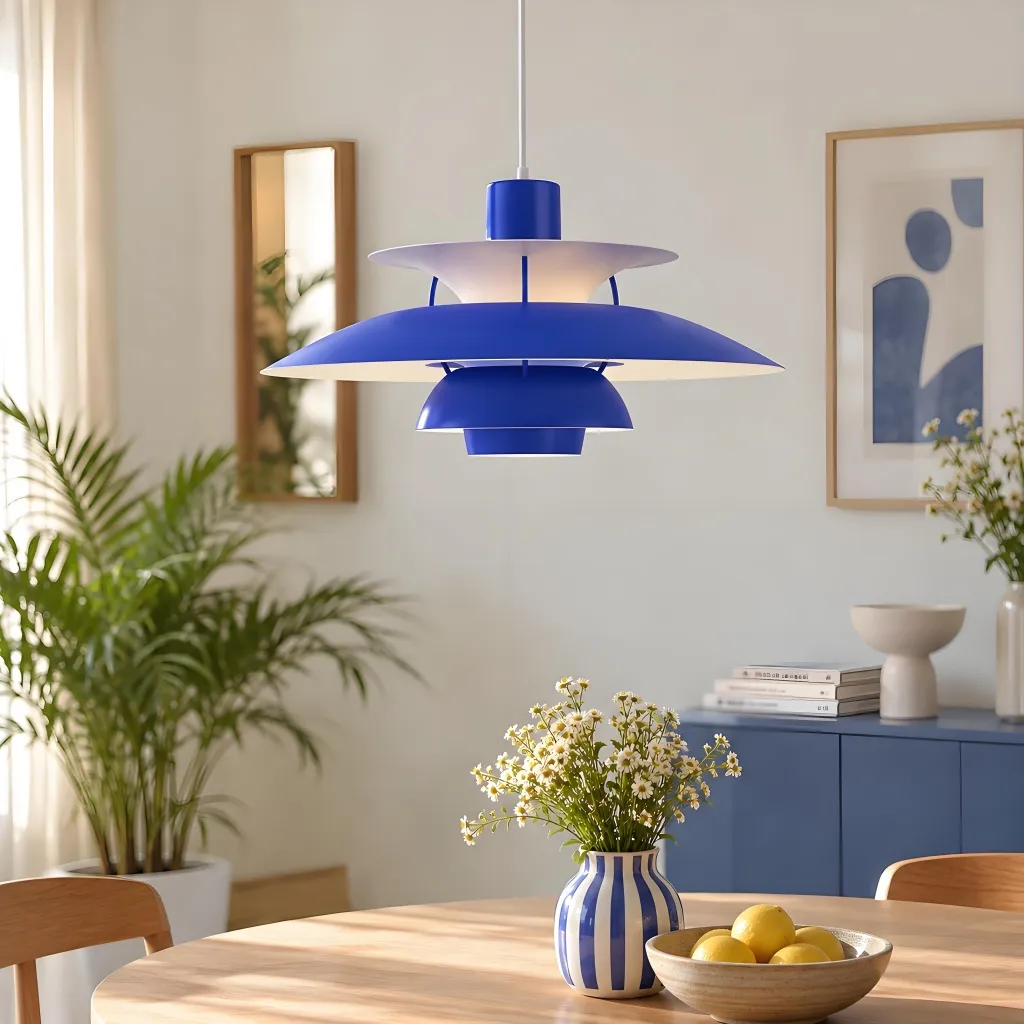
Diameter and hanging height work as a pair. A useful starting point is 75 to 90 cm from the bottom of the shade to the tabletop. Raise the fixture slightly when the shade is deep, the ceiling is low, or people need a clear view between kitchen and dining seats. Lower it within the comfortable range when the ceiling is high and the table needs a more intimate pool of light. Test from a seated eye line, then stand at the room entrance and check that the shade does not obstruct movement.
A 30 cm shade can tolerate more visual separation in a compact room. A 50 cm shade usually looks better when its height is deliberate: too high and it loses connection with the table; too low and its mass dominates faces and serving space. An adjustable suspension helps, but confirm the available cable length and mounting method before buying.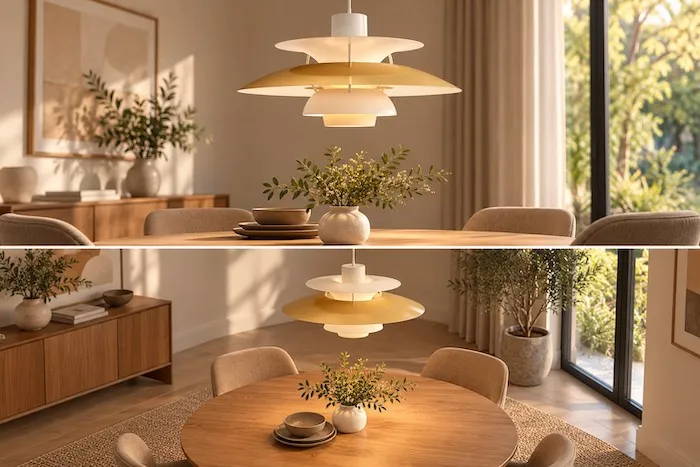
Light output, bulb, and layered comfort
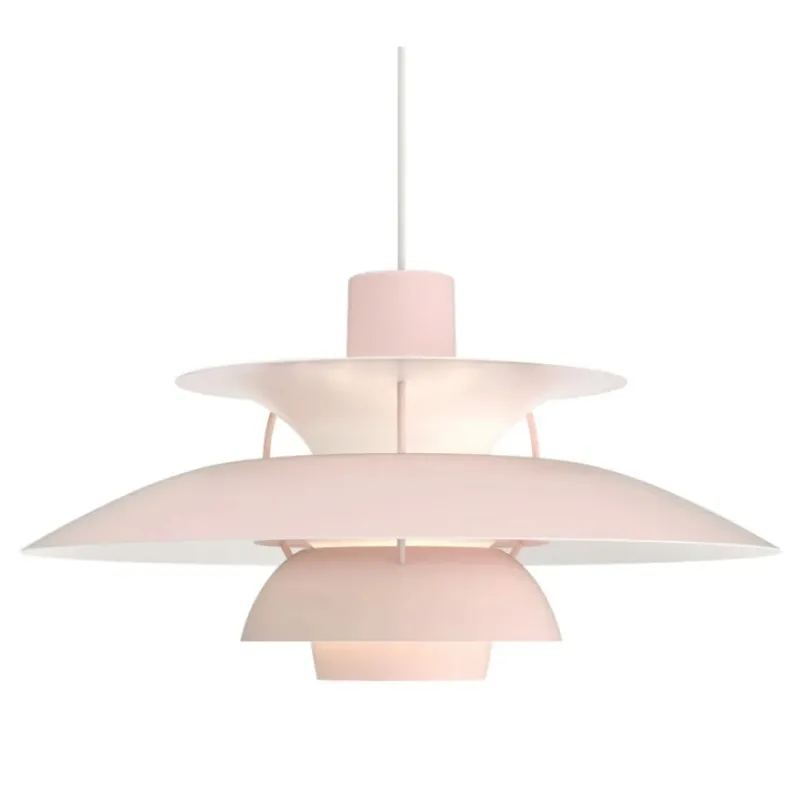
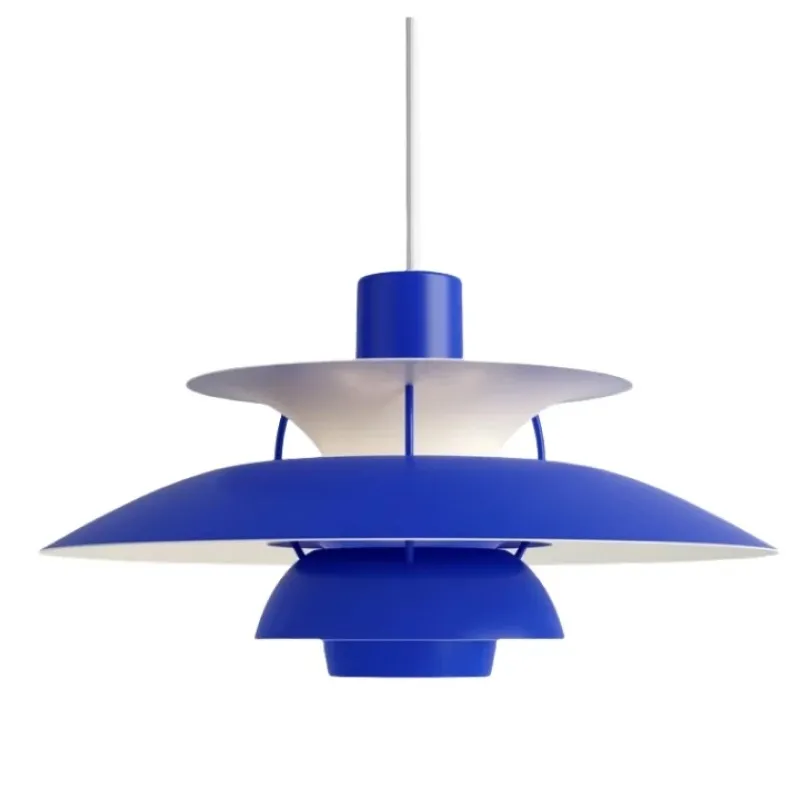
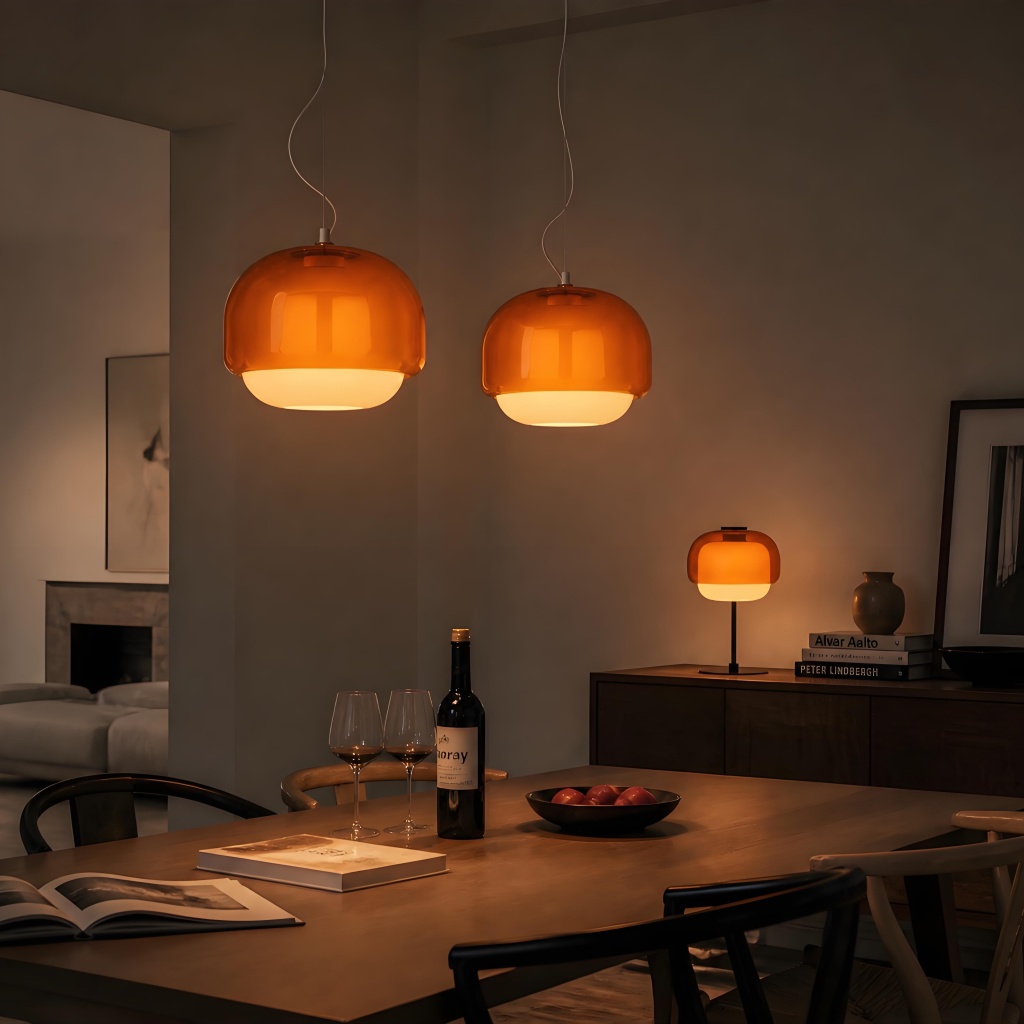
Size does not tell you how bright a pendant will be. Compare lumens, bulb rating, and shade openness rather than assuming the larger option needs the brightest bulb. The Lumesdesign Danish-inspired layered pendant uses an E27 format, so you can choose a warm bulb and adjust the atmosphere without replacing the fixture. Check the exact listing for supported bulb type, maximum rating, and dimming compatibility.
If the room still needs more light, add a sideboard, wall, or floor source instead of forcing one pendant to illuminate every corner. This keeps the dining light comfortable and makes diameter a visual as well as functional decision.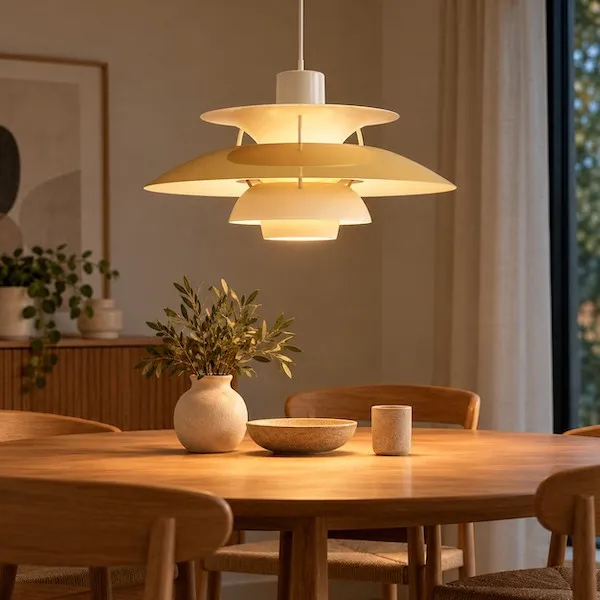
A simple pre-order method
- Measure the table in its everyday configuration.
- Mark 30 cm and 50 cm circles on the tabletop with removable tape or cardboard.
- View both outlines from the doorway, kitchen position, and main seats.
- Check chair backs, artwork, doors, and the walking line.
- Confirm ceiling point, cable range, bulb format, and finish on the product page.
Review the fixture after the mock-up
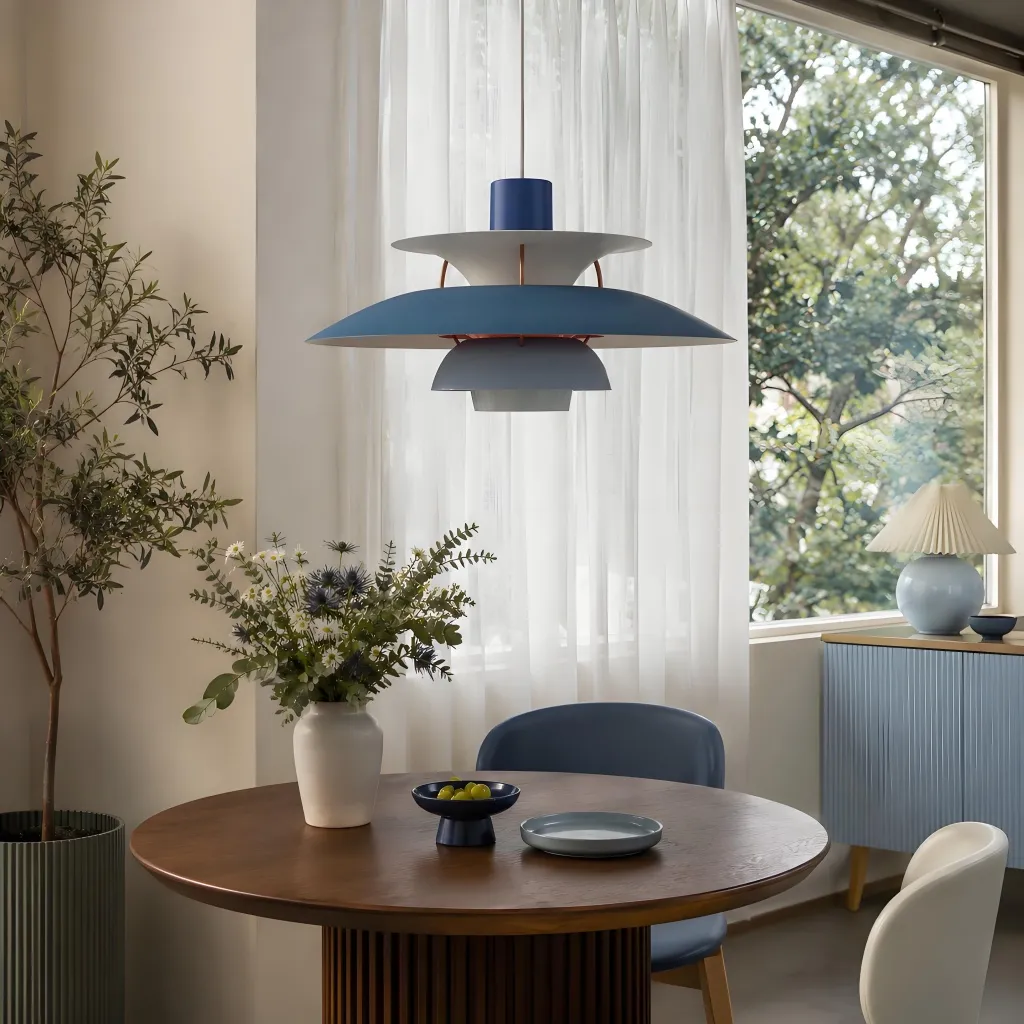
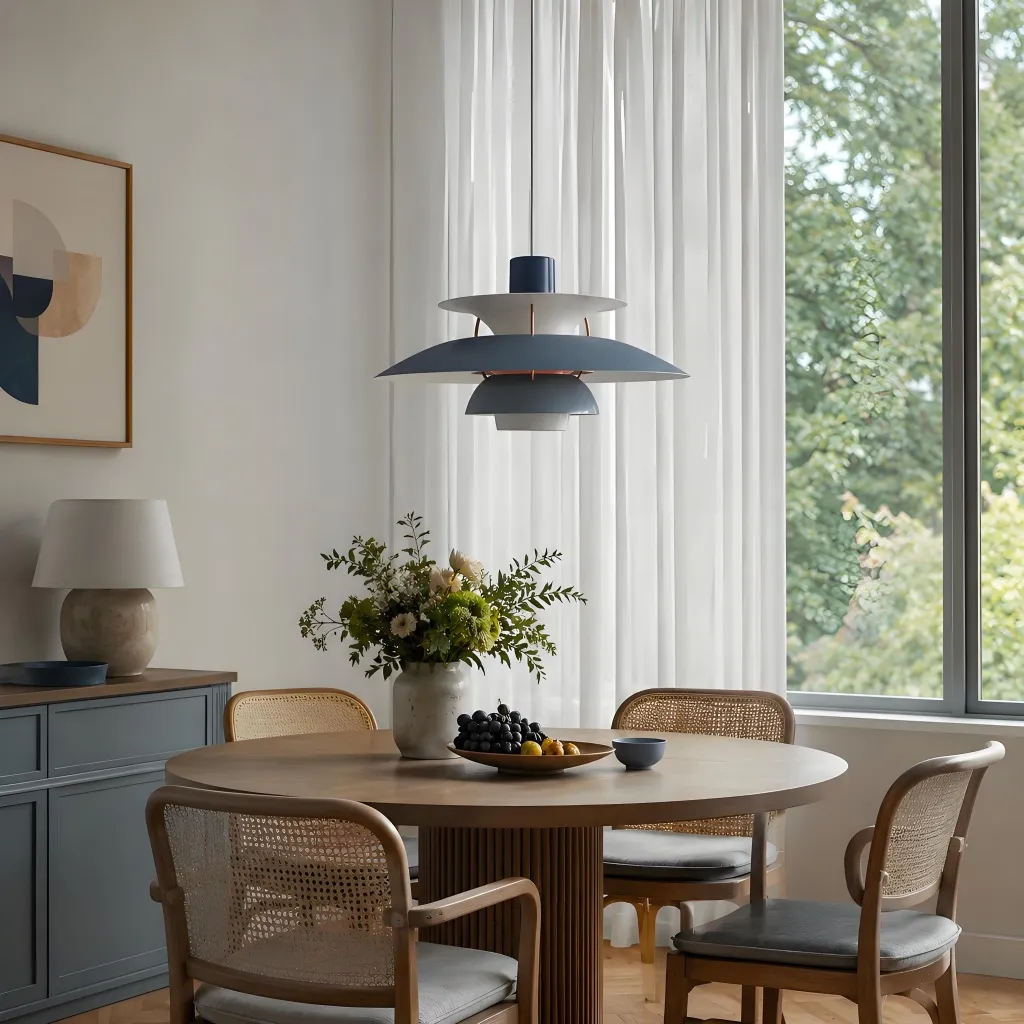
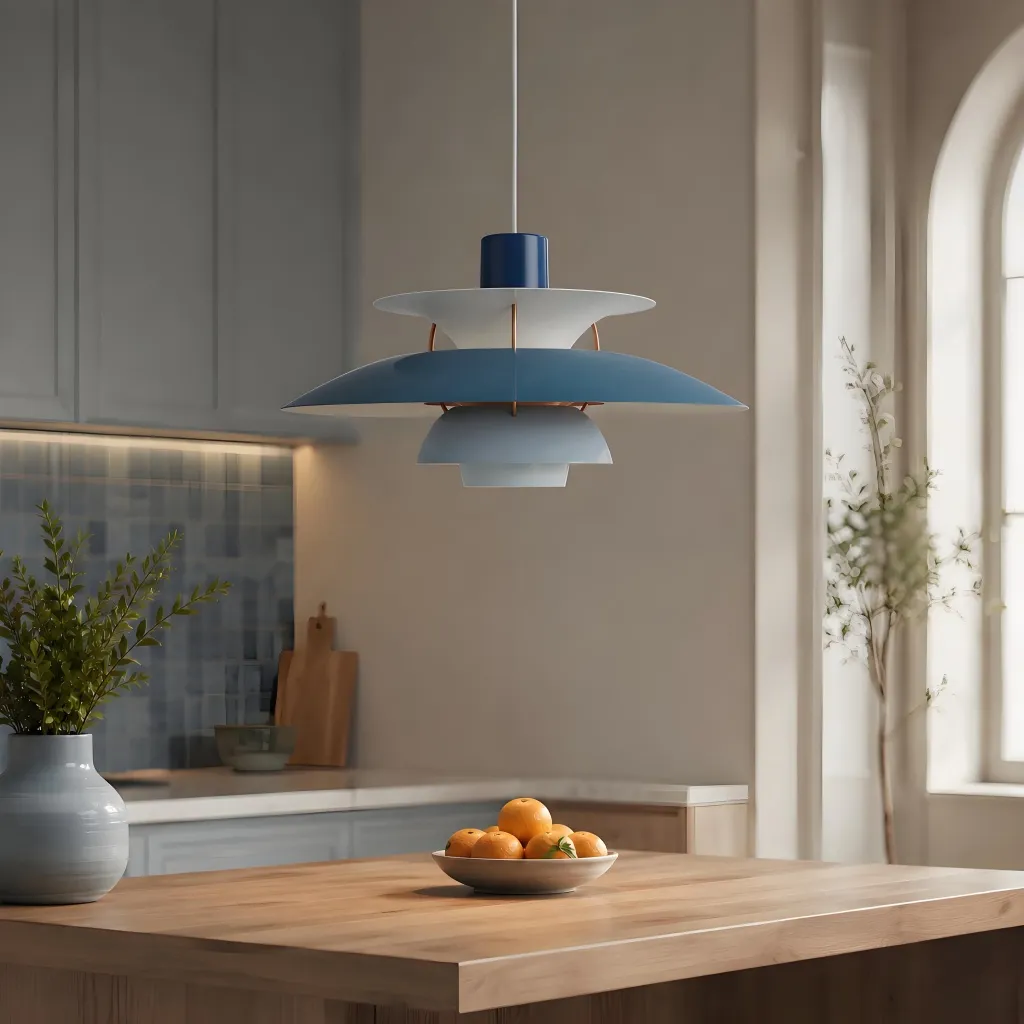
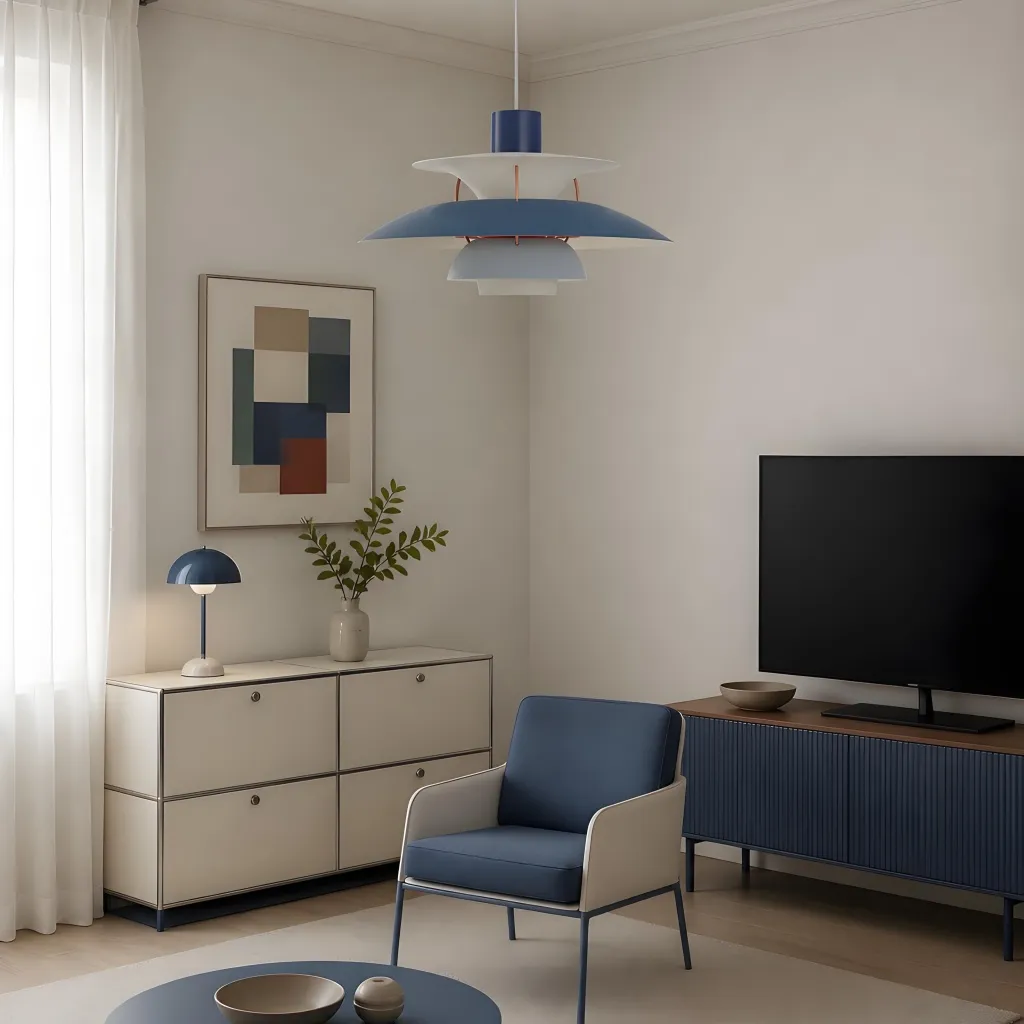
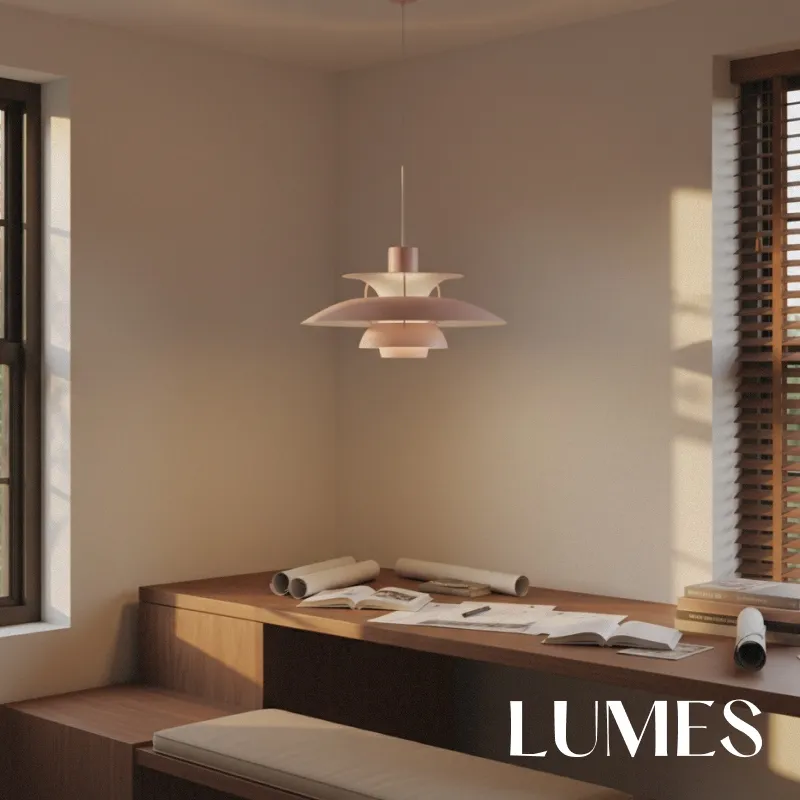
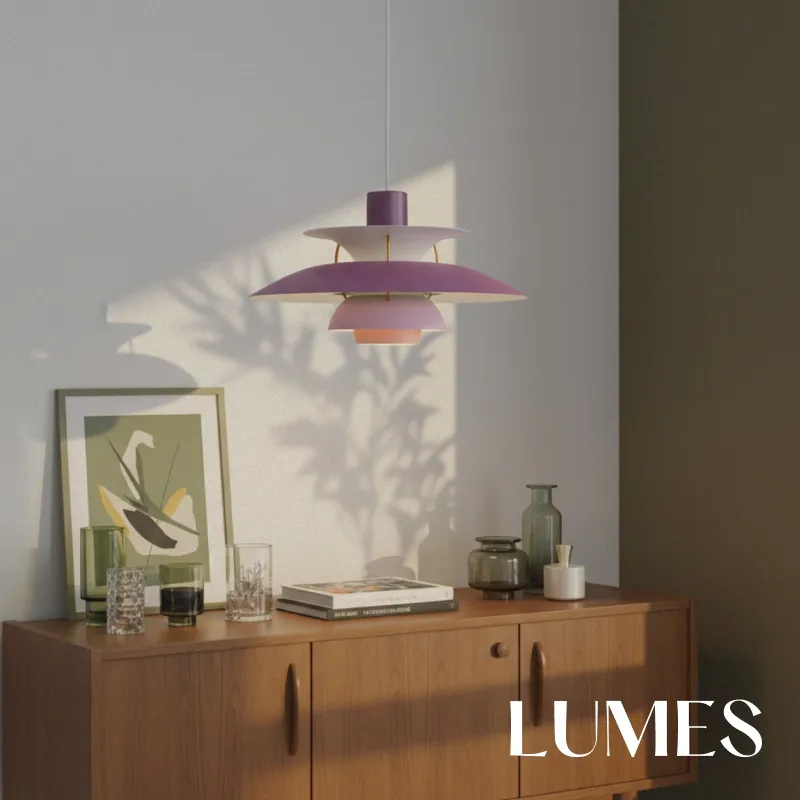
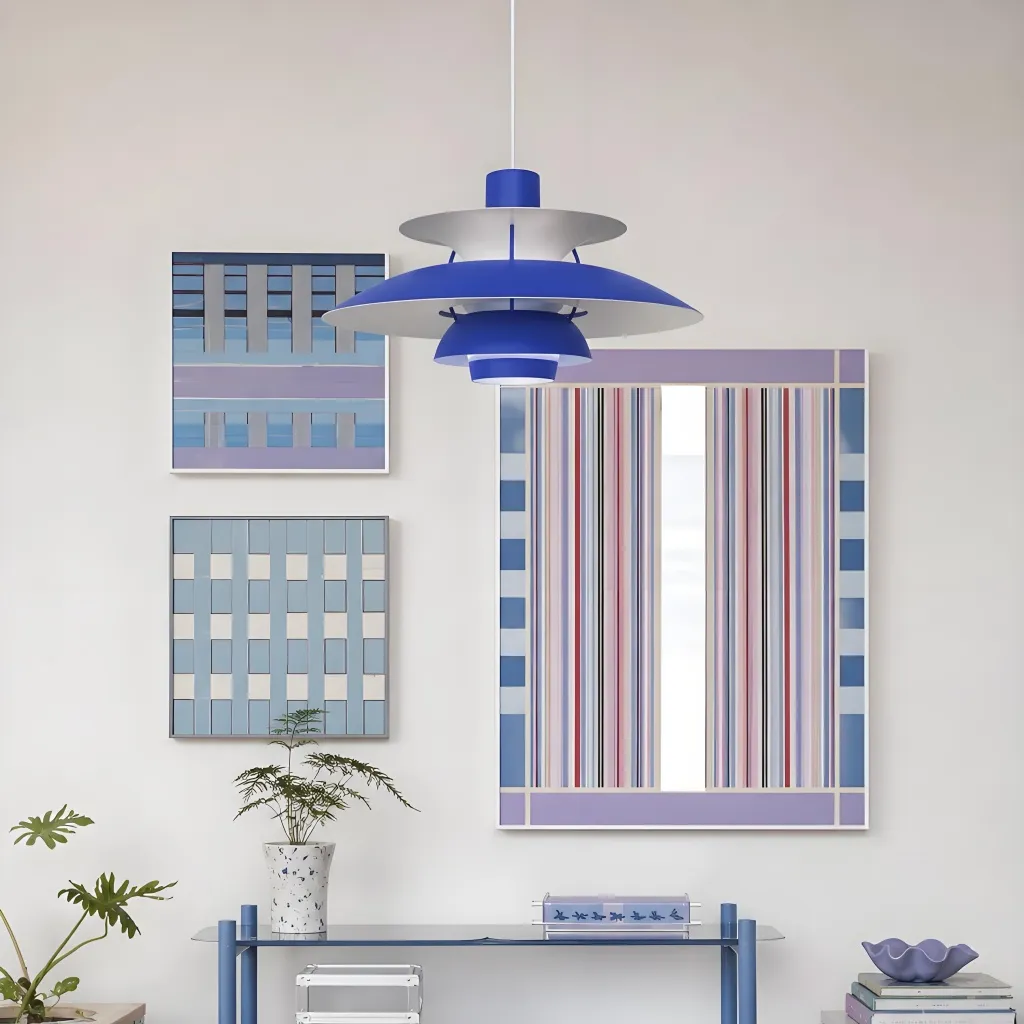
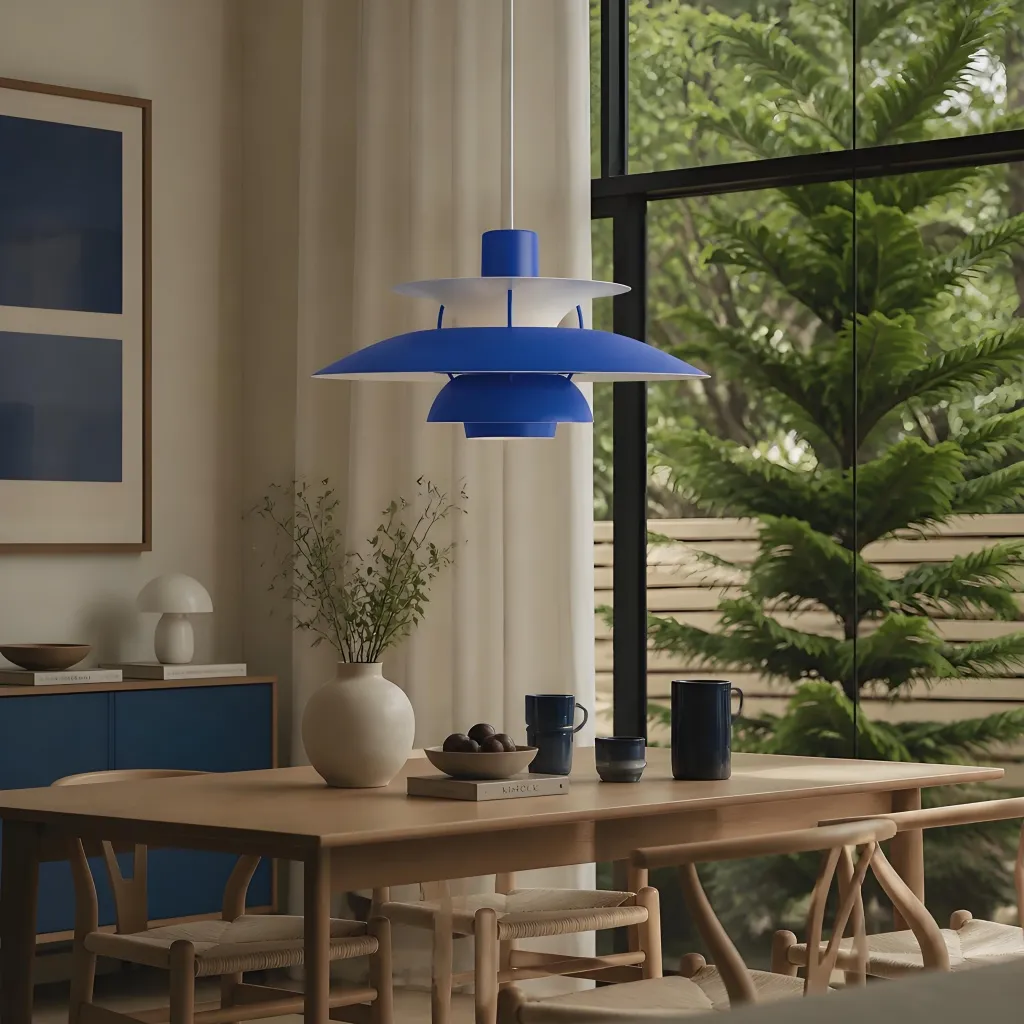
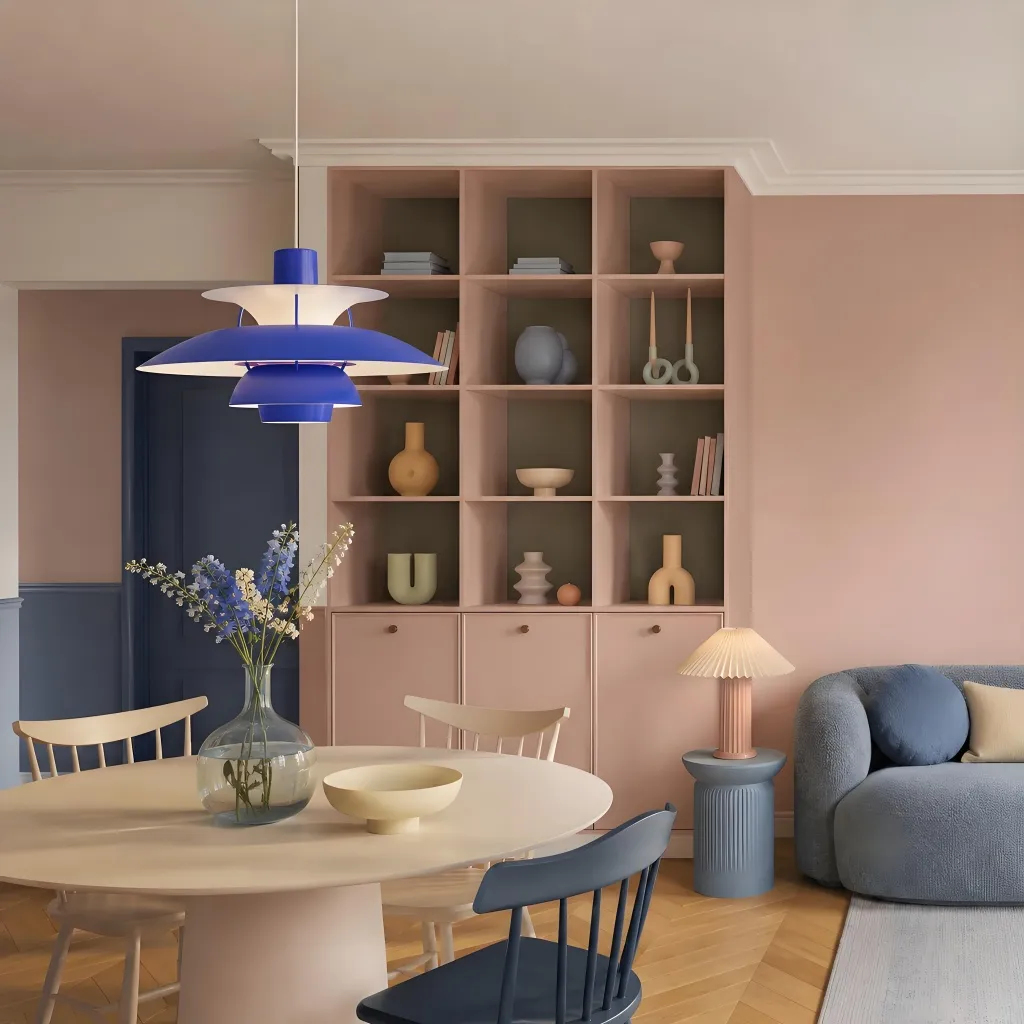
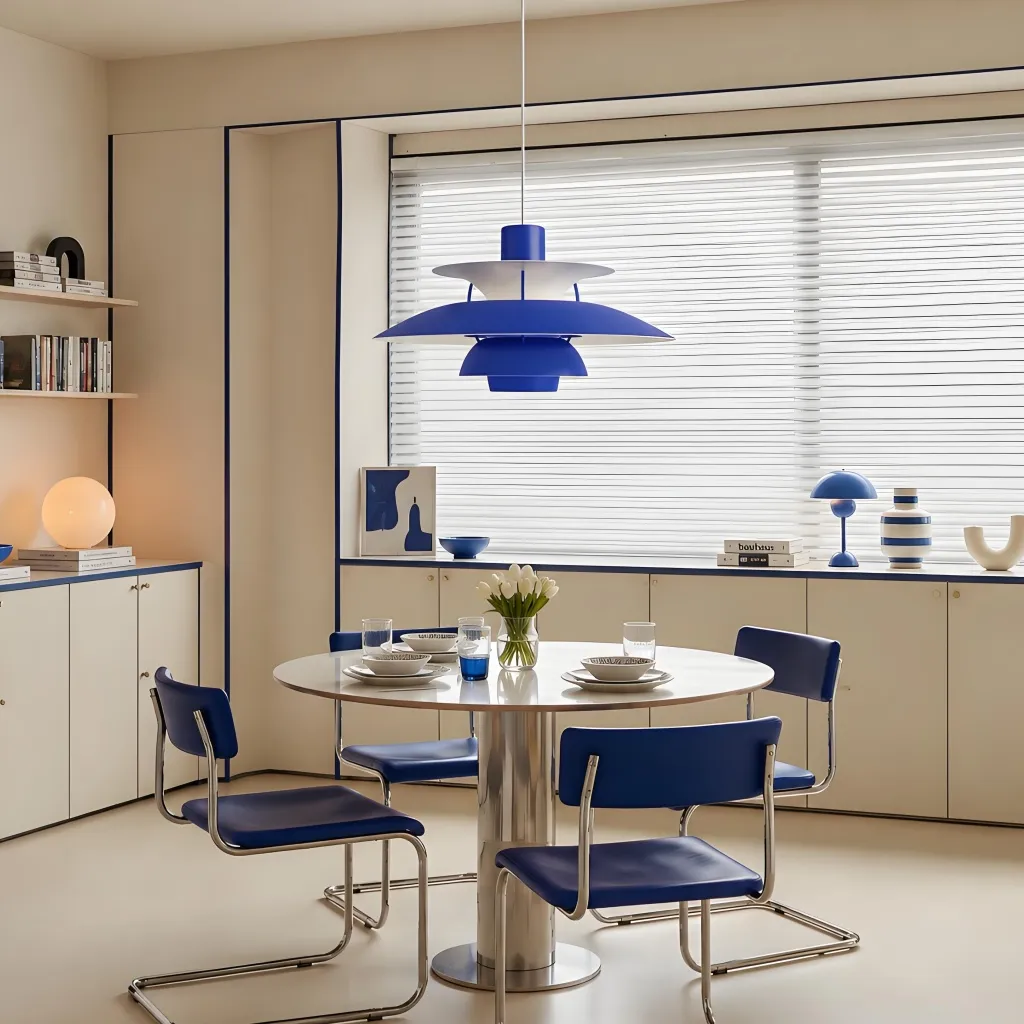
Review the Danish-inspired layered metal pendant light after you make the two circles. For style and construction, see Best Danish Pendant Lights for Dining Rooms: Metal Layered Designs to Buy. For the next decision, use How High Should a Pendant Light Hang Over a Dining Table Before You Buy? before drilling or wiring.
Check the current product details and match the selected configuration to the table you actually use.
Common size mistakes
A pendant that matches floor area but ignores the table feels disconnected. Other errors are choosing 50 cm for a narrow tabletop and hanging 30 cm so high that it becomes a ceiling ornament. Measure with chairs pulled out, not only pushed in, and include serving and walking space.
FAQ: choosing 30 cm or 50 cm
Is 30 cm too small for a dining table?
Not if the table is compact and the room benefits from an open sightline. Scale it to the tabletop, not a catalogue photograph.
Is 50 cm suitable for a round table?
Yes, when the tabletop leaves a clear border and the ceiling can carry the visual weight.
Can I use two 30 cm pendants instead of one 50 cm pendant?
Sometimes. Check table length, junction-box positions, spacing, and combined visual weight.
What if my ceiling is low?
Start with 30 cm, use the smallest comfortable drop, and check shade depth and seated sightline.
Does a bigger pendant always give more light?
No. Brightness depends on the bulb, fitting, shade, and room layers.