


How to Choose the Right Pendant Size and Number
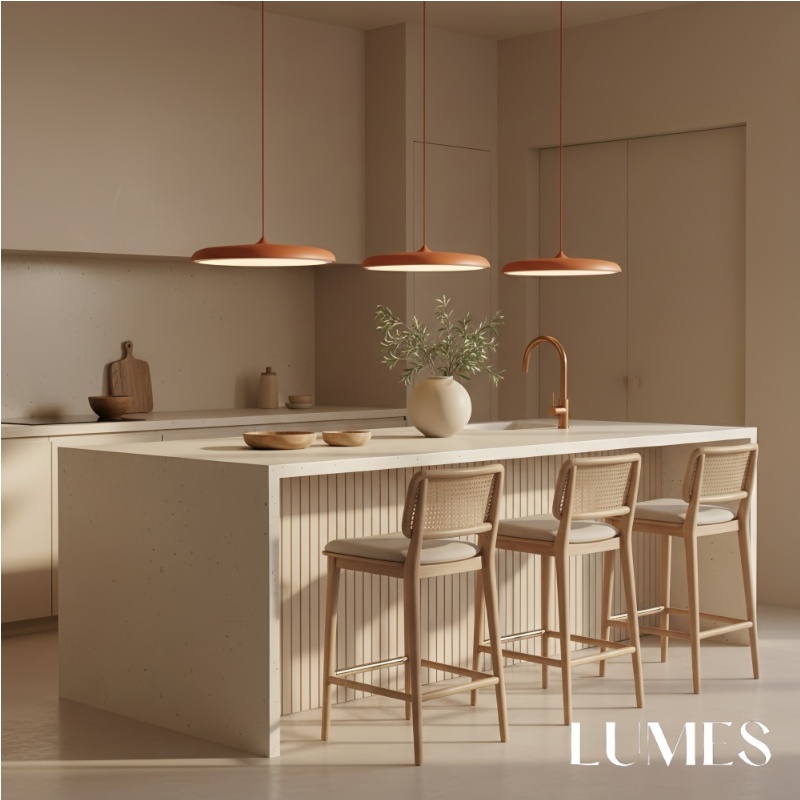
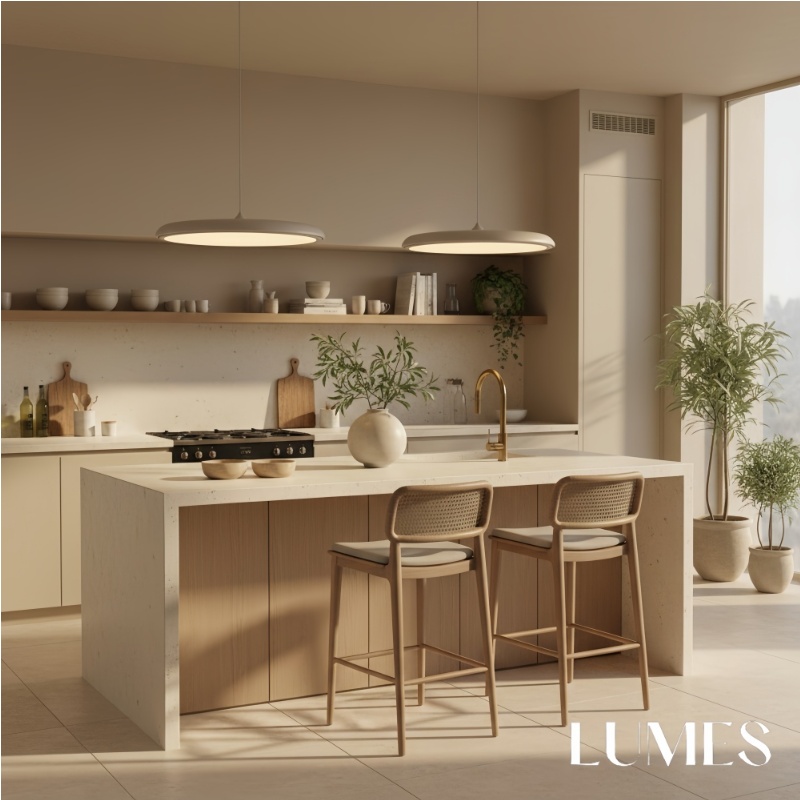
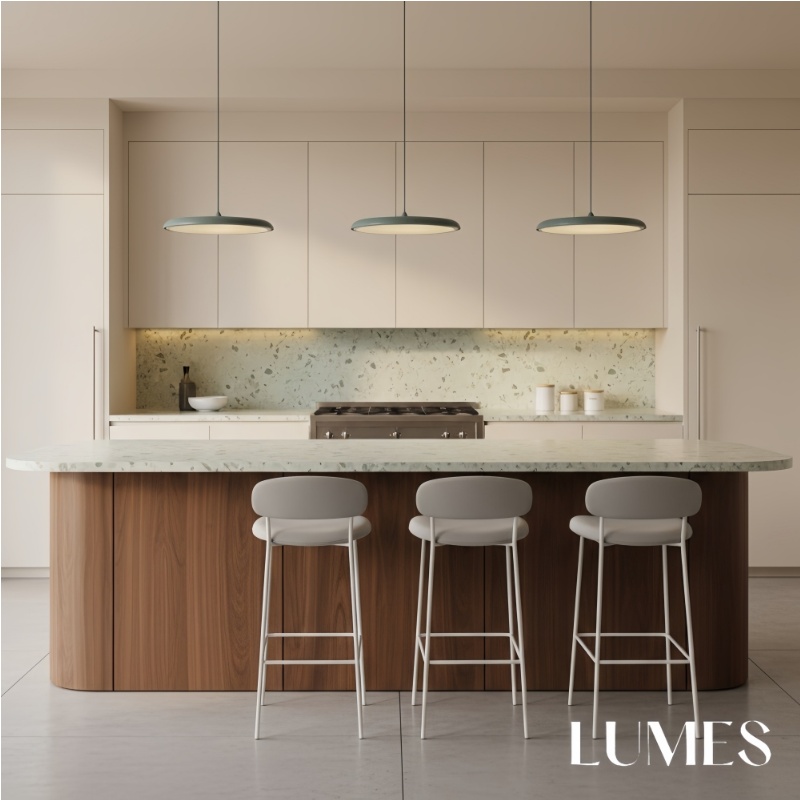
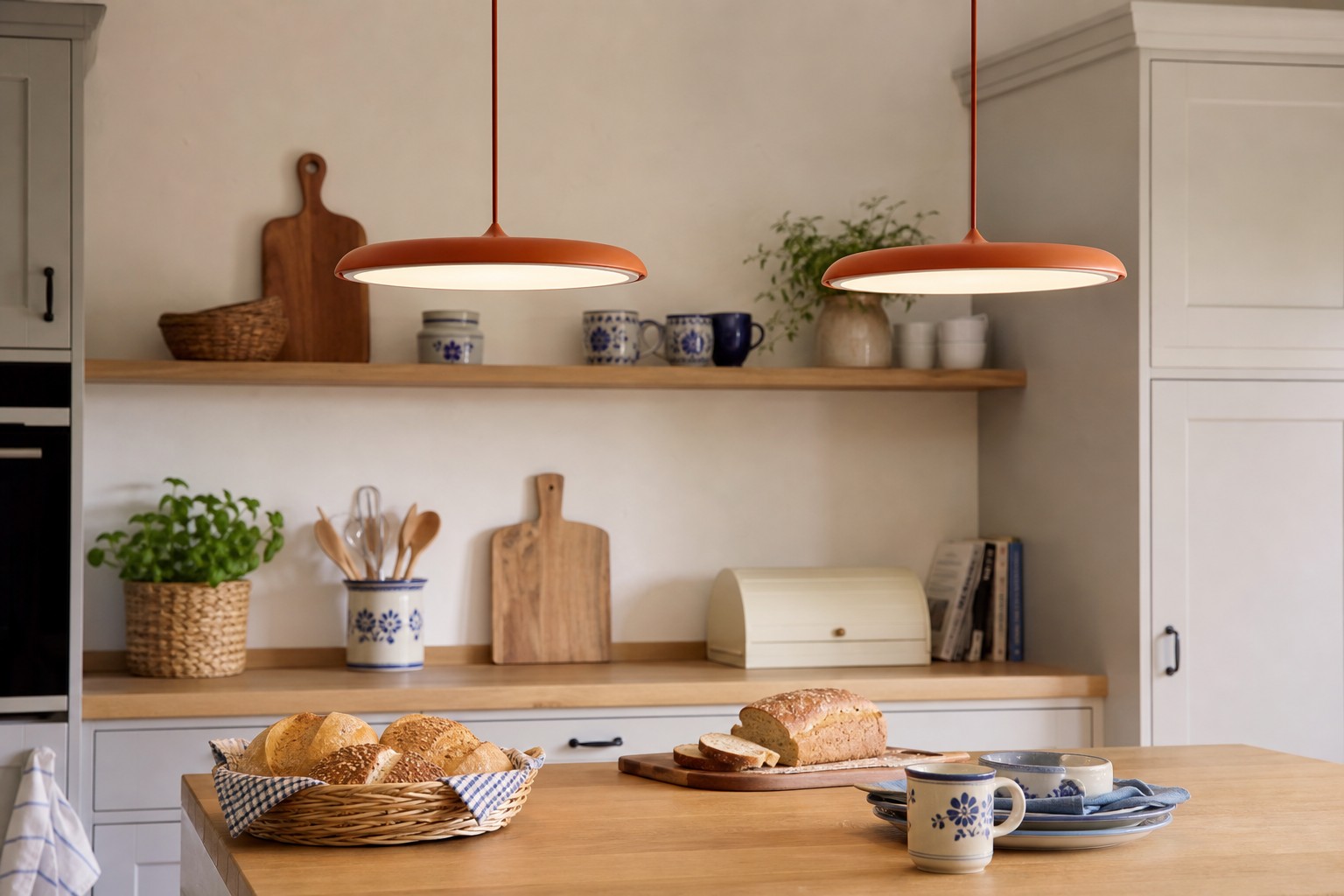
A kitchen island may be a prep station at 6 p.m. and a breakfast table the next morning. Its pendant lights therefore need to do three jobs well: illuminate the countertop, preserve clear views across the room, and look proportionate to the island below. The right answer is not always three matching pendants. It depends on the island length, fixture diameter, ceiling height, circulation space, and the activities that happen at the counter.
Before You Start: Your Kitchen Measurement Profile
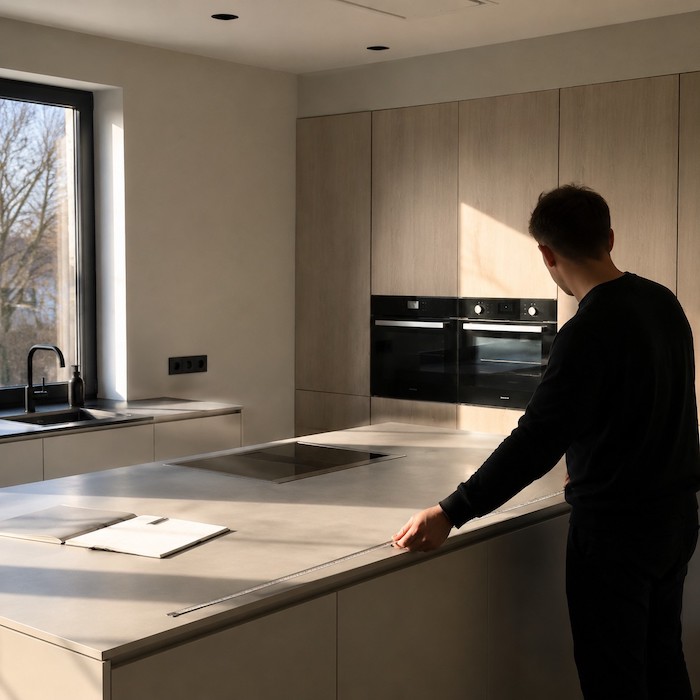
Measure the room before comparing pendant styles. Record these four details:
- Island length and width: Measure the full countertop, including any overhang used for seating.
- Counter-to-ceiling height: This determines the available drop and whether a long pendant will obstruct views.
- Primary activities: Note where people chop, serve, eat, work, and sit so the light supports the real task area.
- Ceiling and junction points: Check whether the ceiling is flat, sloped, beamed, or fitted with electrical points that do not align with the island.
Kitchen Island Dimensions and Recommended Clearance
Before choosing pendant lights, make sure the island itself has enough room around it. Leave at least 90 cm (36 in) around the kitchen island for comfortable movement. In a busy walkway, or in front of a dishwasher, oven, drawer bank, or storage cabinet, allow 100 to 120 cm (40 to 48 in).
This circulation clearance is the floor space around the island. It is different from pendant edge distance, which is measured across the countertop. The widest part of each pendant should normally remain 30 to 45 cm (12 to 18 in) inside the island's outer edges.
Use this quick reference to keep the measurements separate:
| Measurement | Recommended Distance |
|---|---|
| Clearance around the kitchen island | At least 90 cm (36 in) |
| Busy walkway or appliance clearance | 100–120 cm (40–48 in) |
| Pendant distance from island edges | 30–45 cm (12–18 in) |
| Distance between pendant centres | 60–75 cm (24–30 in) |
| Pendant height above countertop | 75–90 cm (30–36 in) |
Balance Task Light with Comfortable Ambience
Island lighting must be bright enough for chopping and food preparation without shining into the eyes of someone seated opposite. A shaded or diffused source is usually more comfortable than an exposed bulb, especially near glossy cabinets, polished stone, glass splashbacks, or reflective appliances.
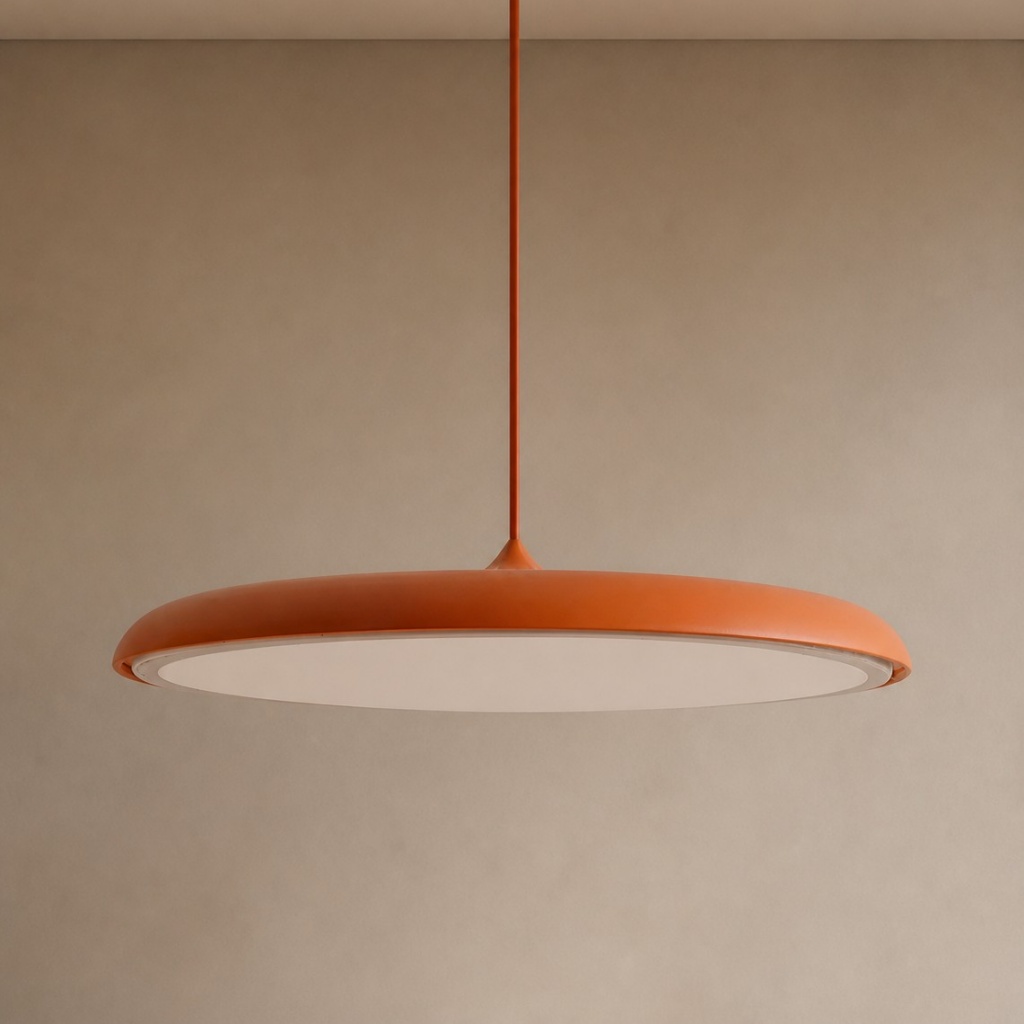
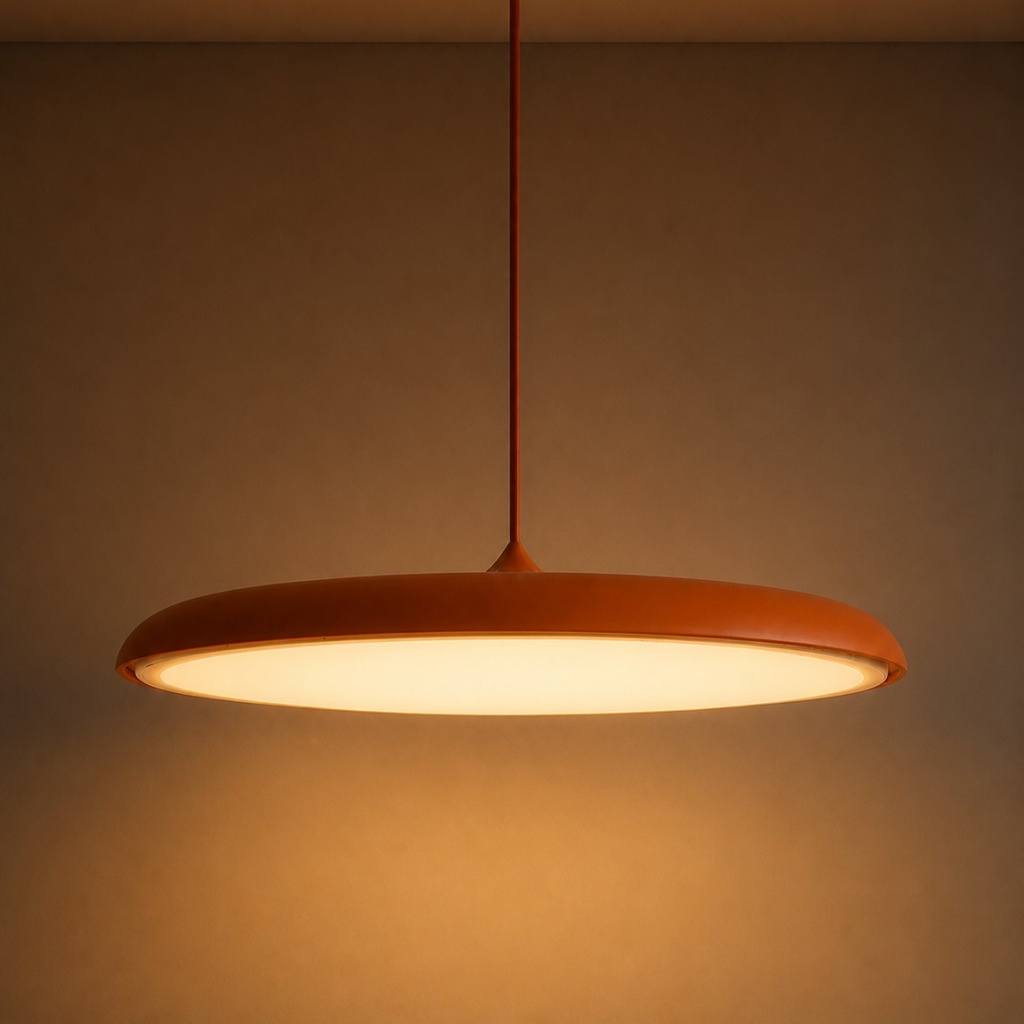
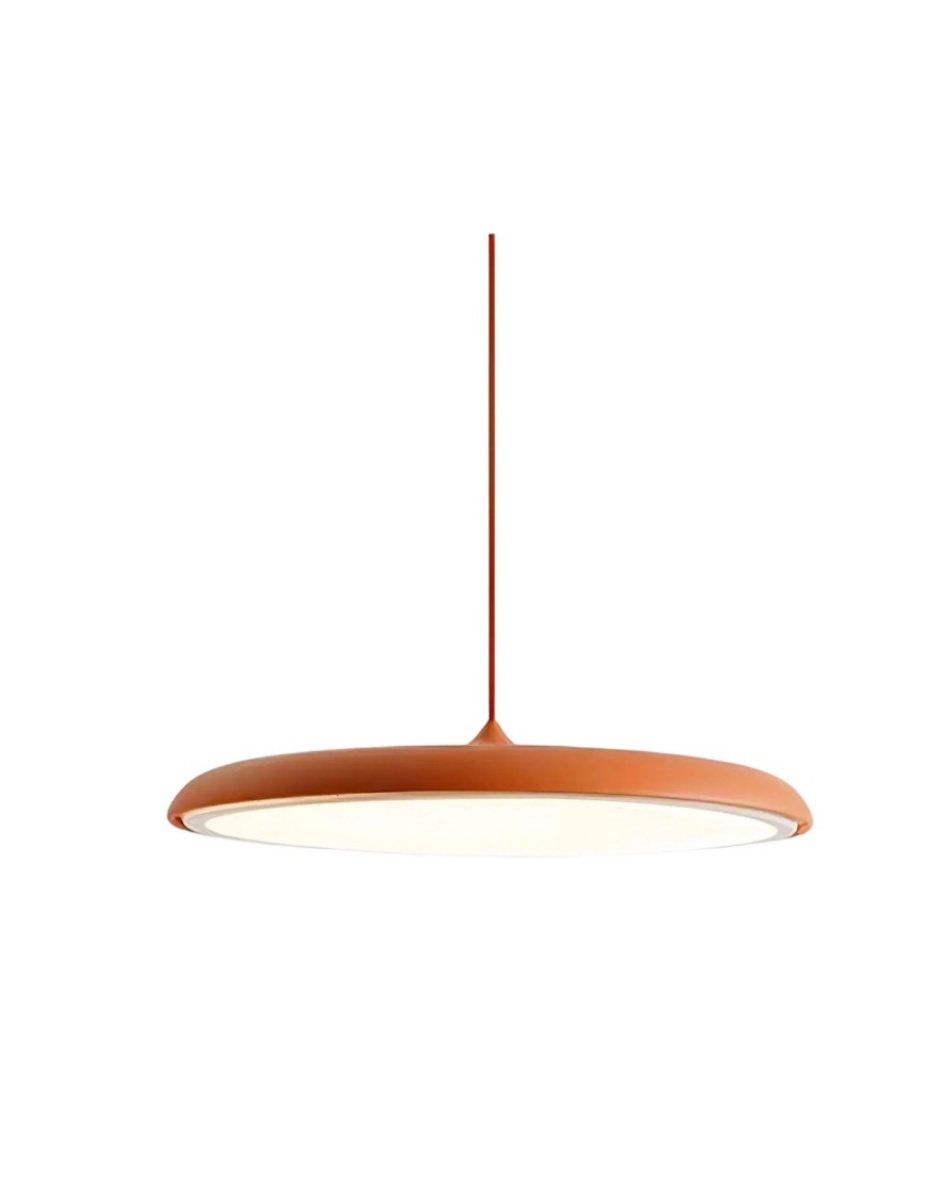
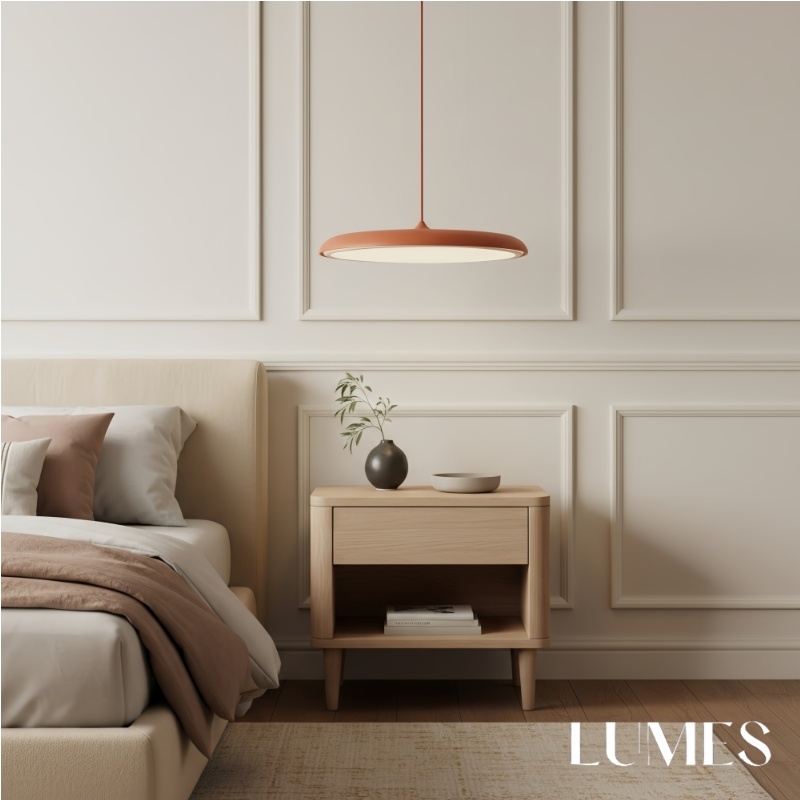
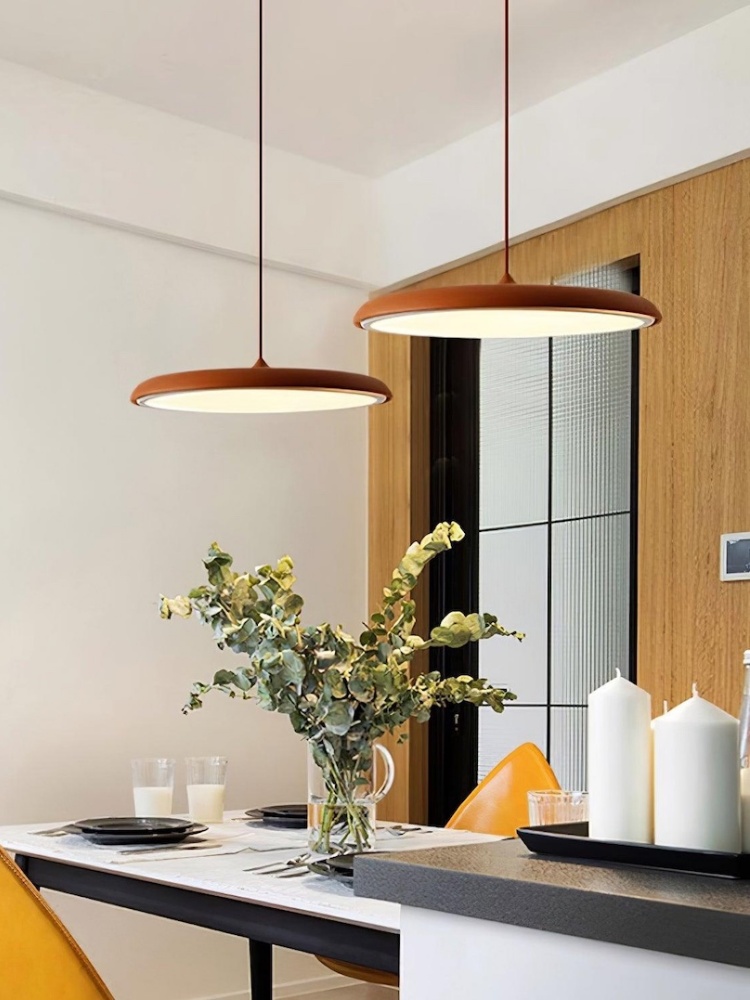
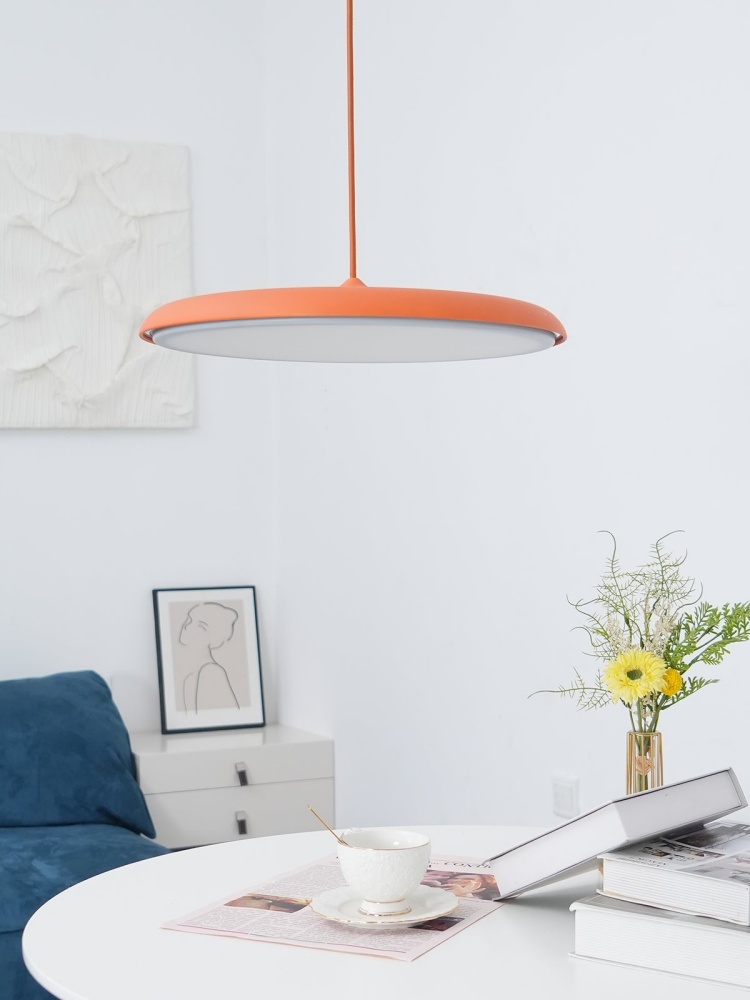
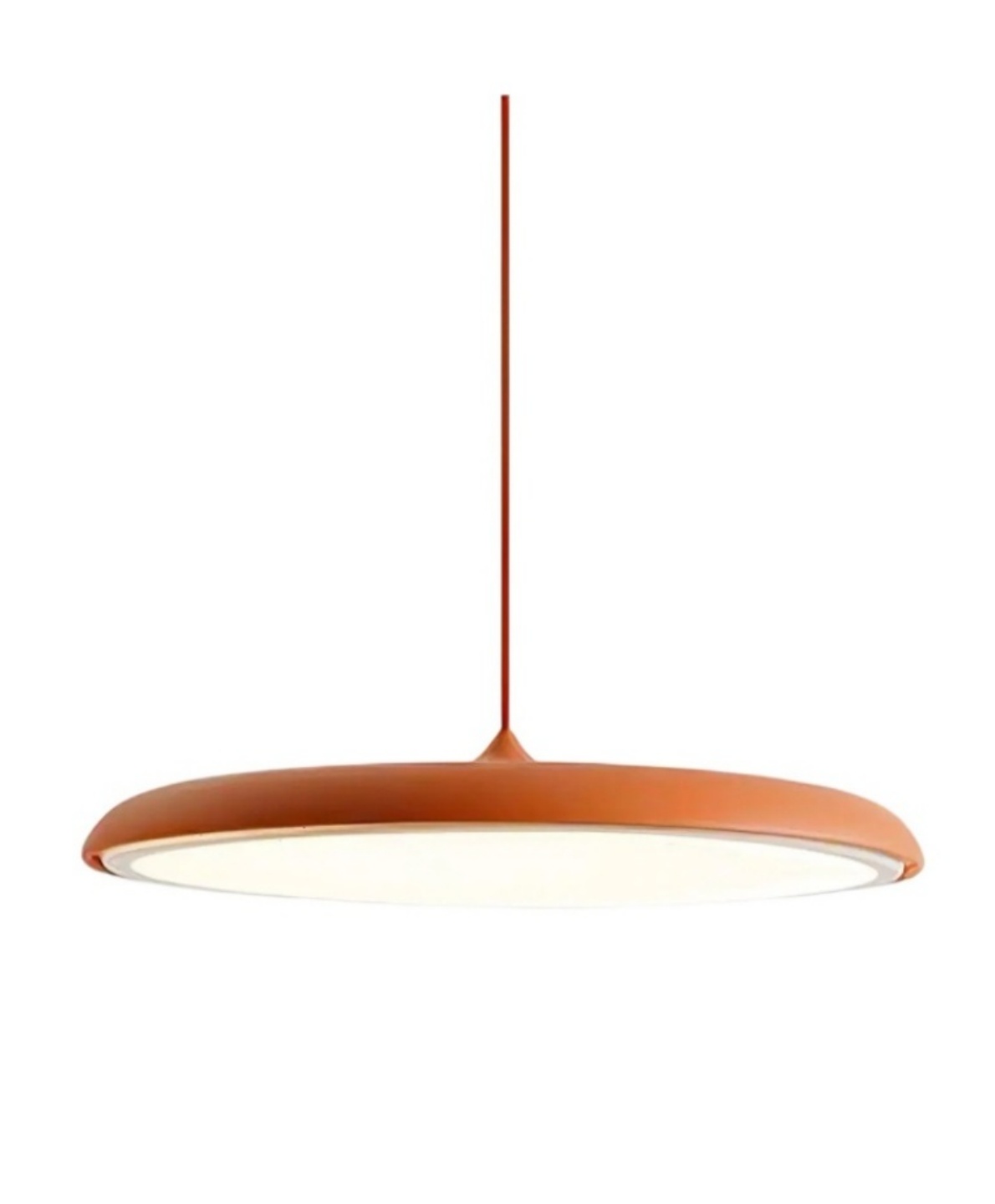
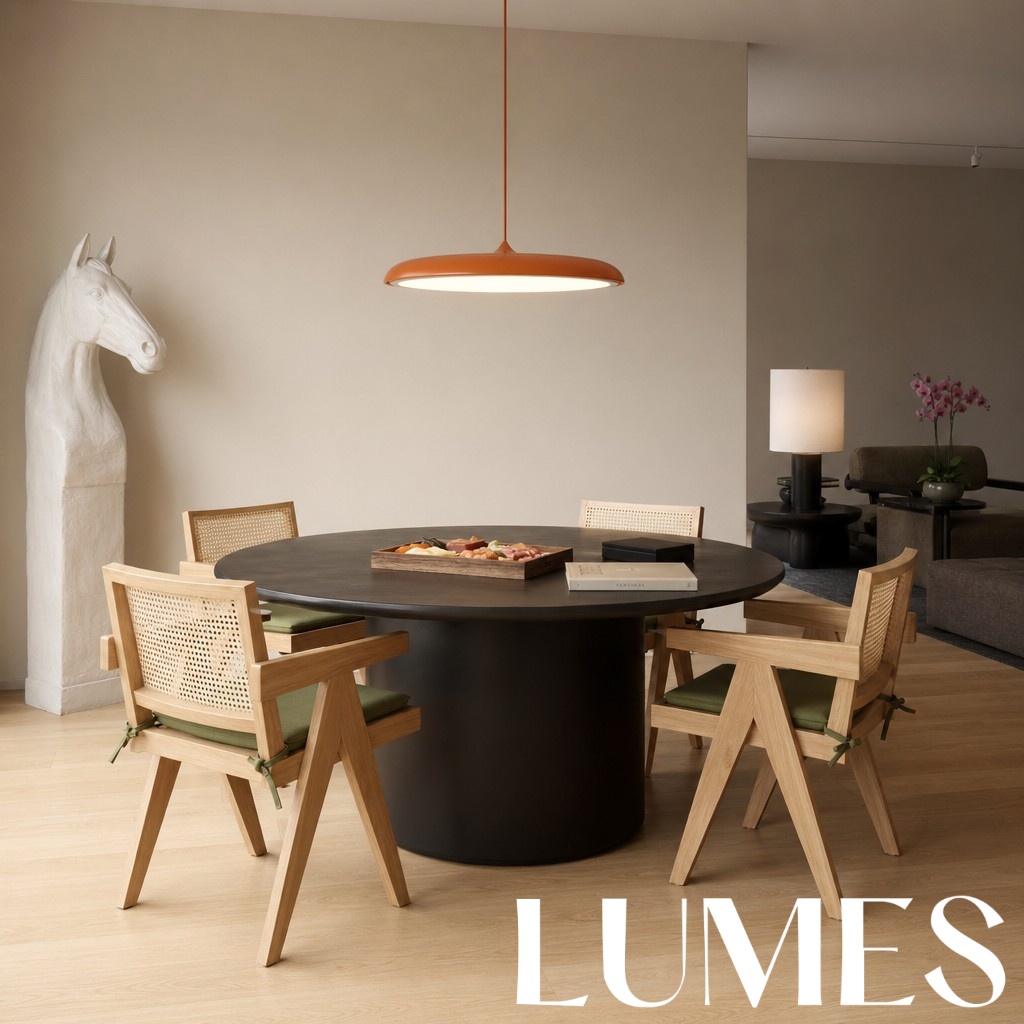
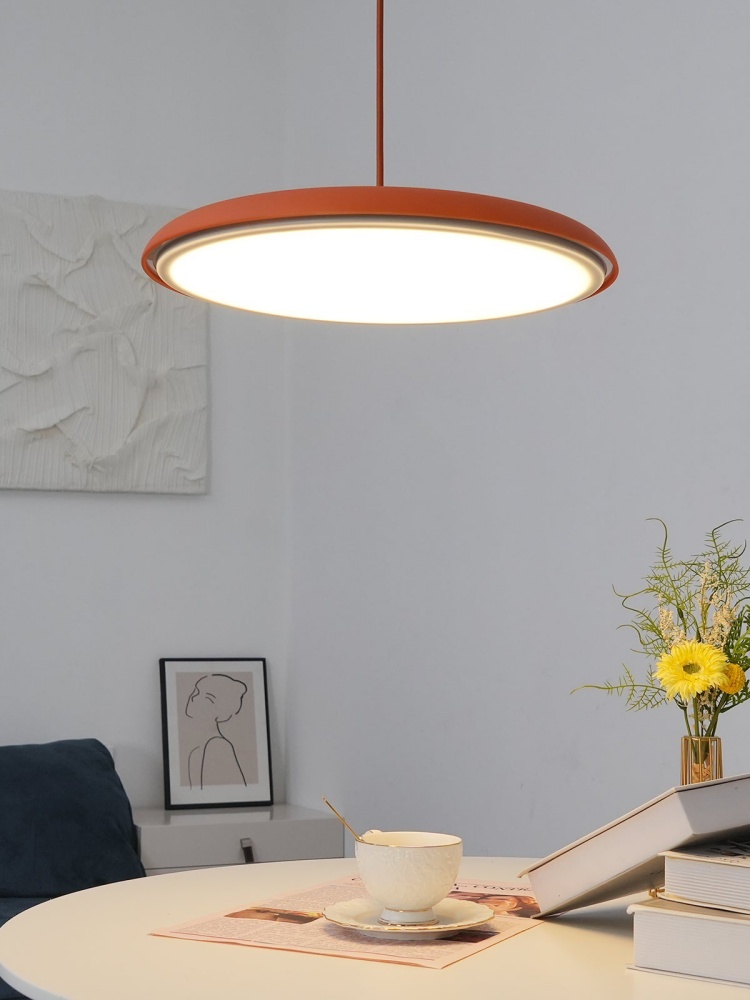
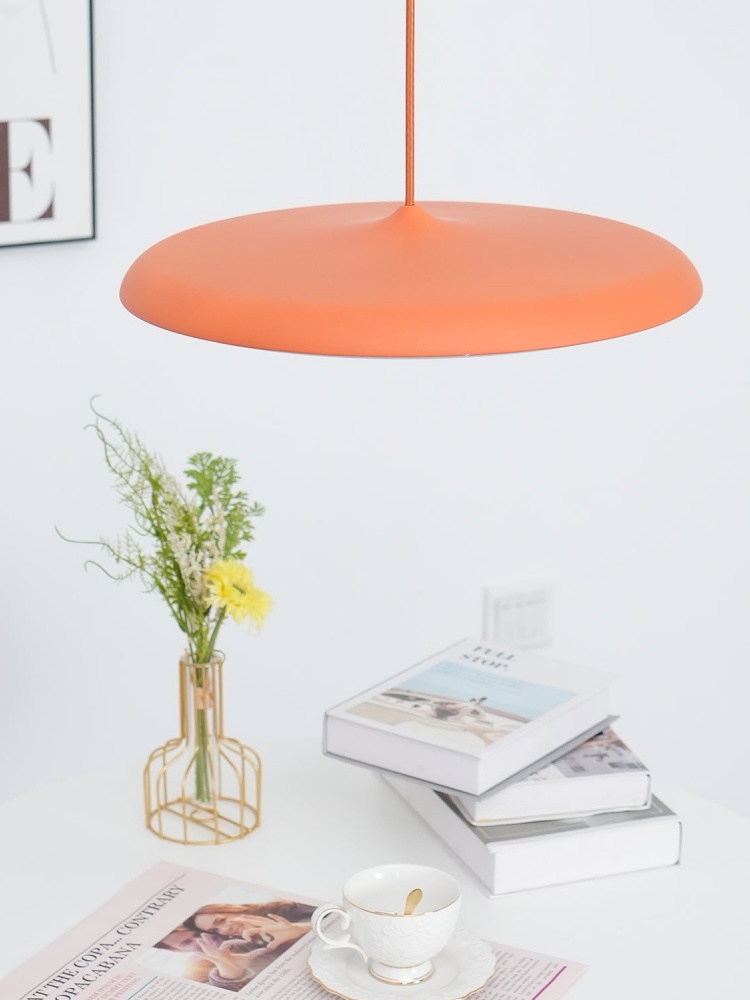
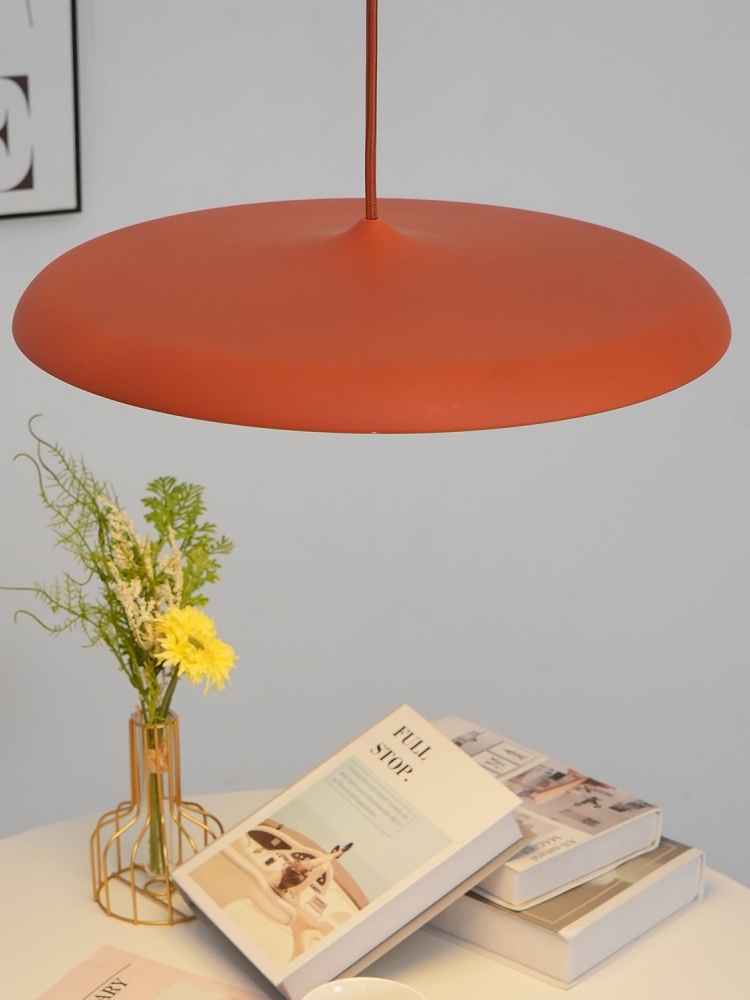
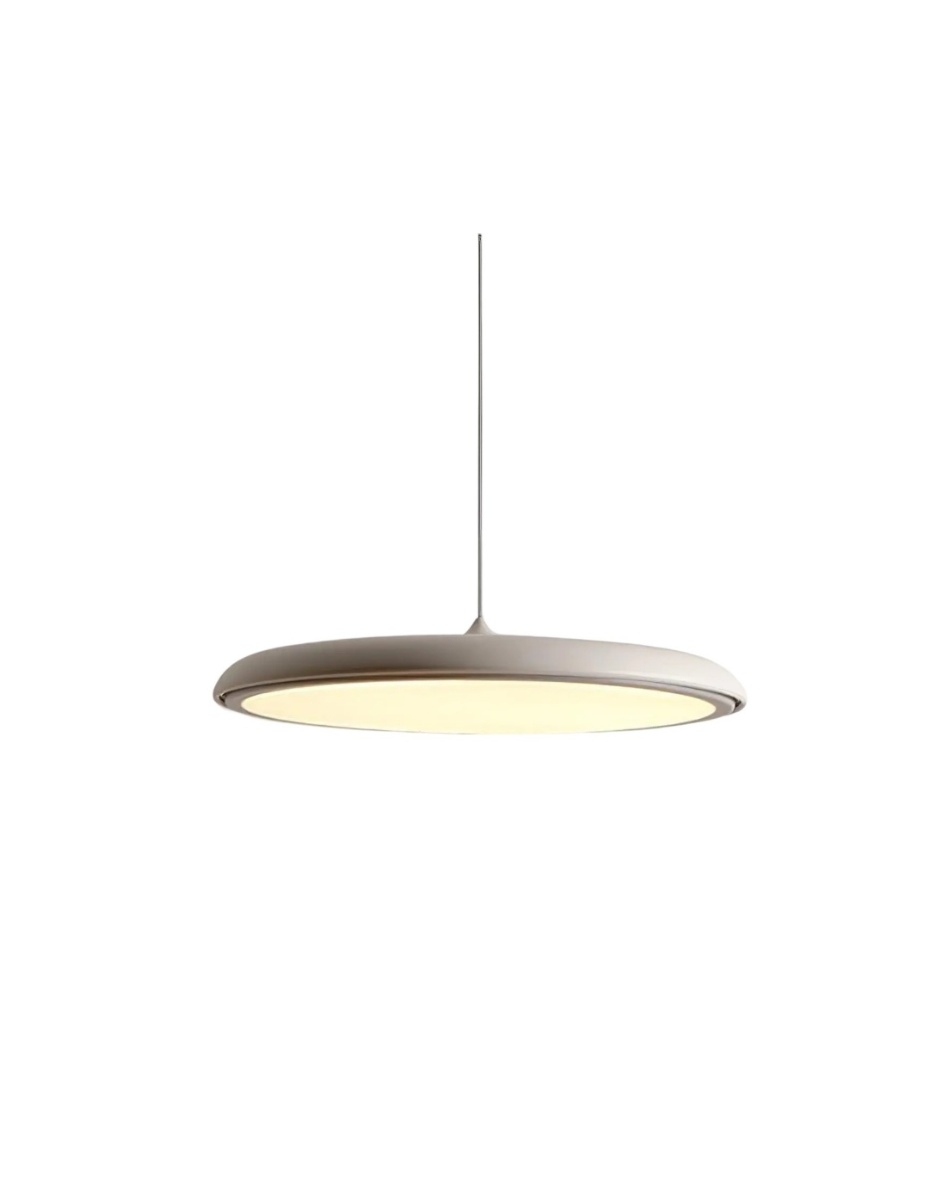
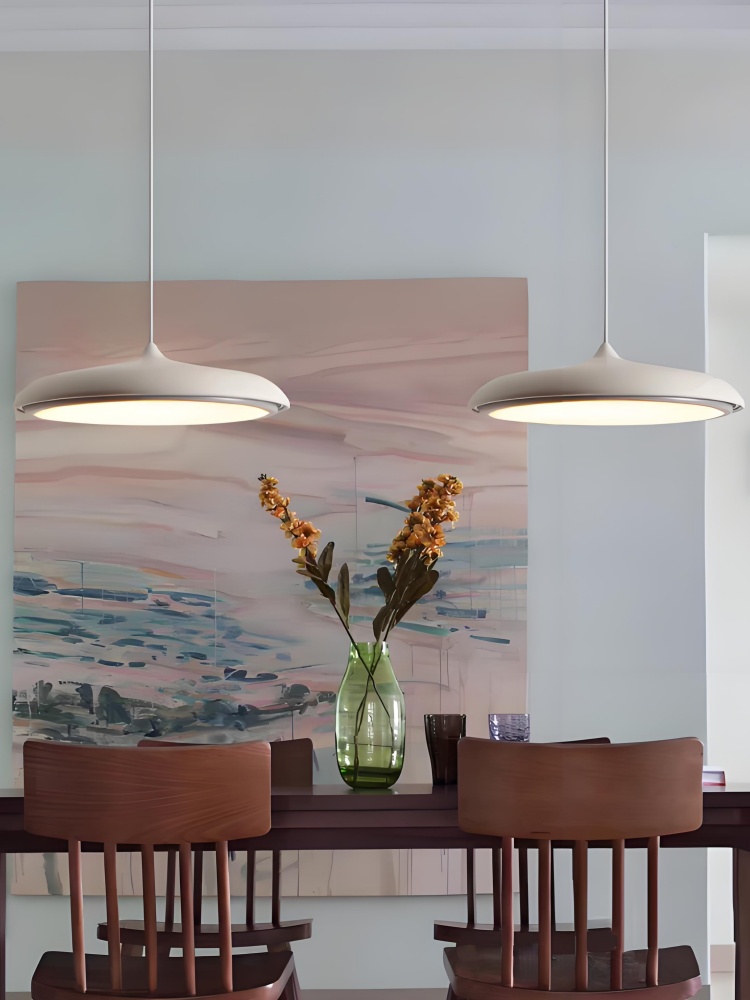
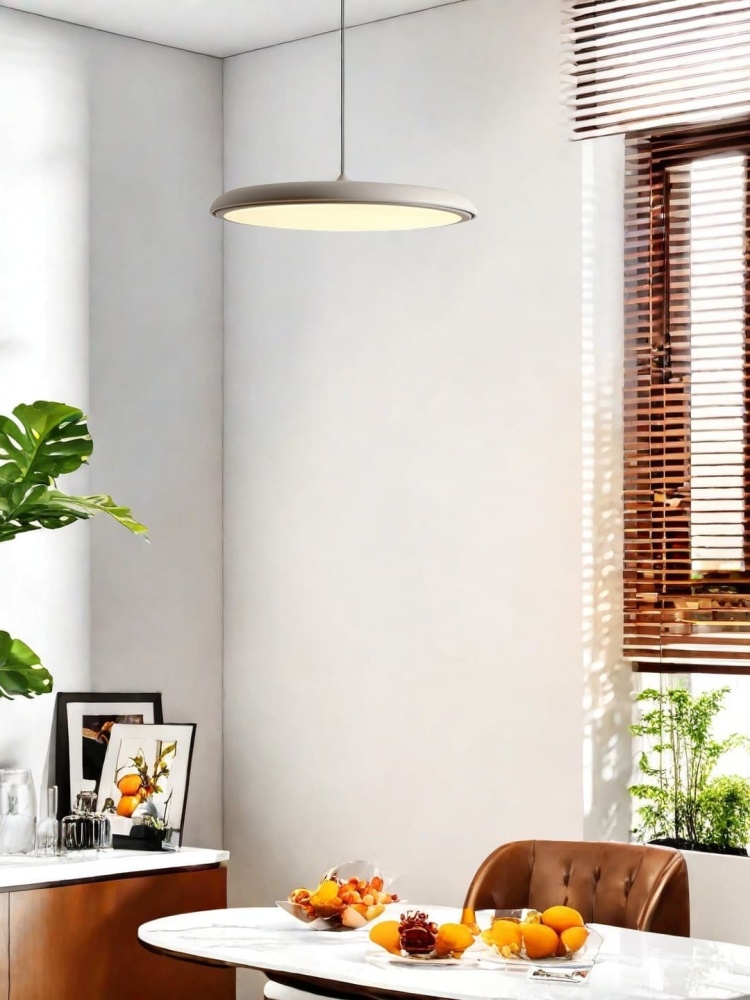
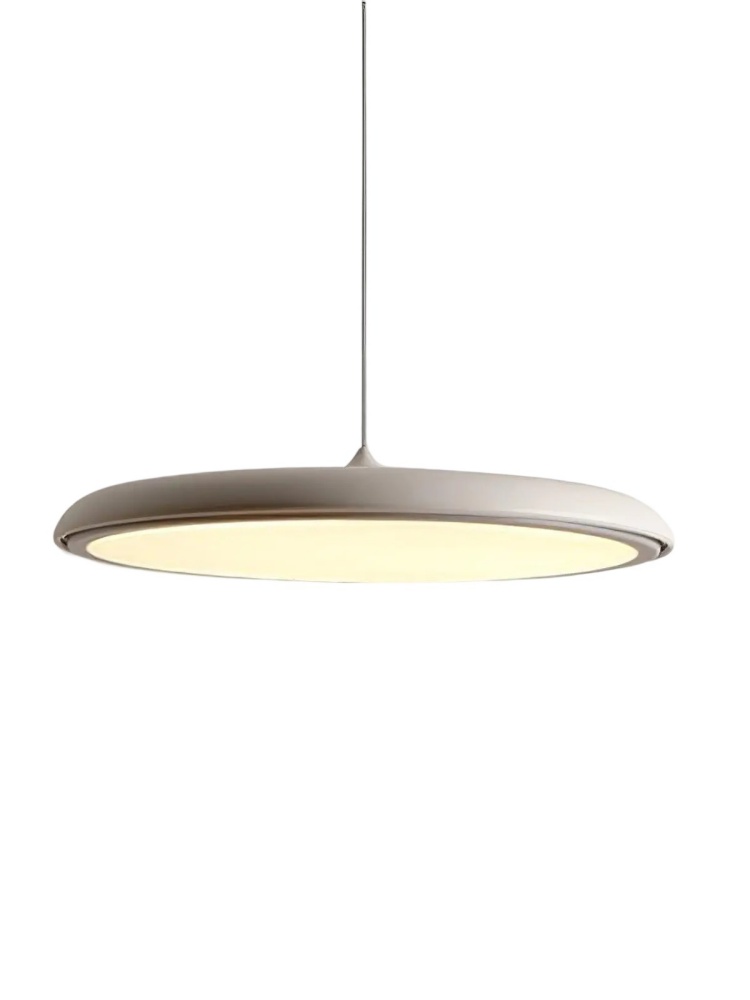
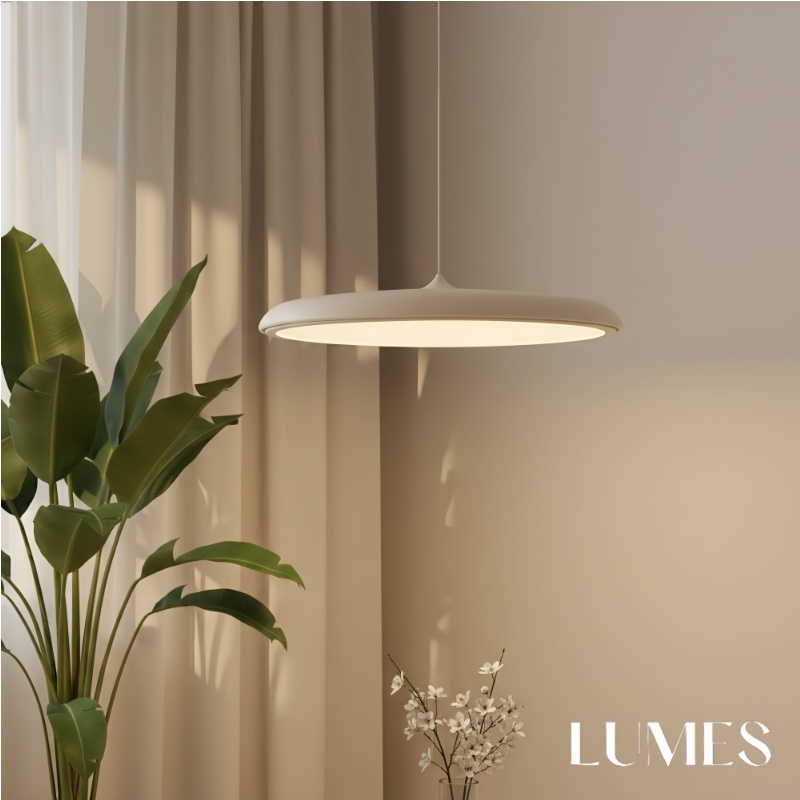
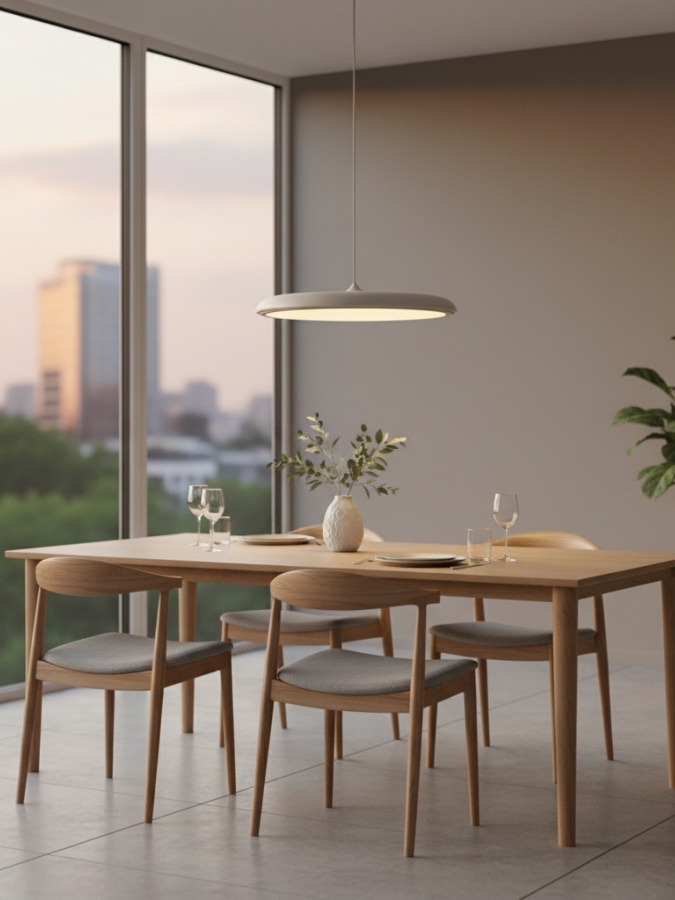
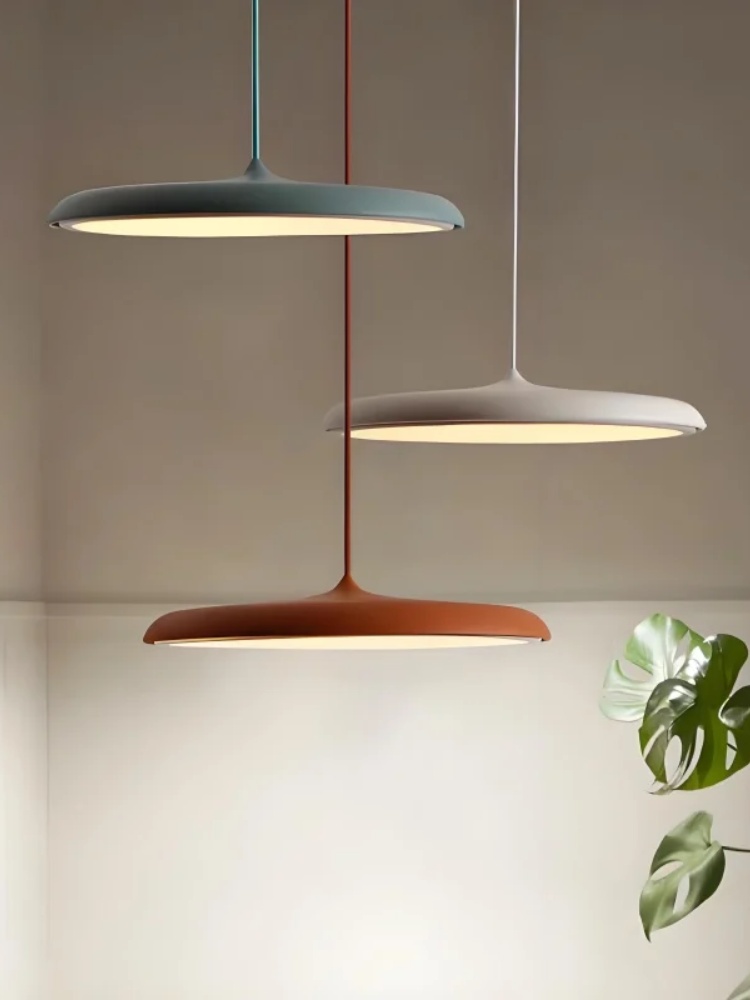
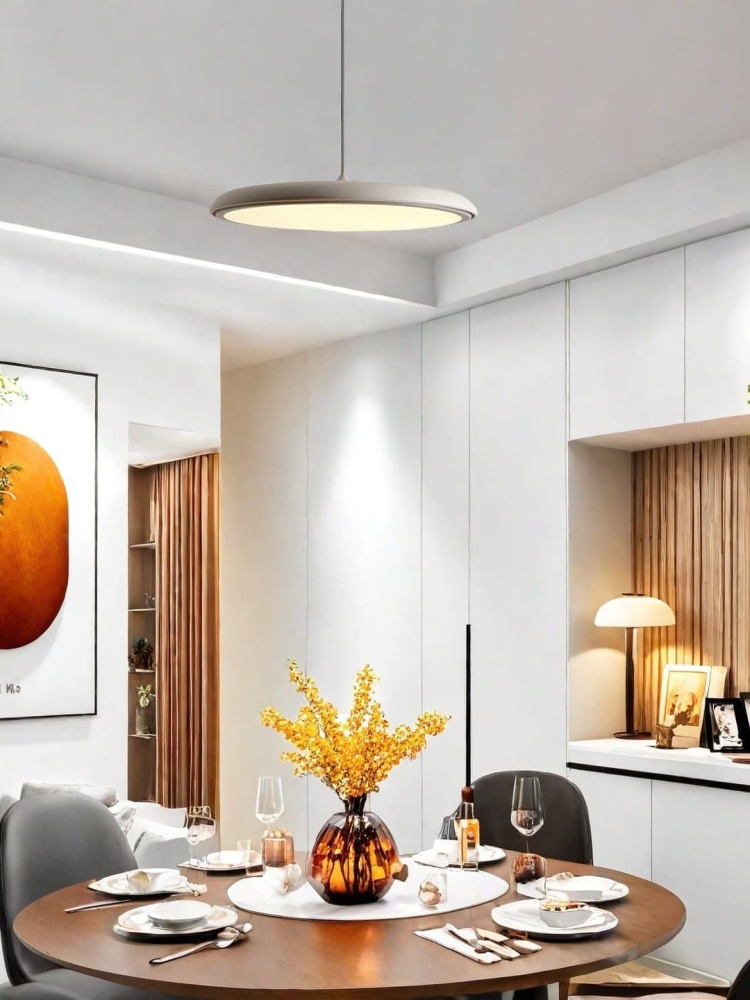
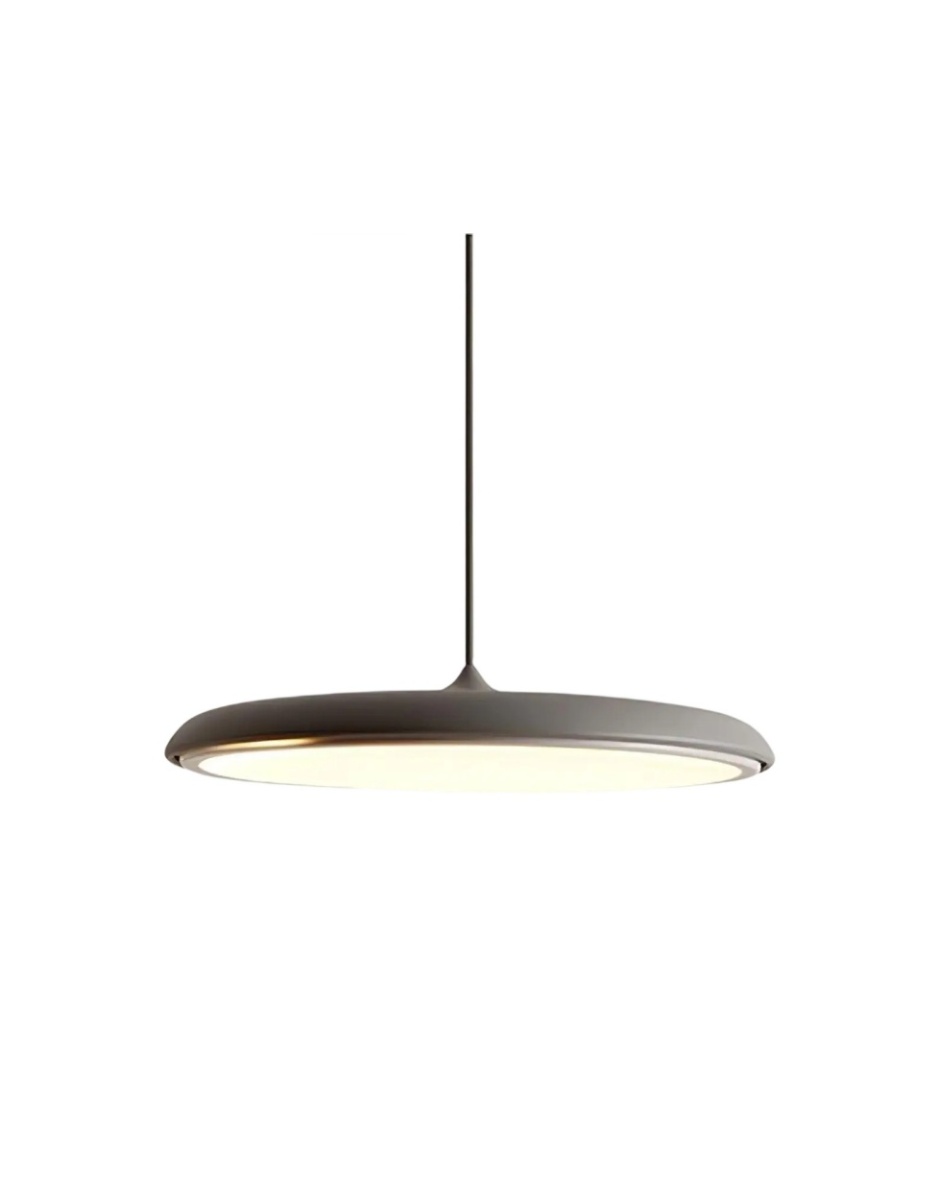
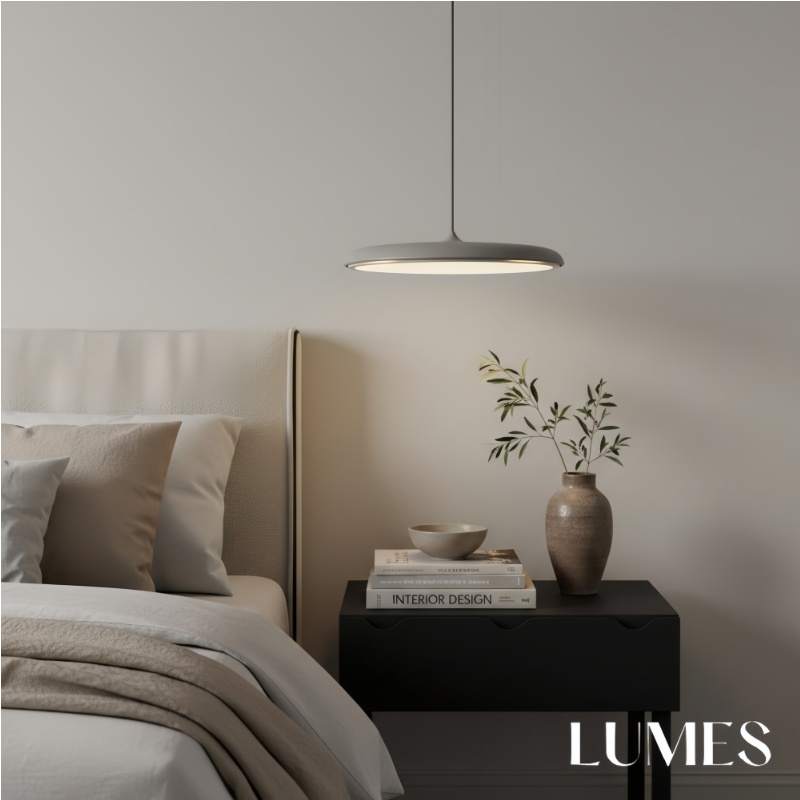
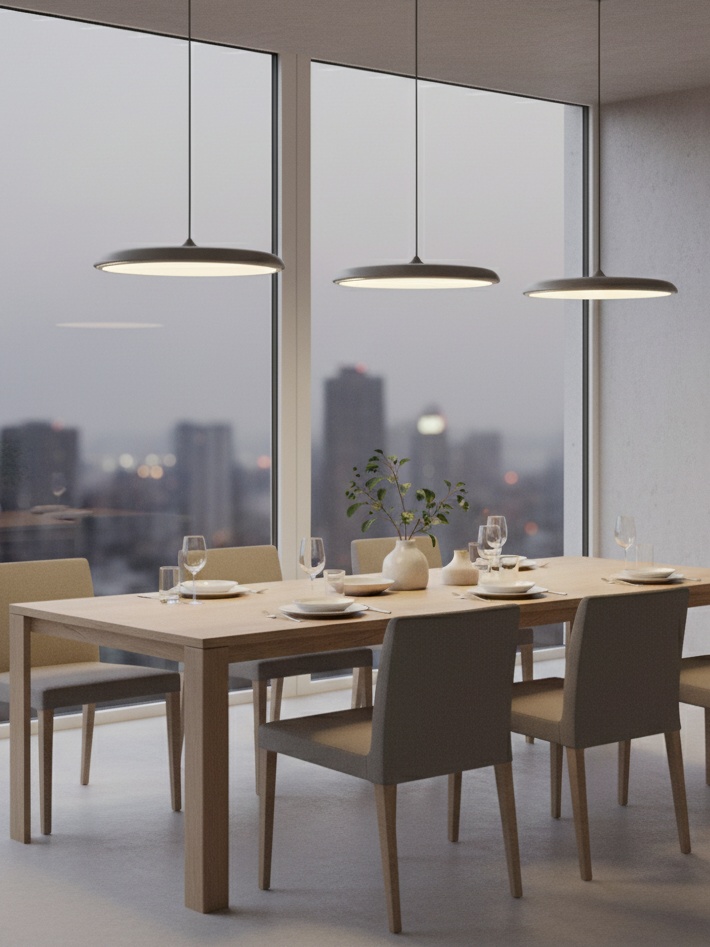
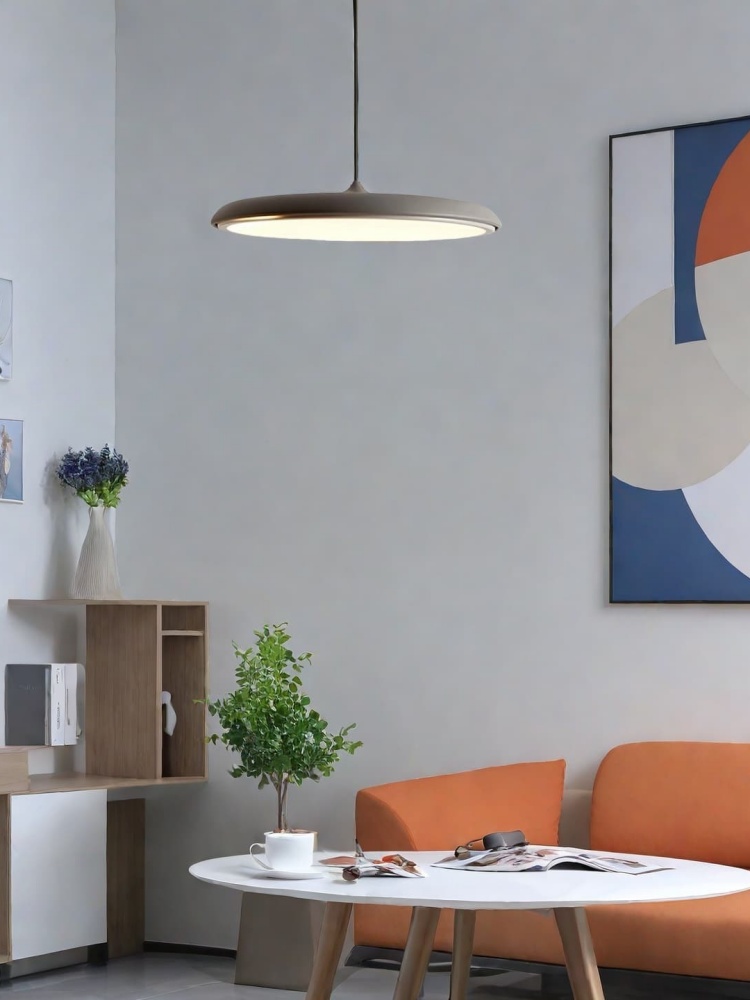
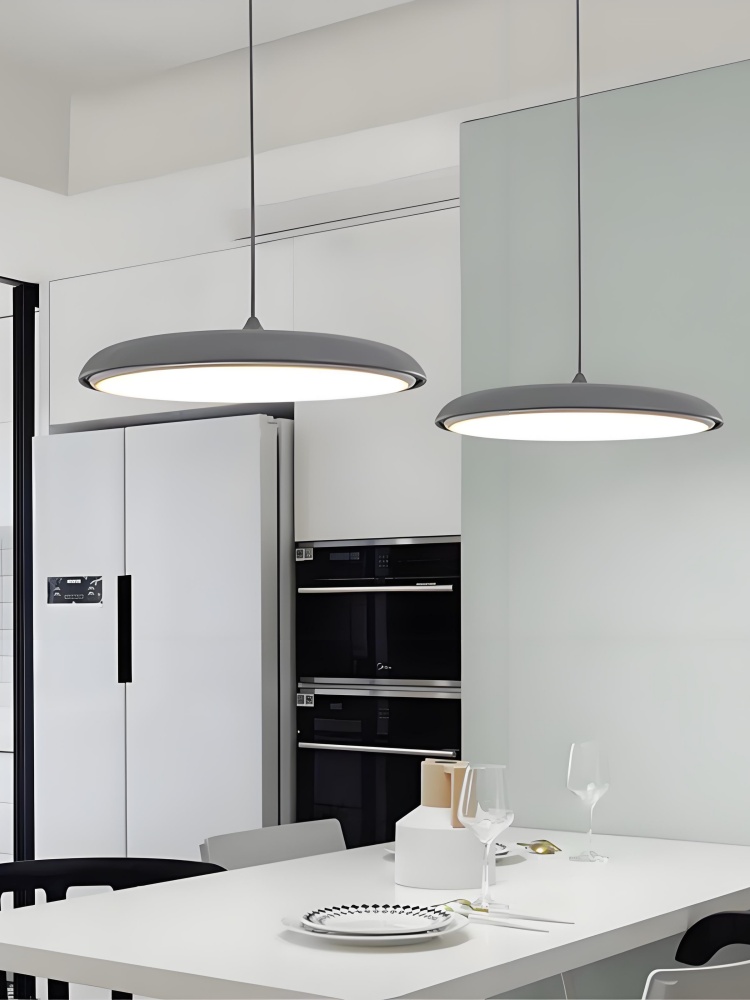
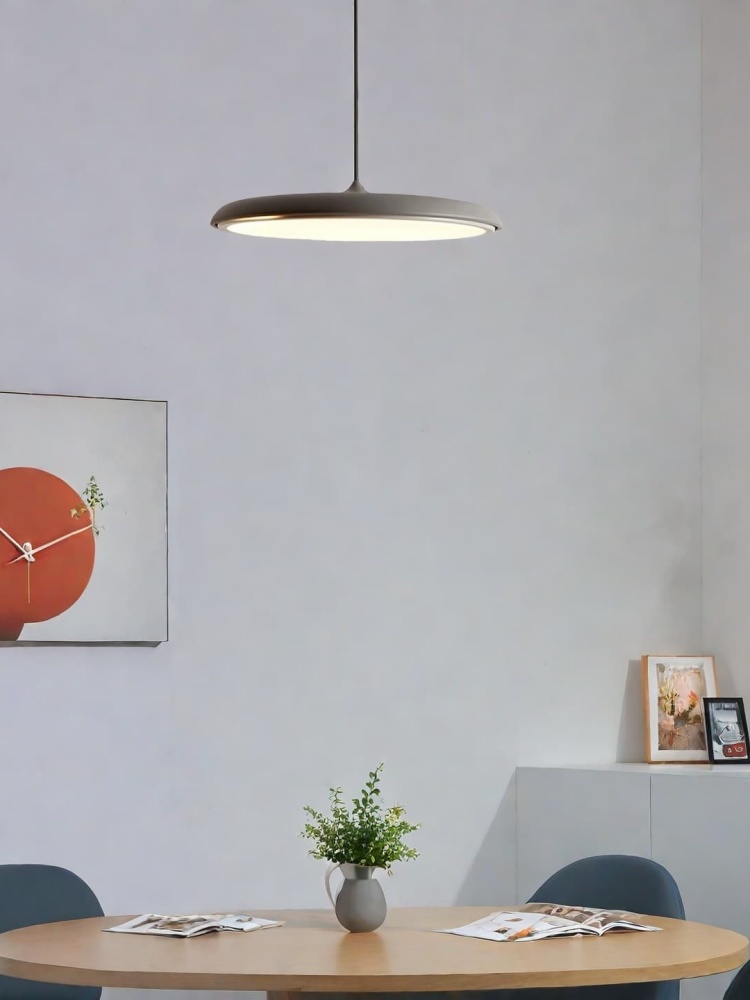
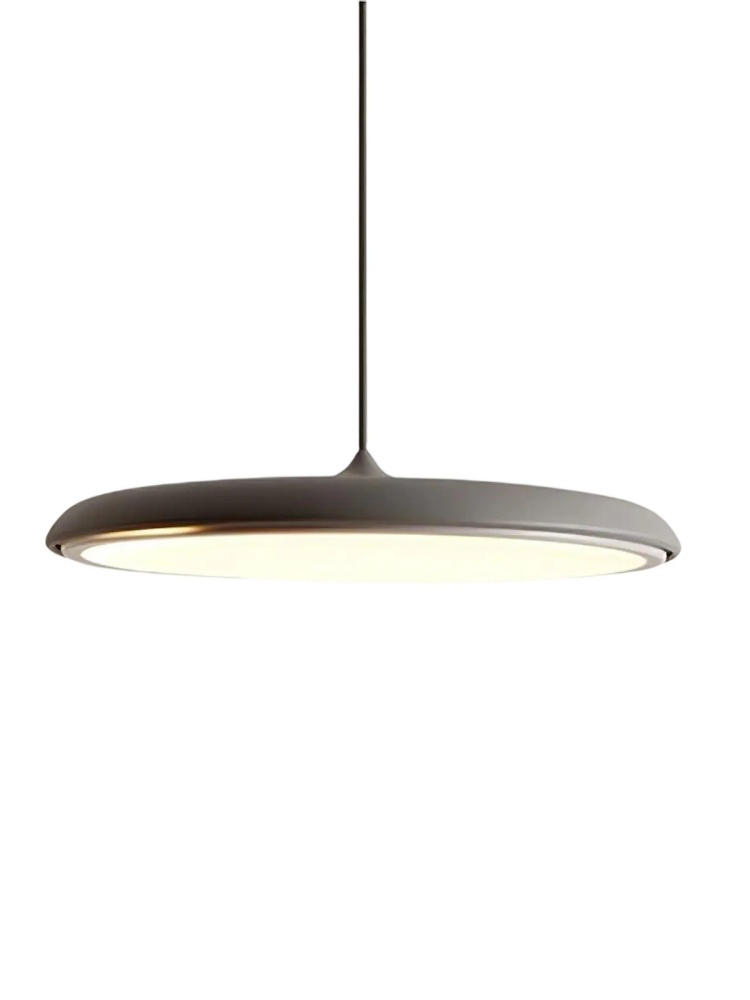
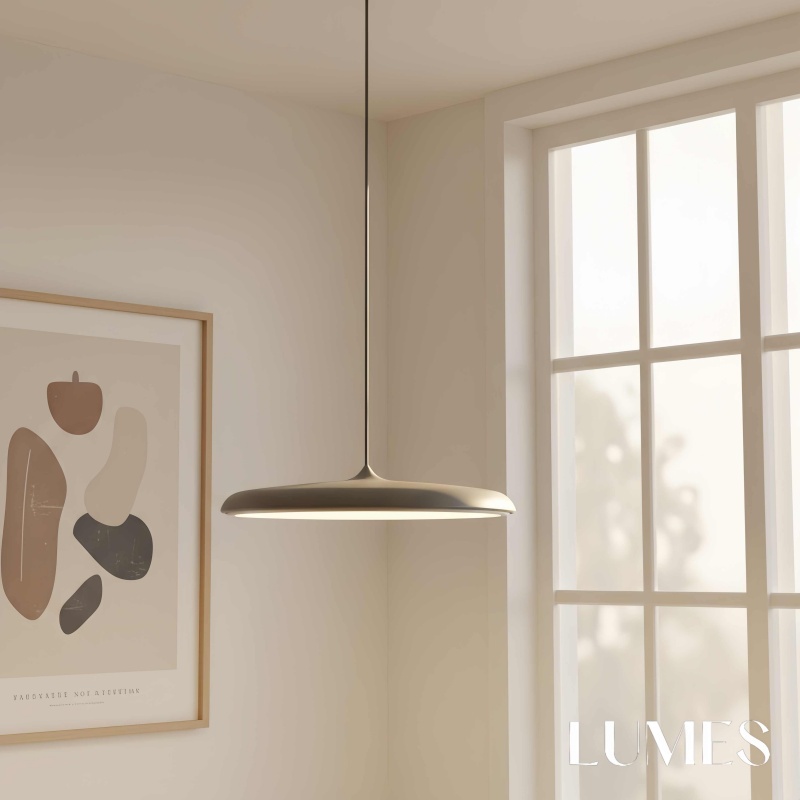
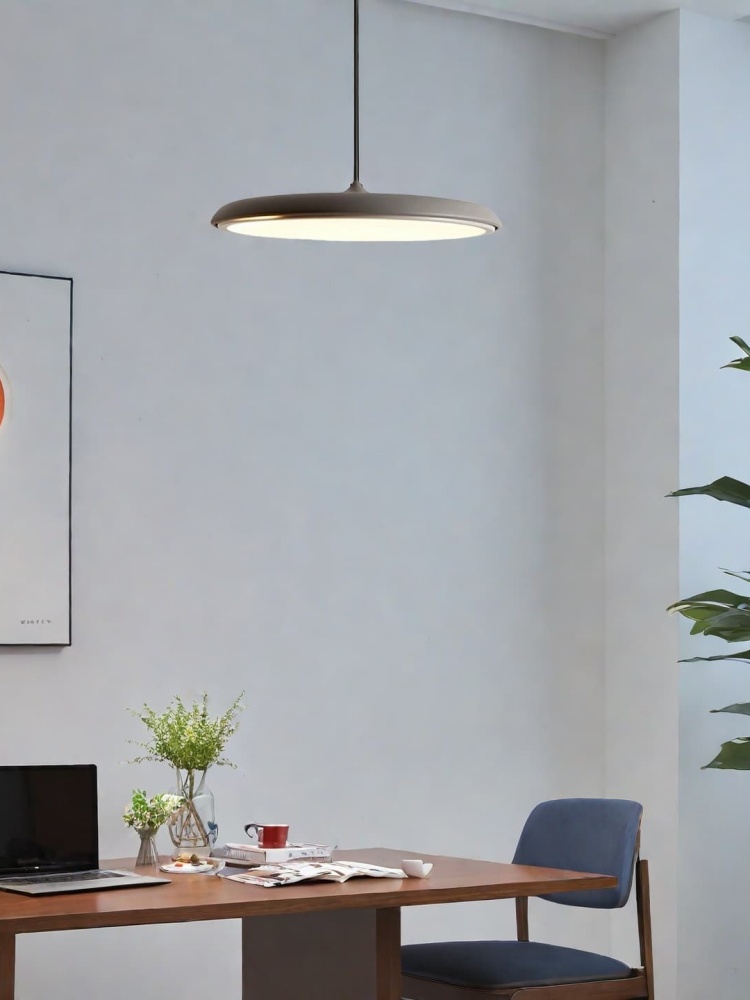
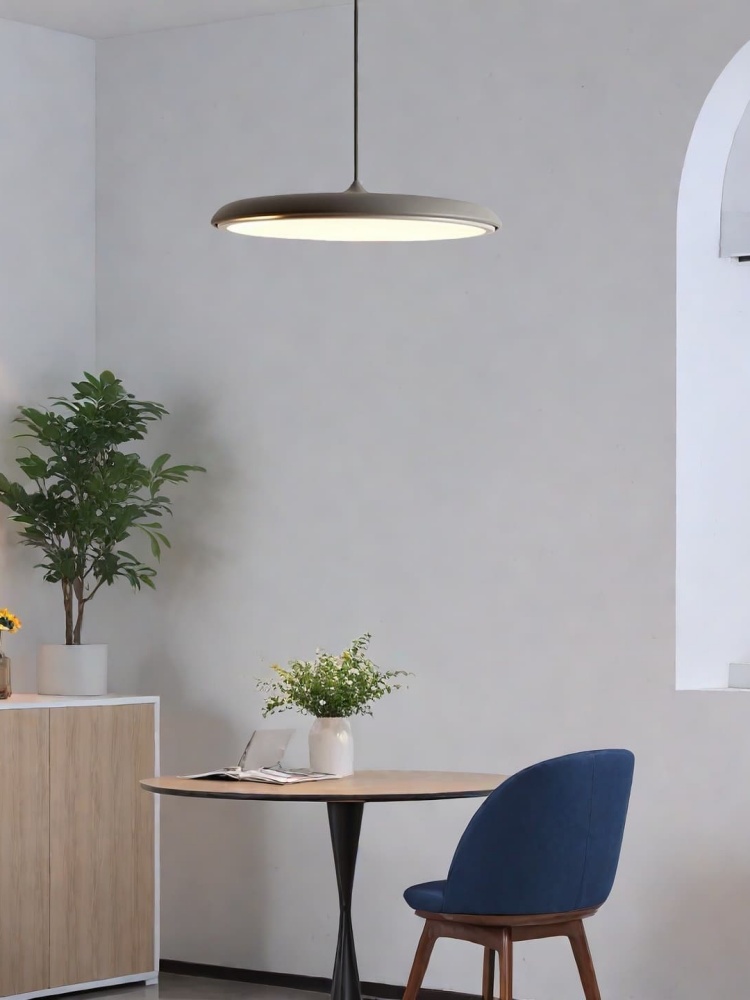
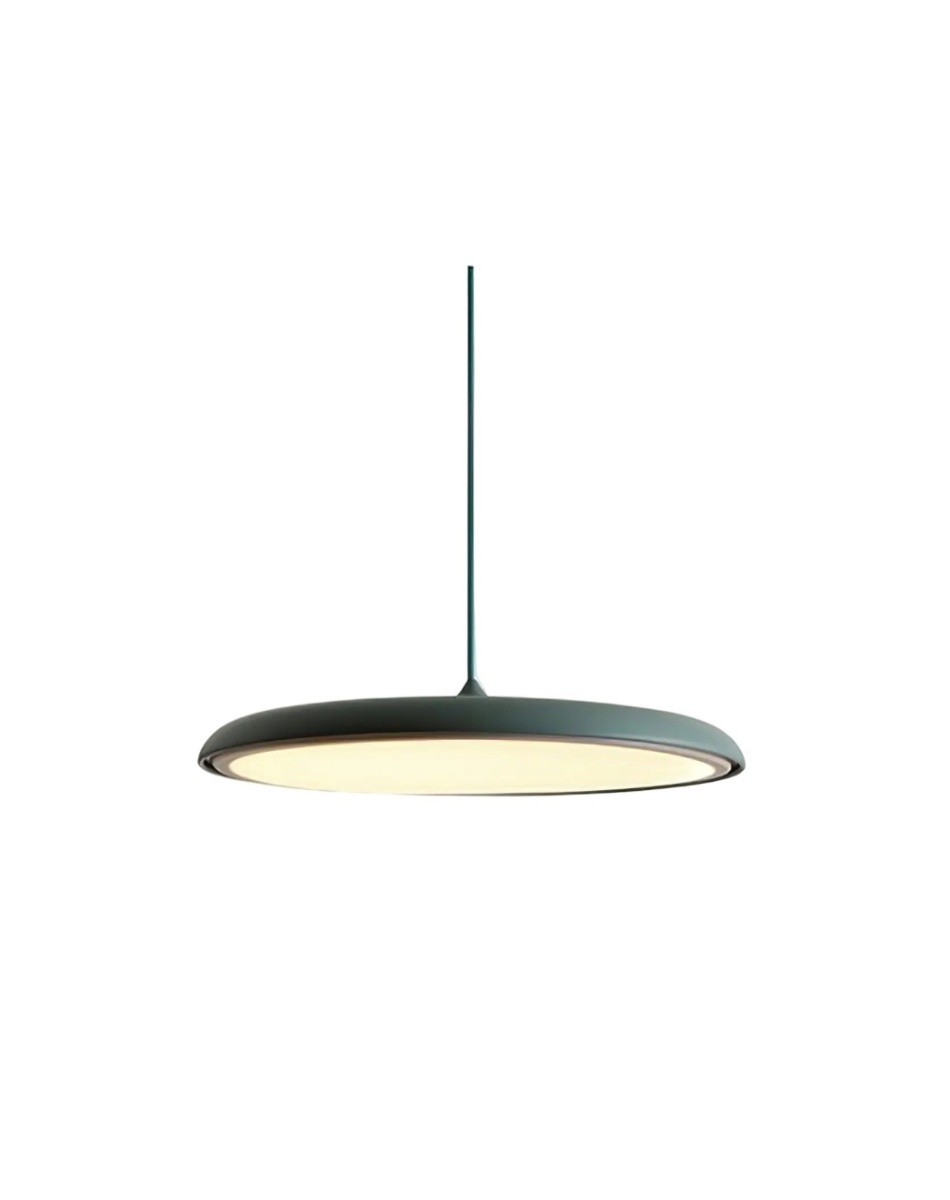
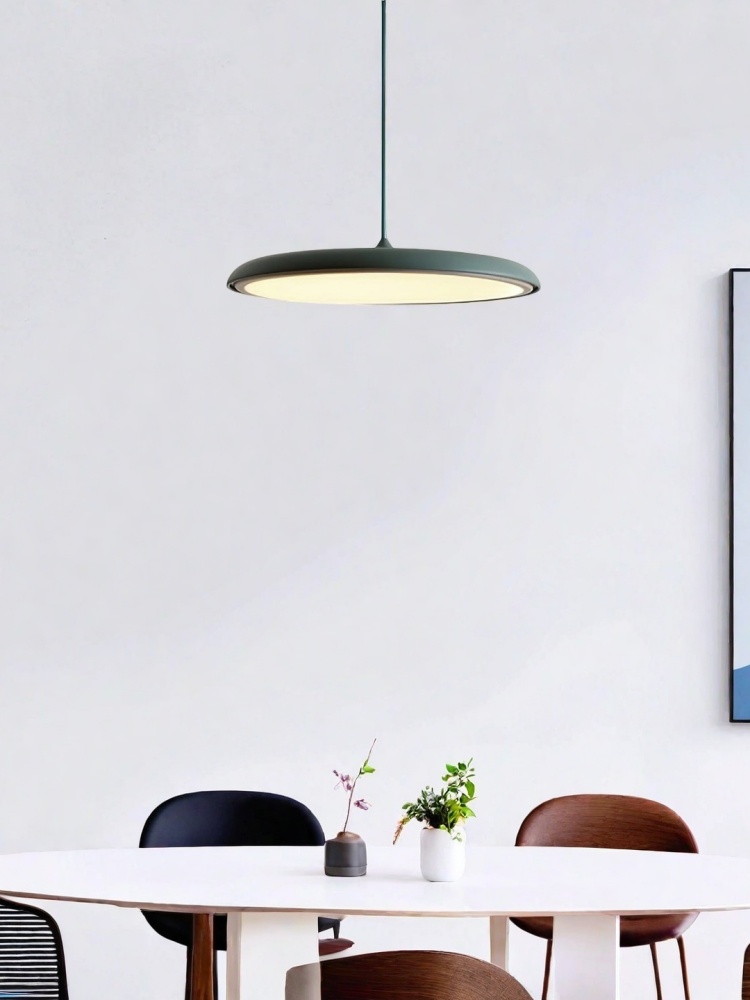
Look at the pendant from normal standing and seated positions, not only from directly underneath it. A broad, shielded design such as the Modern Design Scandinavian LED Pendant Lamp can suit an island when its diameter, light output, and drop are checked against the countertop rather than chosen from a close-up product image alone.
Choose the Number of Pendants from the Usable Island Length
Start with the usable length between the two pendant edge zones. For example, if a 210 cm island keeps 35 cm clear at each end, about 140 cm remains for the pendant arrangement. Then compare that space with the widest part of each shade and the planned centre-to-centre spacing.
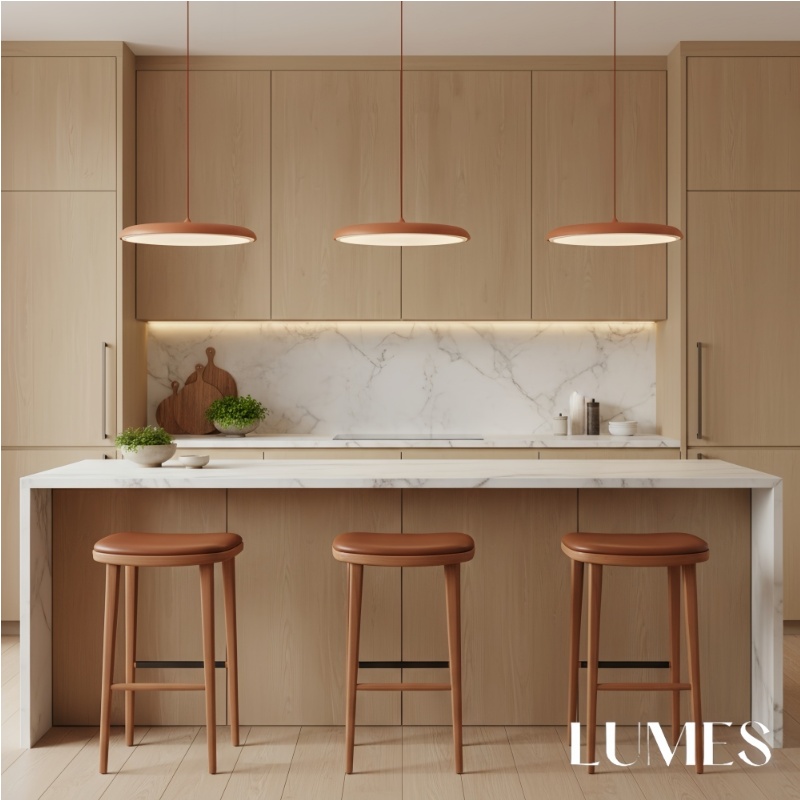
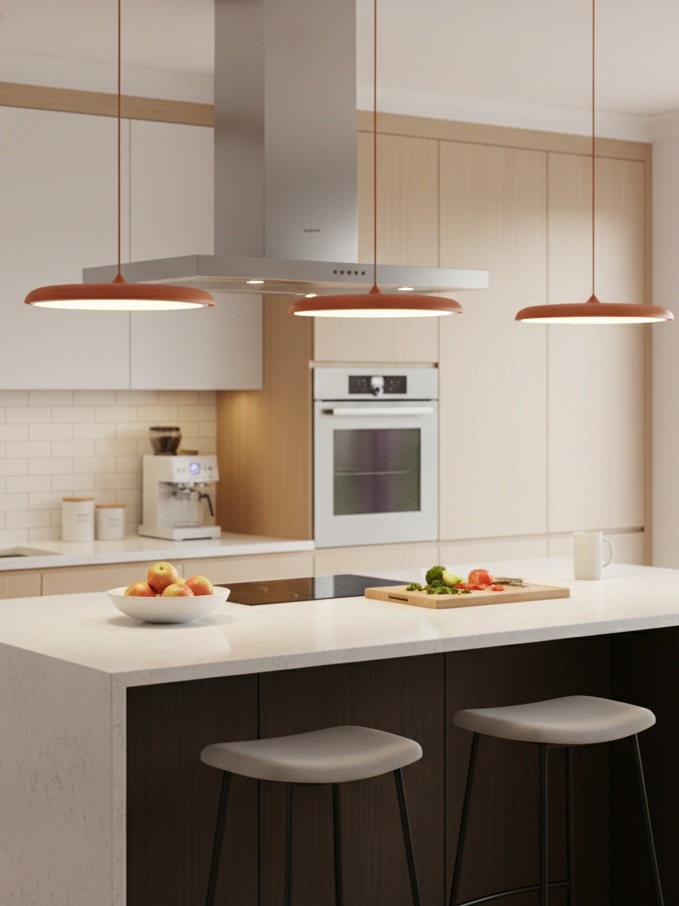
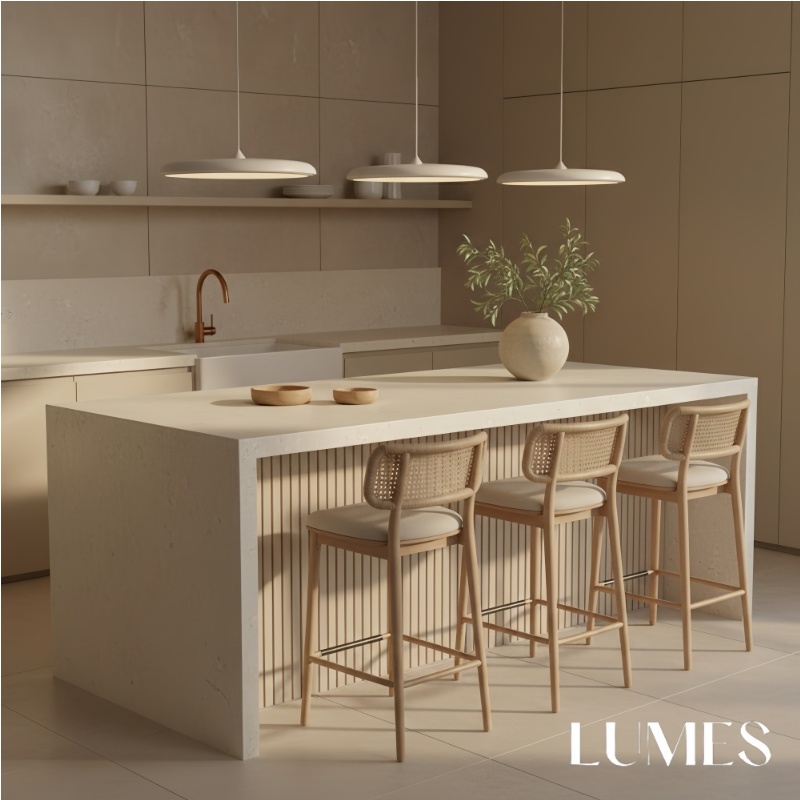
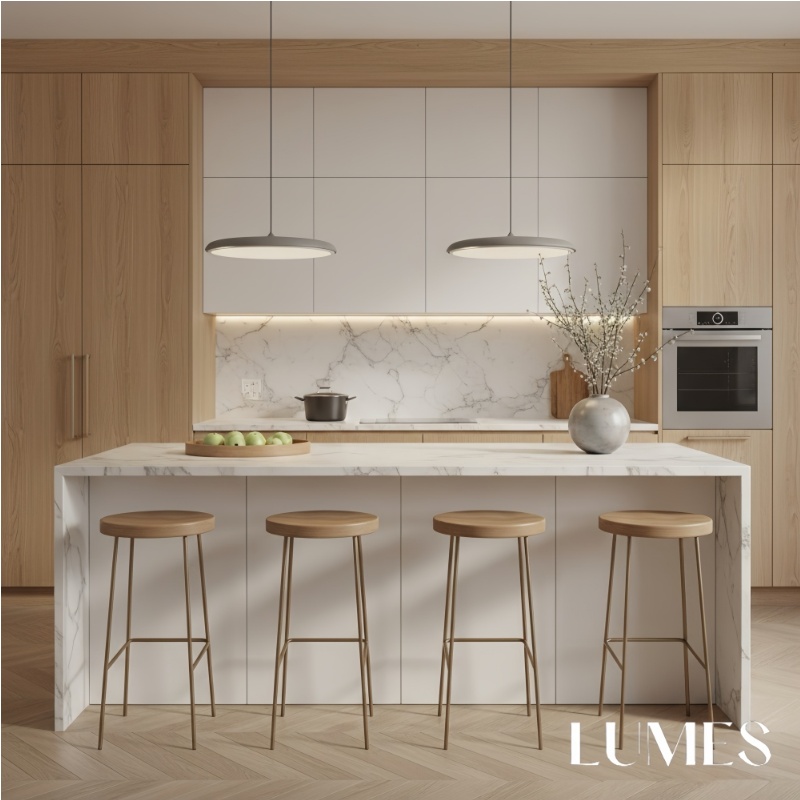
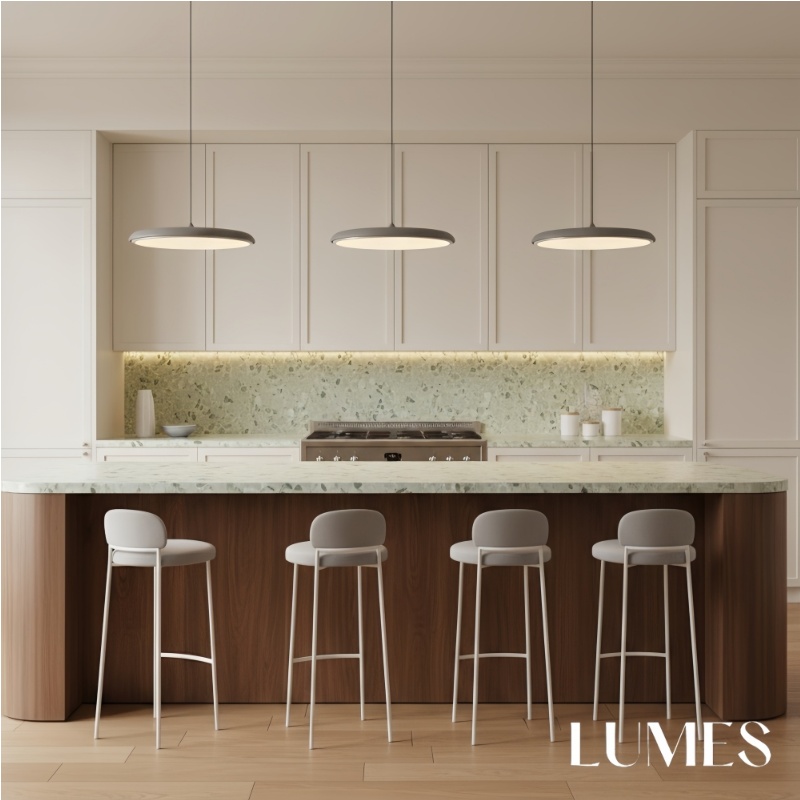
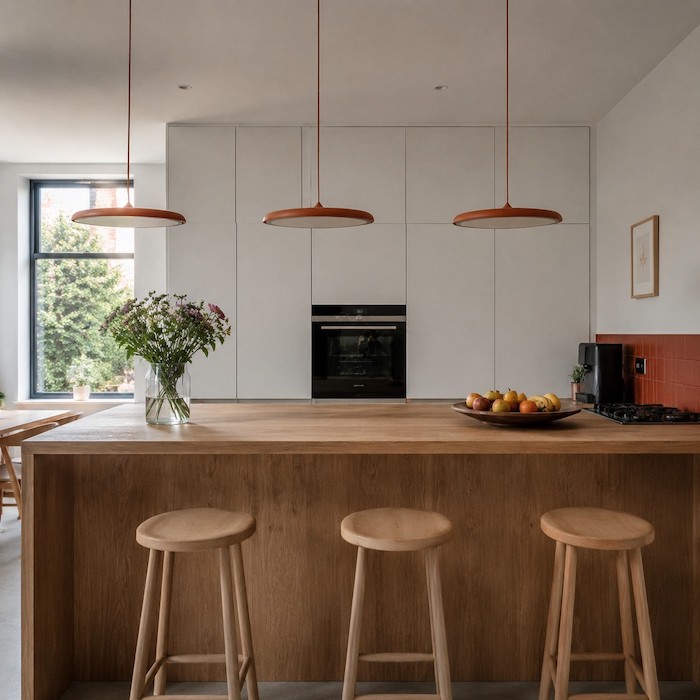
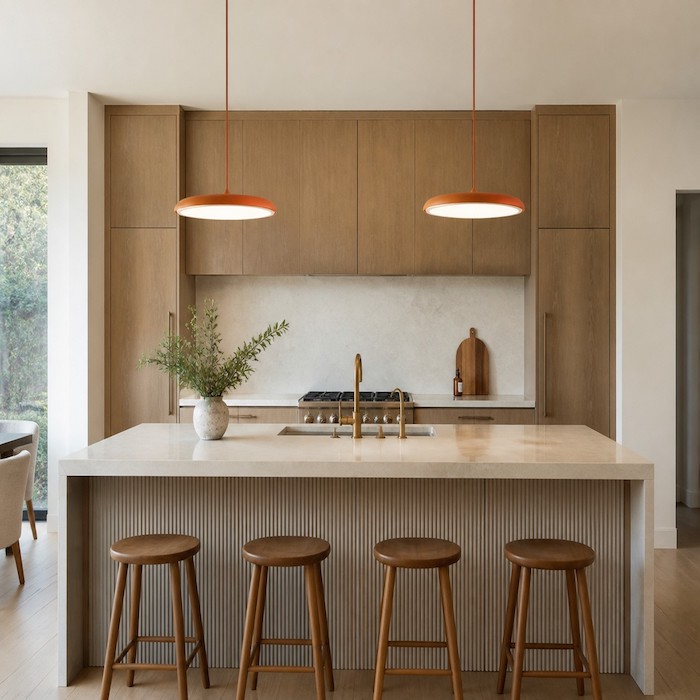
One large pendant can give a compact island a strong focal point. Two medium pendants often suit a 180 to 210 cm island without crowding the ceiling. Three medium pendants can work on islands of 240 cm or longer, provided the shades remain inside the island edges and the light reaches the full work surface. The familiar rule of three is a visual option, not a requirement.
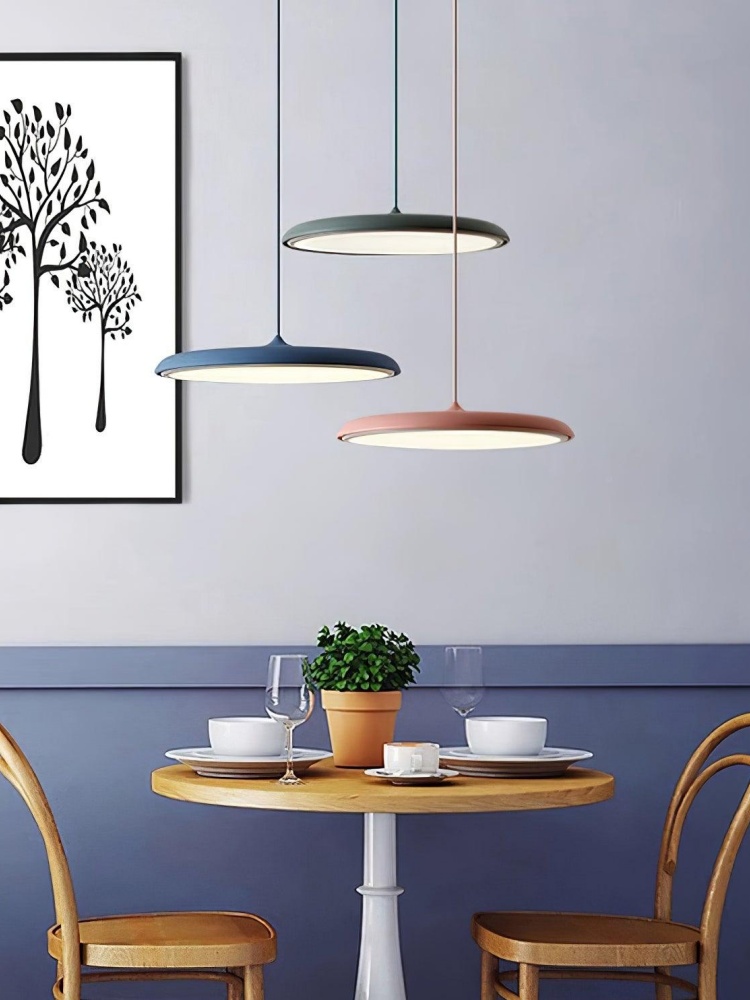
If you are comparing repeated fixtures with larger statement shapes, 10 Pendant Lighting Trends Designers Are Using Right Now offers useful context for deciding whether the kitchen needs rhythm or one clear focal point.
Match the Shade to the Kitchen's Materials
A kitchen already contains many hard surfaces: stone, stainless steel, glass, tile, and straight cabinet lines. Pendant lights can soften that setting through a matte finish, a rounded silhouette, or a restrained colour that relates to the room without matching every finish exactly.
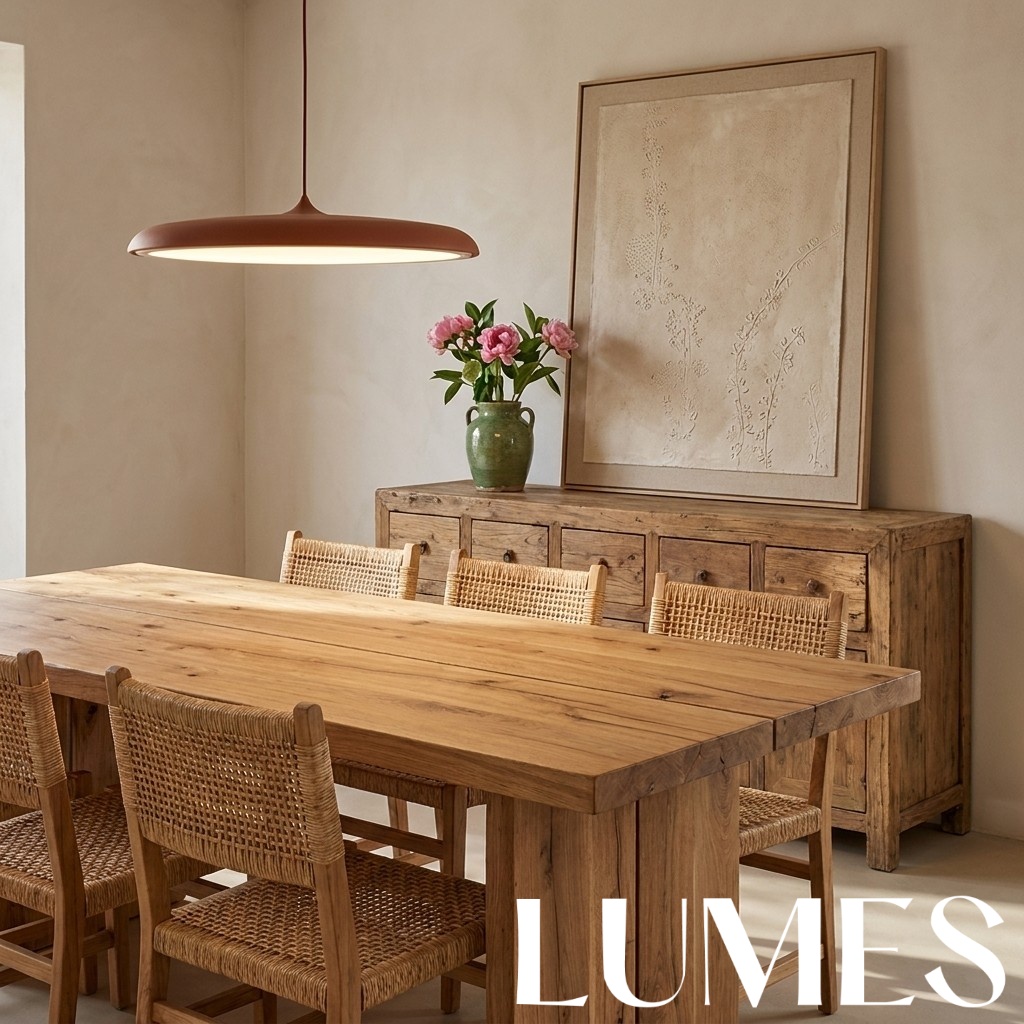
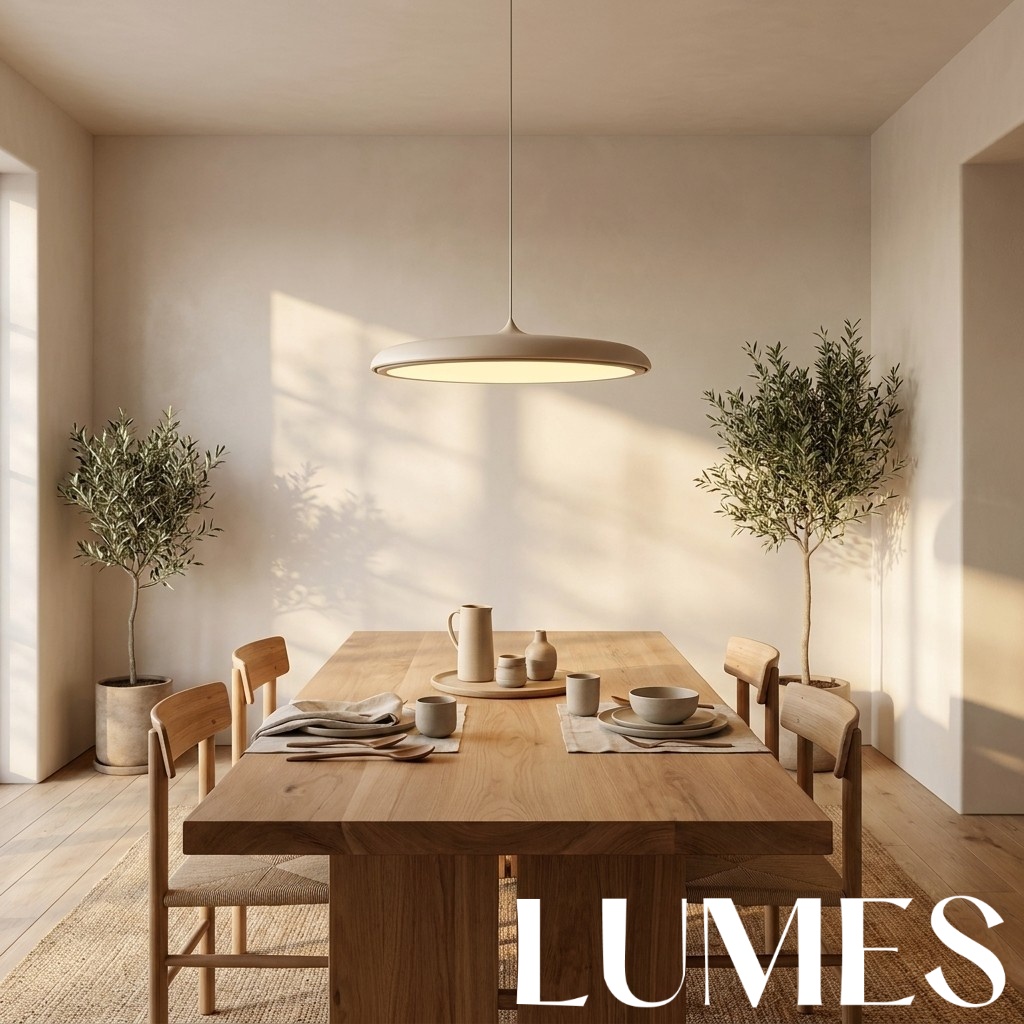
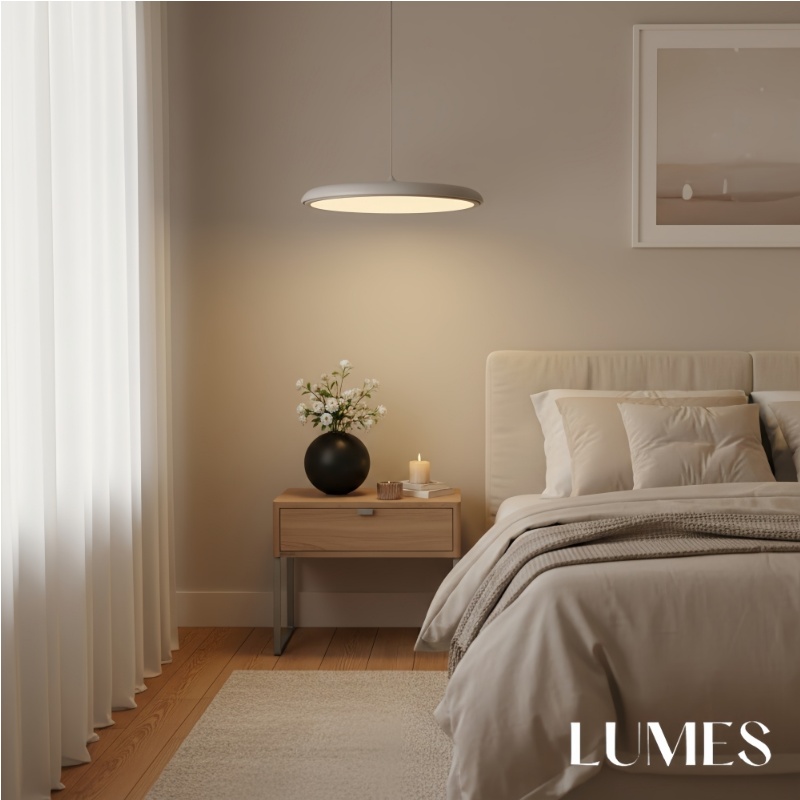
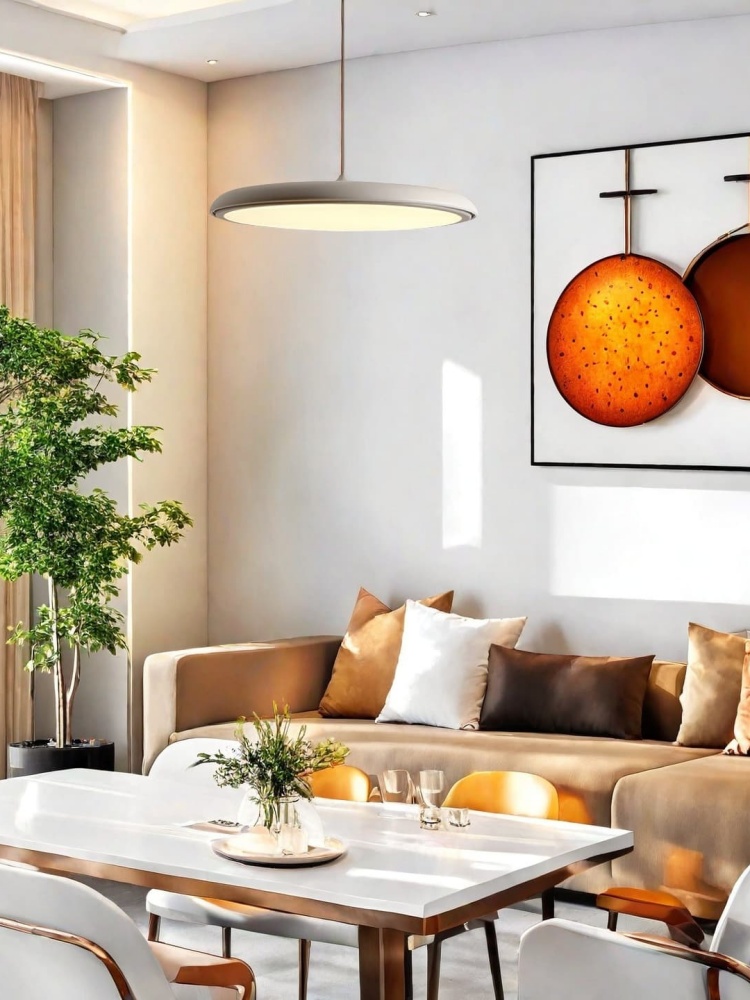
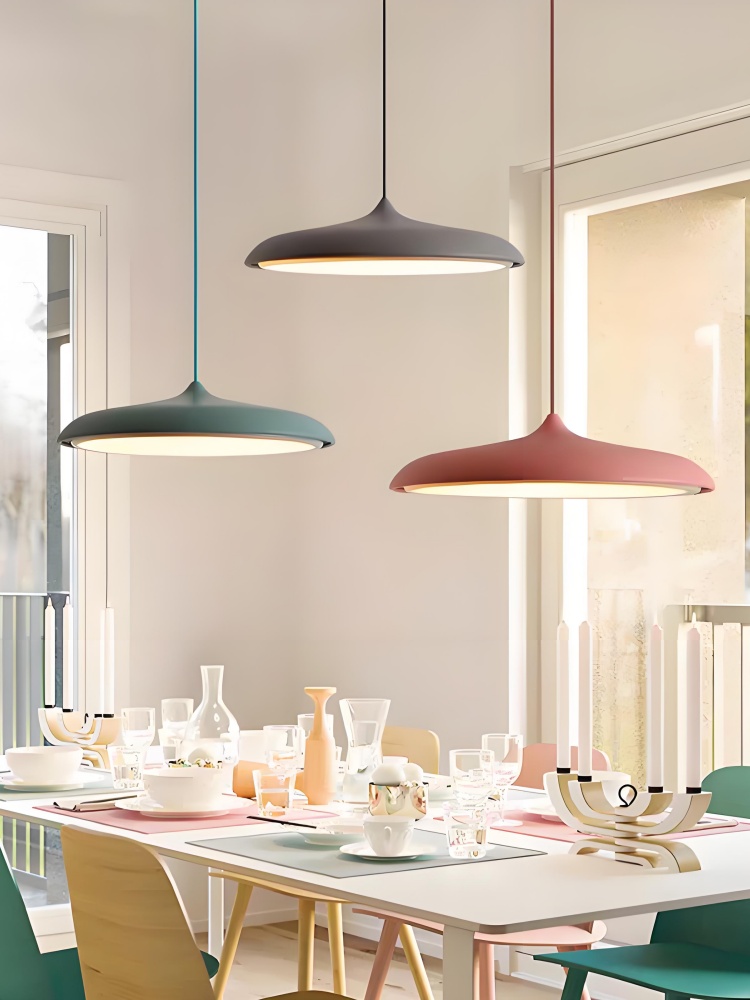
Scale matters as much as colour. A slim disc can look visually light even when its diameter is generous, while a deep dome may dominate the same island. Judge the fixture from the doorway and the adjacent dining area as well as from the worktop. For a broader discussion of how shape and finish affect the room, read Creating Designer-Looking Interiors Starts with the Right Pendant Light.
When reviewing the featured pendant, note that the current product information describes metal and acrylic construction. Compare the exact finish and size option with cabinet hardware, taps, and the island surface before ordering.
Set the Hanging Height and Check the Controls
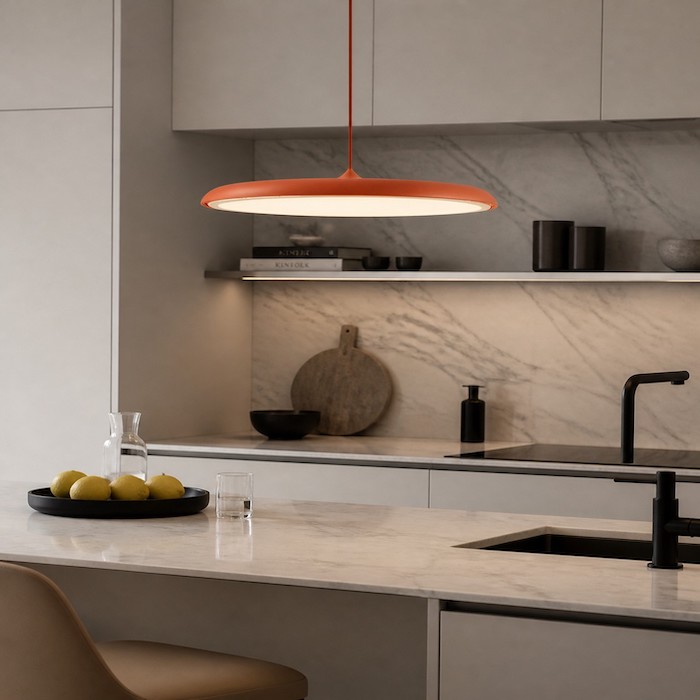
A practical starting point is 75 to 90 cm (30 to 36 in) from the countertop to the bottom of the shade. Raise the pendant if it interrupts conversation or views across the island. Lower it only when the light feels weak at the work surface and the shade still stays safely above normal sightlines.
For a very high ceiling, do not assume the pendant should sit higher above the counter. The counter-to-shade relationship still matters most; the extra ceiling height is usually handled by a longer cable or rod. On sloped ceilings, confirm that the canopy and suspension system are designed for the angle.
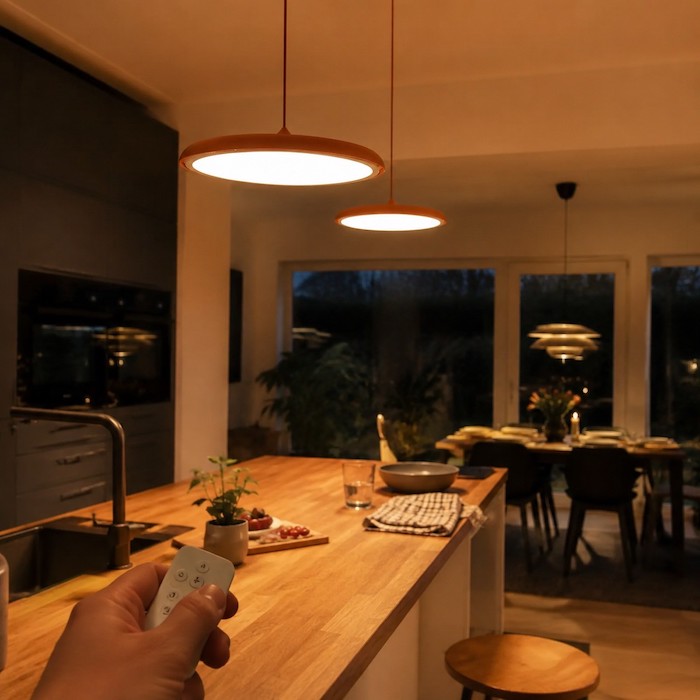
Dimming can make one fixture useful for both food preparation and evening dining, but compatibility varies. Before choosing the pendant's size and control option, confirm the selected variant, driver, wall switch, installation requirements, and whether a controller is included. Do not assume every integrated LED version works with every dimmer.
Avoid These Common Kitchen Island Lighting Mistakes
- Confusing walkway clearance with pendant spacing: Measure circulation on the floor and pendant placement across the countertop. They solve different problems.
- Centred fixtures over an off-centre feature: Align the arrangement to the island's usable countertop, not automatically to a sink or hob that sits to one side.
- Measuring between shade edges: For repeated pendants, record centre-to-centre spacing so the installer can transfer the layout accurately to the ceiling.
- Choosing from daylight photos only: Review glare, reflections, shadow, and colour temperature after dark before committing to the final height.
- Ignoring doors and seating: Confirm that appliance doors, cabinet fronts, stools, and busy routes still have enough room when the island is in use.
Pendant Size and Spacing by Kitchen Island Length
Use the table as a starting point, then adjust for the actual shade diameter, seating position, ceiling junction points, and the amount of task light required.
| Kitchen Island Length | Recommended Pendant Layout | Distance from Island Edges |
|---|---|---|
| 120–160 cm | 1 large pendant or 2 small pendants with a diameter of about 20–25 cm | At least 30 cm |
| 180–210 cm | 2 medium pendants with a diameter of about 25–35 cm | About 35–40 cm |
| 240 cm or longer | 3 medium pendants or 2 oversized statement pendants | About 40–45 cm |
Check the Fixture Against Your Measurements
Once the island length, usable spacing, hanging height, and control requirements are clear, compare them with the fixture dimensions and installation details. This final check is more reliable than choosing by pendant count alone.
Review the Pendant DetailsFrequently Asked Questions
How much clearance should there be around a kitchen island?
Leave at least 90 cm (36 in) around a kitchen island. Increase this to 100 to 120 cm (40 to 48 in) in busy walkways or where a dishwasher, oven, drawer, or cabinet opens into the route.
How do I choose pendant lights based on kitchen island size?
Begin with the island length and subtract 30 to 45 cm at both ends for edge clearance. A 120 to 160 cm island often suits one large pendant or two small pendants, a 180 to 210 cm island commonly suits two medium pendants, and an island of 240 cm or longer may accommodate three medium pendants or two oversized fixtures.
How do I align pendants if my island has an off-centre sink?
Align the pendant arrangement with the usable island countertop rather than automatically centring it on the sink. Mark the proposed pendant centres with removable tape, then check the view from the doorway, seating area, and main work position before drilling.
Can I dim an integrated LED pendant light?
Only if the LED driver and control method are compatible. Some models use an LED-compatible wall dimmer, while others use a dedicated controller or are not dimmable. Confirm the exact variant and installation instructions before purchase.
Should kitchen island pendants match the dining room light?
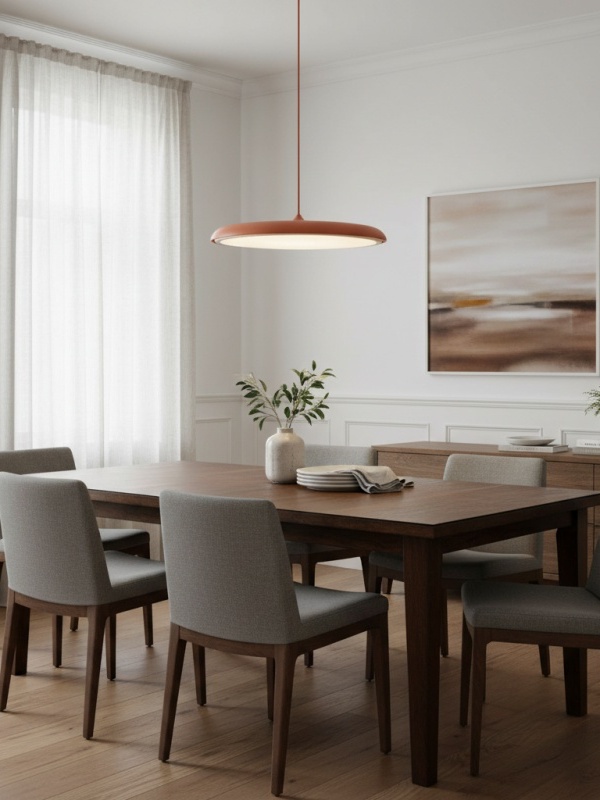
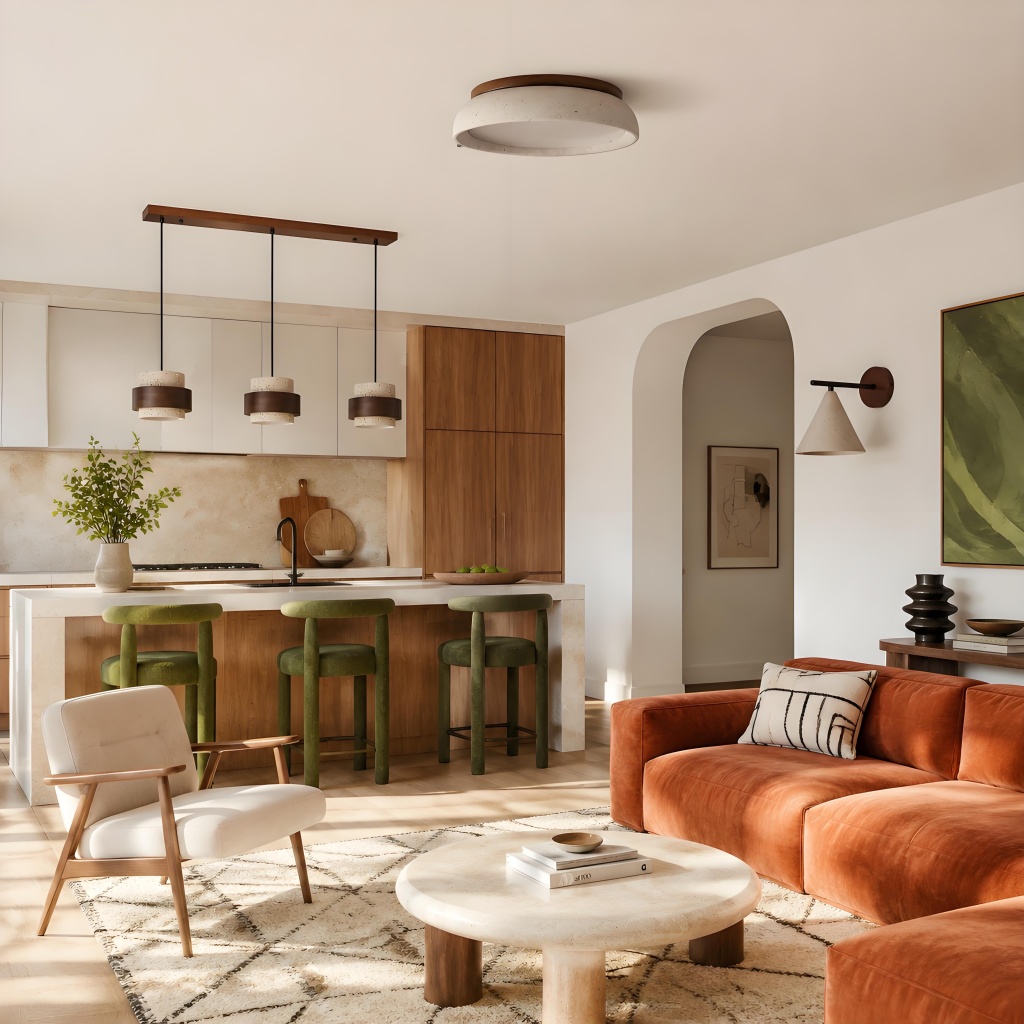
They do not need to be identical. Coordinate one or two elements, such as finish, colour temperature, shape, or visual weight, while allowing each fixture to suit the size and task of its own area.