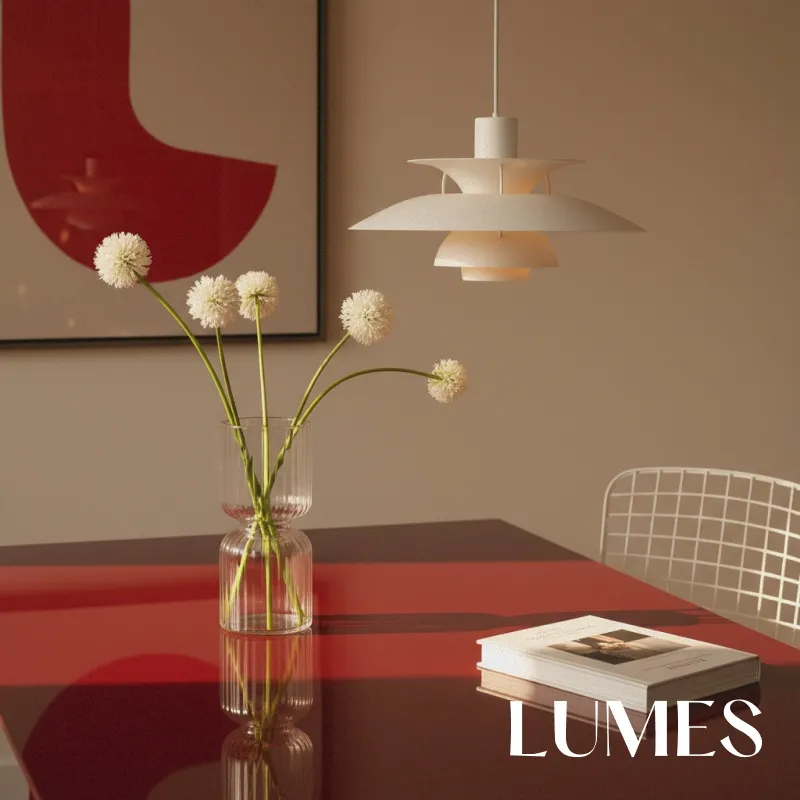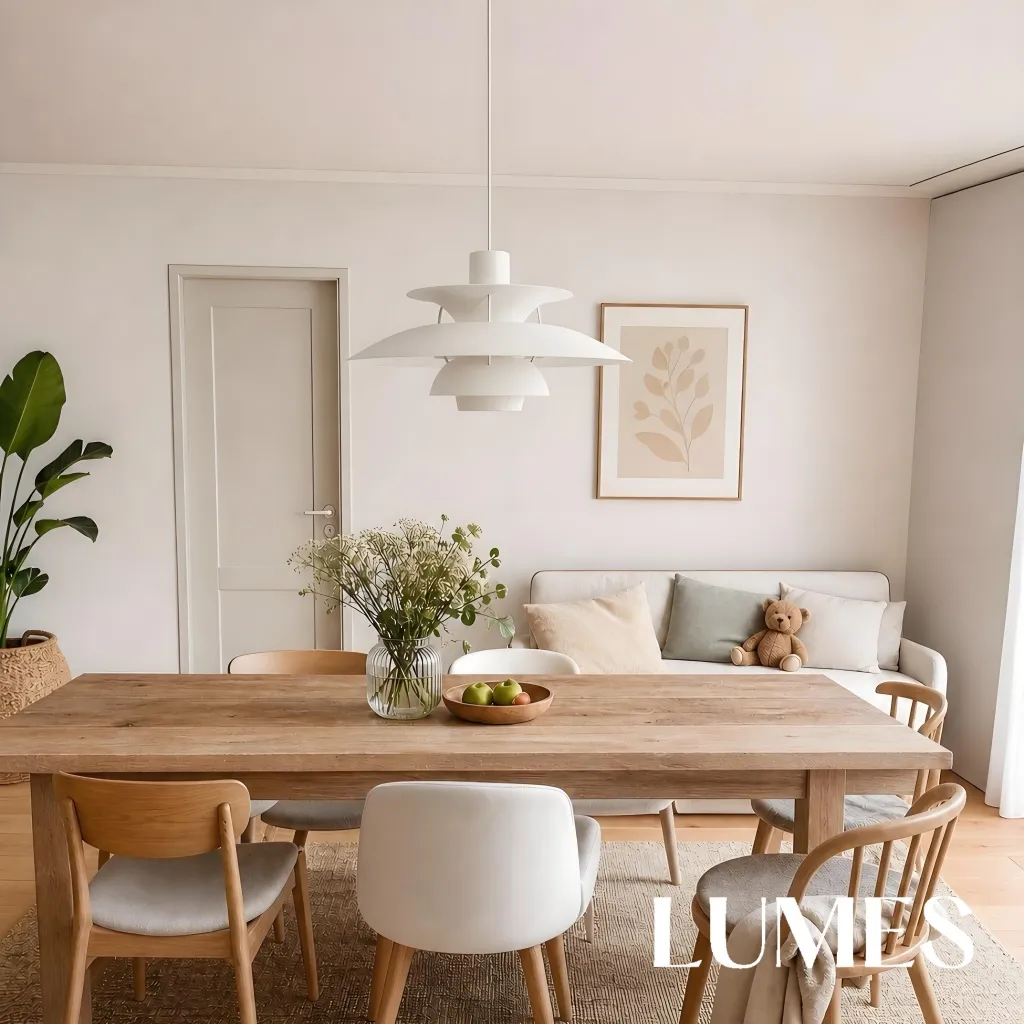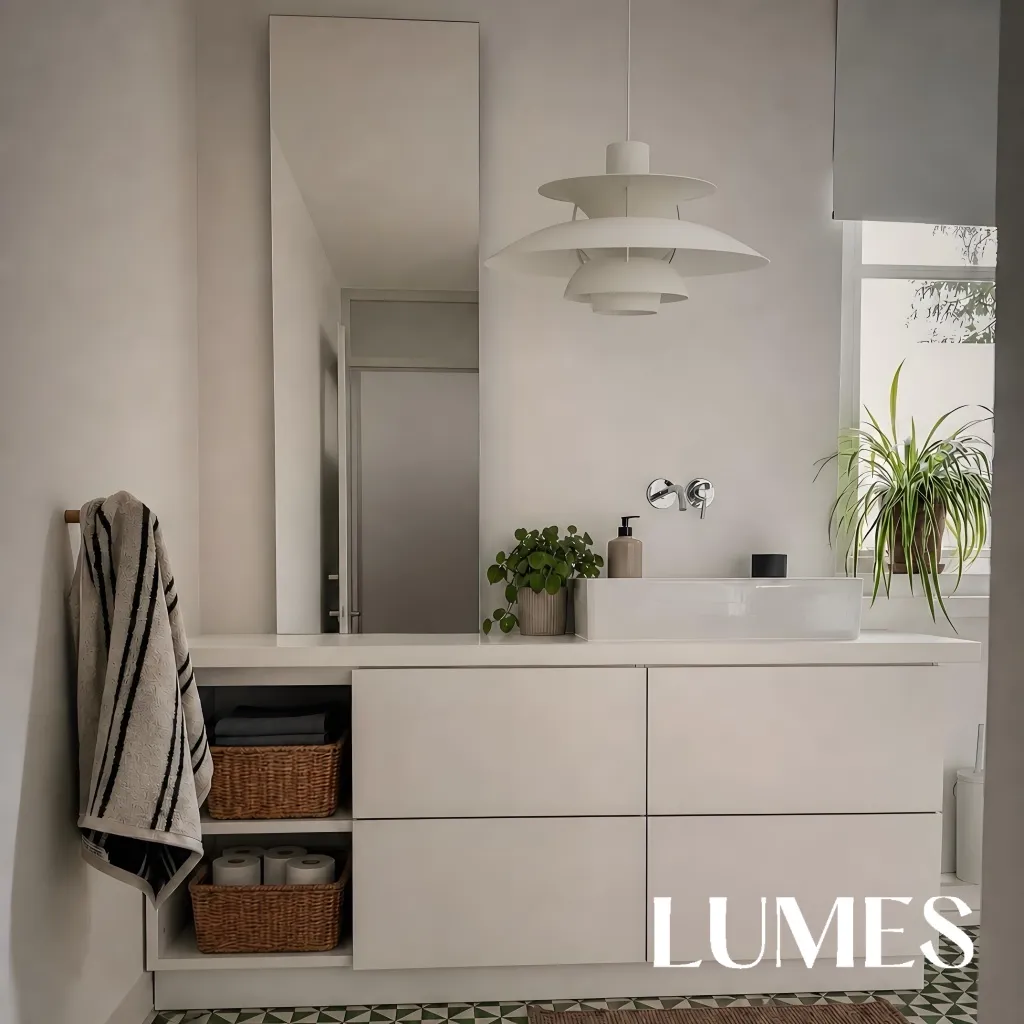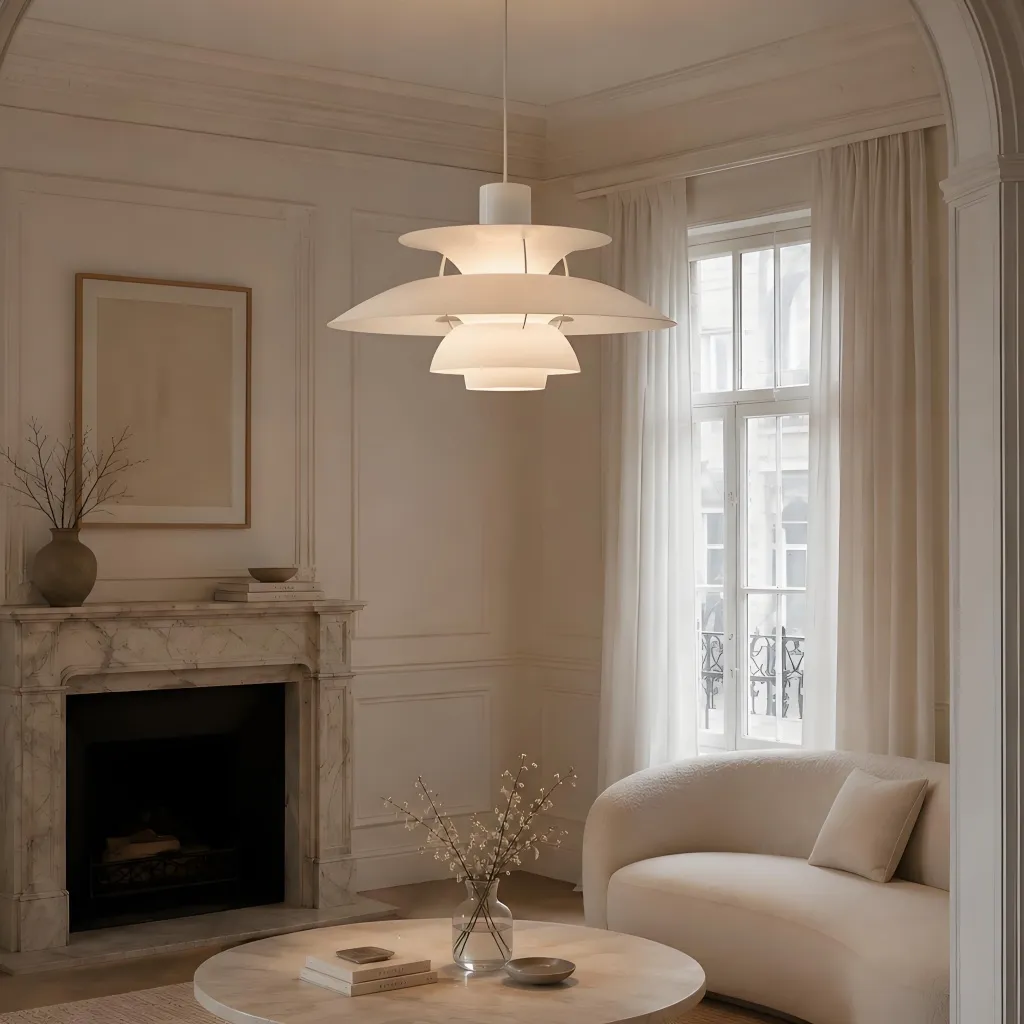



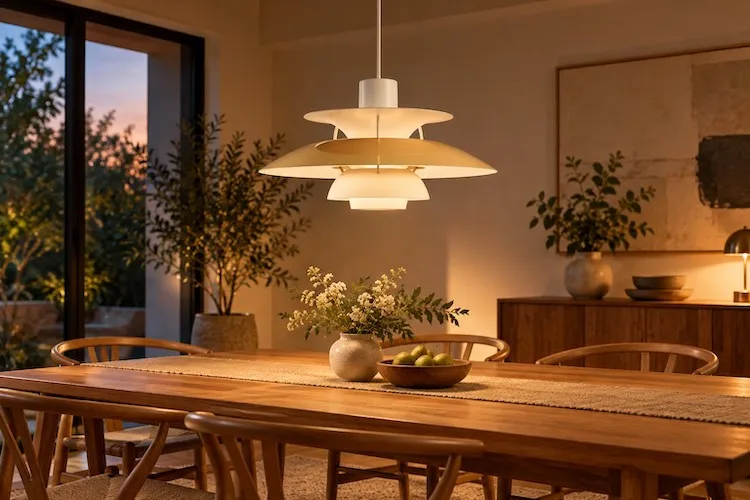
Lumes Design lighting guide
Best E27 LED Bulbs for Pendant Lights: Lumens, Shape and Warm White
The best E27 LED bulb for a pendant is not automatically the brightest or the most decorative one. Start with the screw base, then match the bulb's lumens, shape and colour temperature to the shade, the table and the way you use the room. For a dining pendant, a warm-white bulb with a moderate output is usually a better starting point than a high-output cool bulb. Always check the fixture instructions, the bulb's physical dimensions and the local electrical requirements before ordering.
Quick answer: choose in this order
- Fit: confirm the E27 base, bulb length and widest point.
- Brightness: compare lumens, not watts, and leave room for other lights.
- Shape: use a bulb that sits comfortably inside the opening and does not expose a harsh point.
- Colour: start around warm white (about 2700K-3000K) for dining and living areas.
E27 is the starting point, not the whole decision
The "E27" label describes the 27 mm Edison screw base. It does not tell you whether a bulb is short or tall, clear or frosted, dimmable or suitable for an enclosed shade. A bulb can have the correct base and still touch a layered shade, sit beyond the opening or exceed the fixture's permitted wattage. Before checkout, compare the bulb drawing with the pendant's available space and follow the product instructions for voltage, maximum wattage and installation.
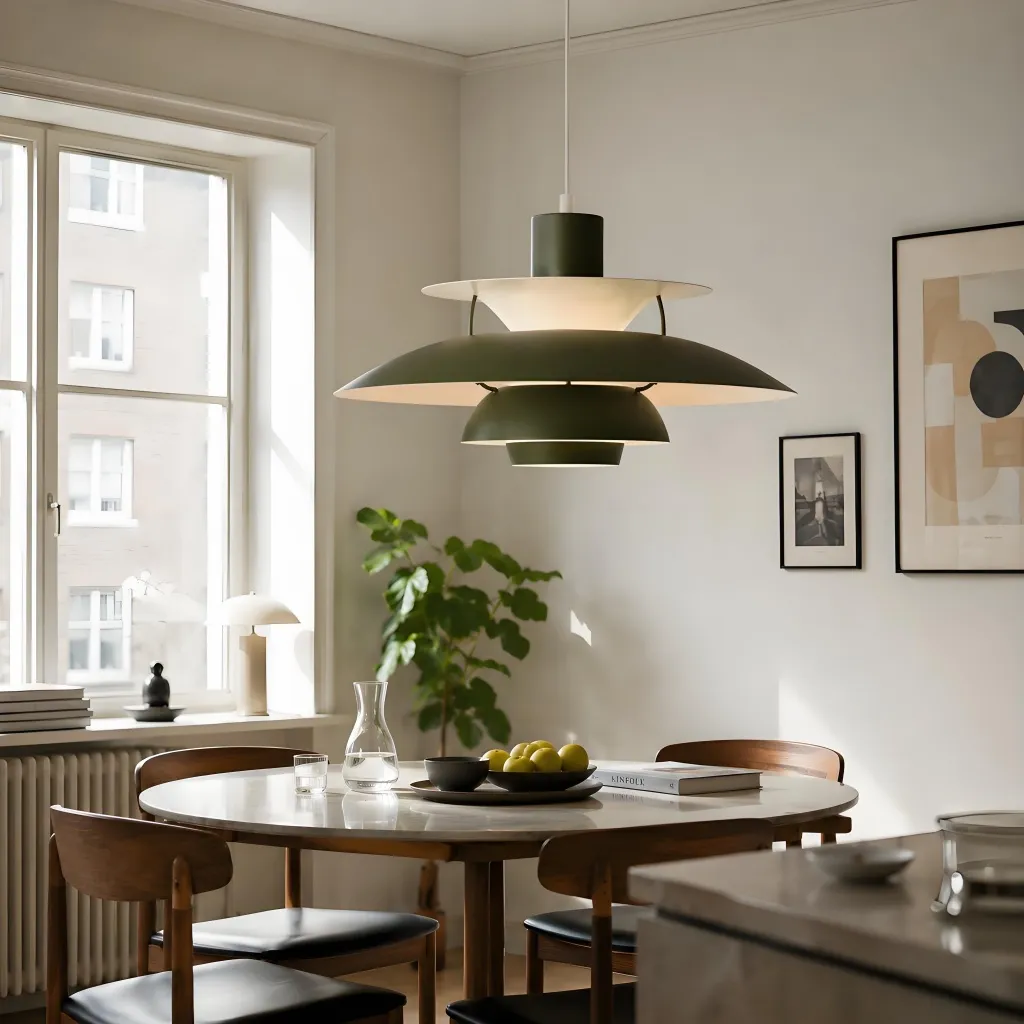
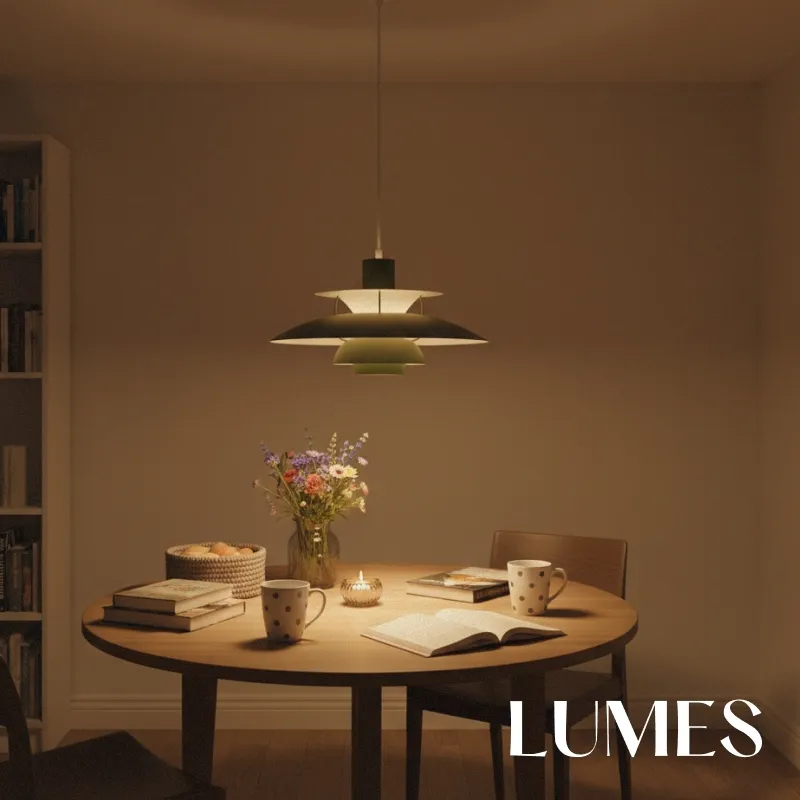
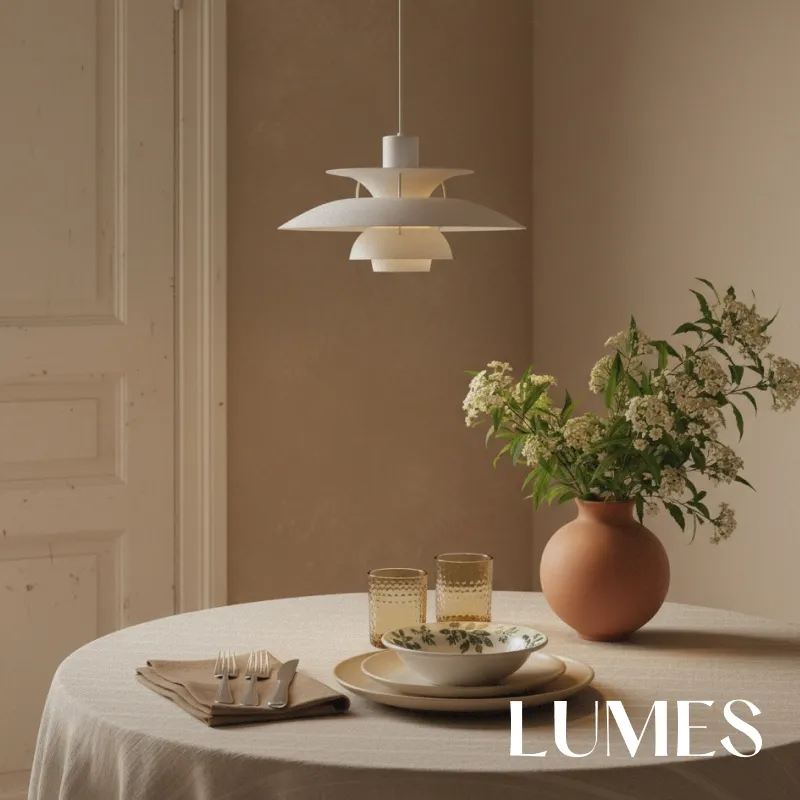
If the pendant will be used above a dining table, check it from both seated and standing eye levels. The brightest part of the bulb should not become the first thing you see when you look across the room. A shade that covers the source usually gives you more flexibility than an exposed decorative bulb.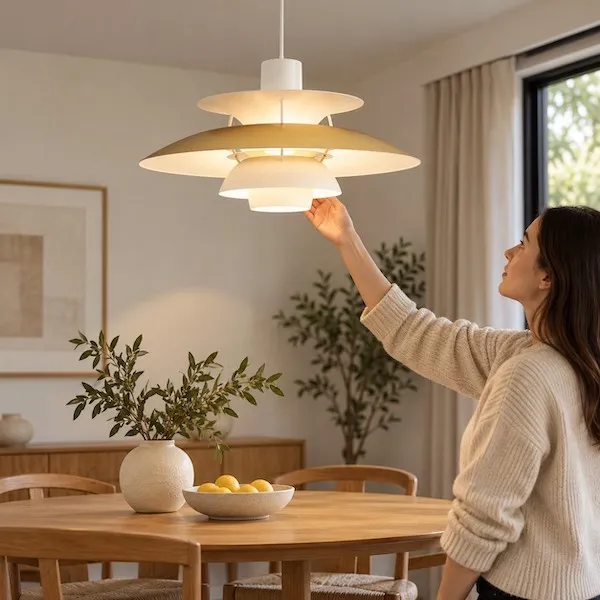
How many lumens do you need?
Watts describe energy use; lumens describe visible light. ENERGY STAR's brightness guide is a useful reminder to compare lumens when you shop for an LED bulb. For one pendant, use a moderate output for atmosphere over a table and a higher output only when the table also handles reading or homework. In a large open-plan room, add wall, floor or table light instead of choosing the highest-output bulb by default.
These are starting decisions, not product promises. A dark tabletop, a deep shade, and the distance from the lamp to the surface can all change the result. Test the light after the furniture and shade are in their final positions.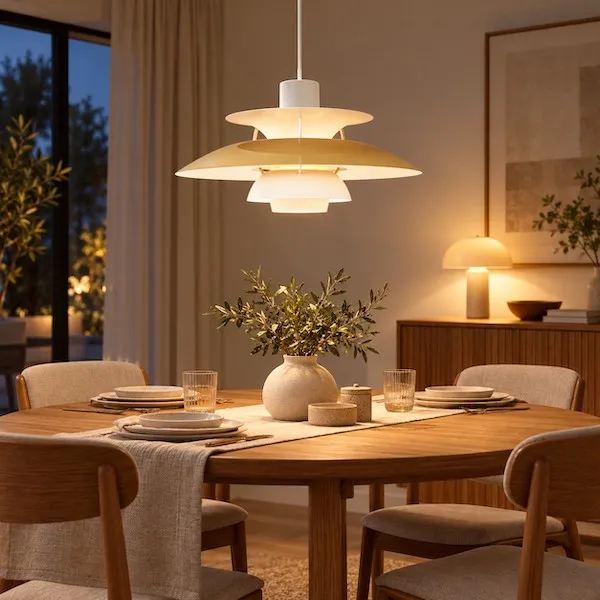
Pick a shape that works with the shade
A-shape bulbs are the straightforward all-round option. They suit many open pendants, but confirm that the widest shoulder does not sit outside the layered shade. Globe bulbs give a softer, more graphic look and can fill a broad opening; measure the diameter before buying. Frosted or opal bulbs hide the sharpest points of light and are often easier to live with at eye level than clear glass.
Filament and clear bulbs are attractive when the bulb is part of the design, but visible LED points can be distracting above a table. Use one only when the shade hides the direct view and the output is modest enough for the room. Tubular bulbs can suit a narrow opening, yet their extra length is easy to overlook. Think in three dimensions: base, total height and widest diameter.
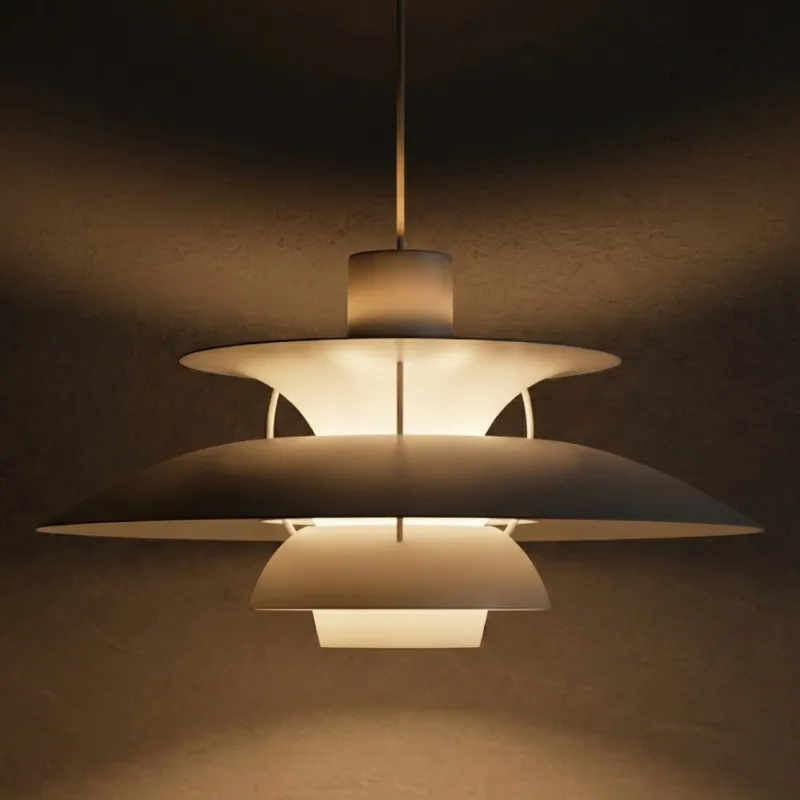
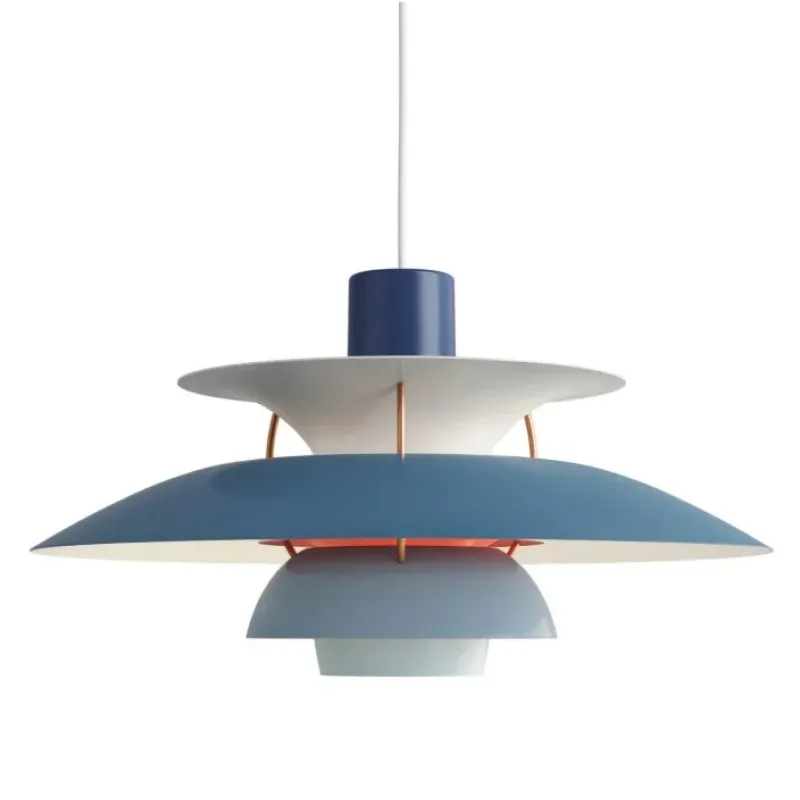
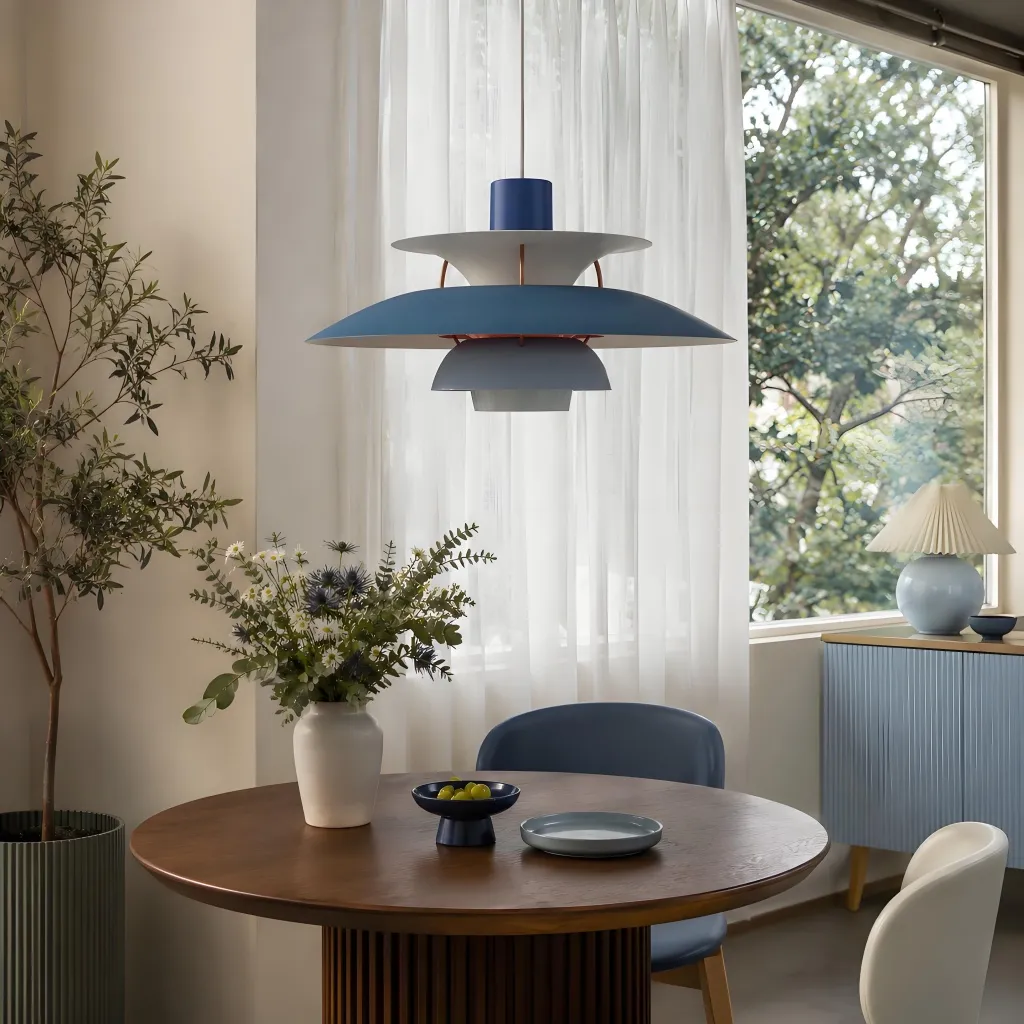
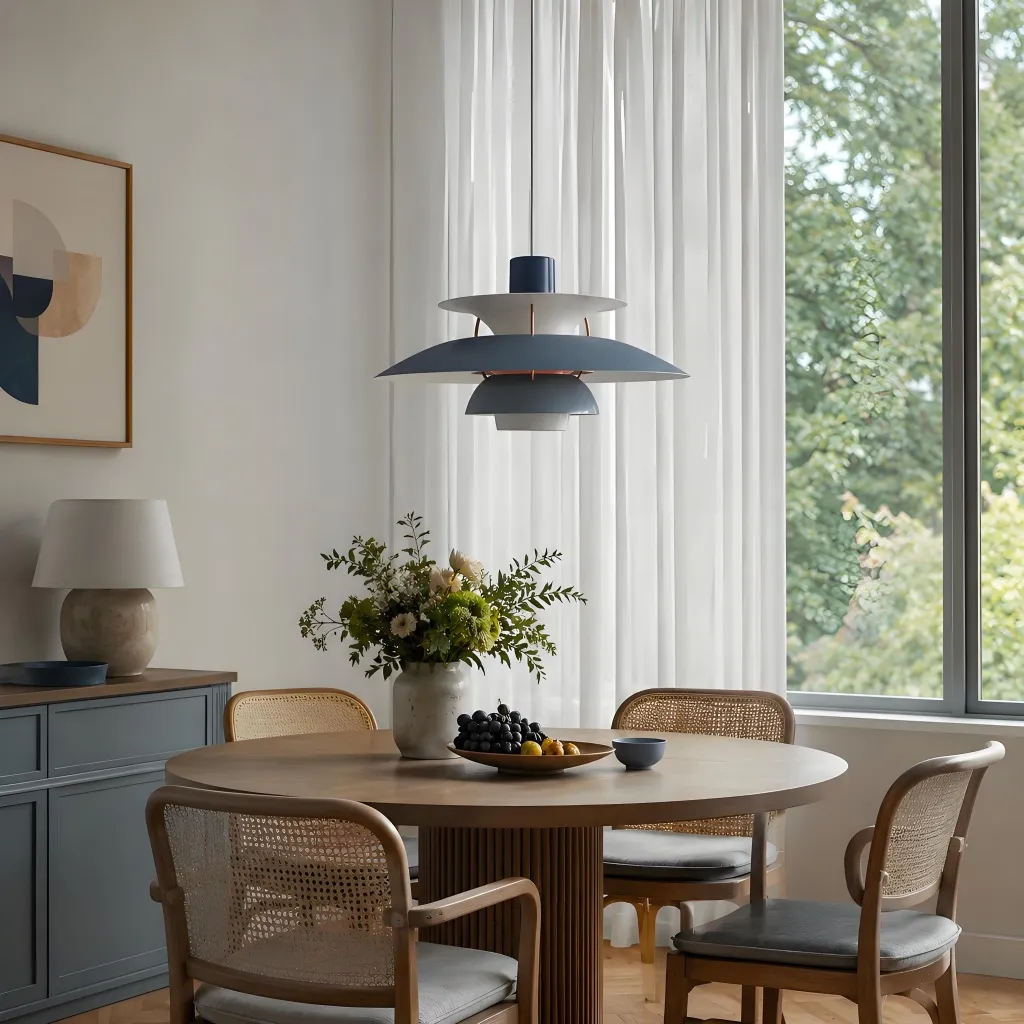
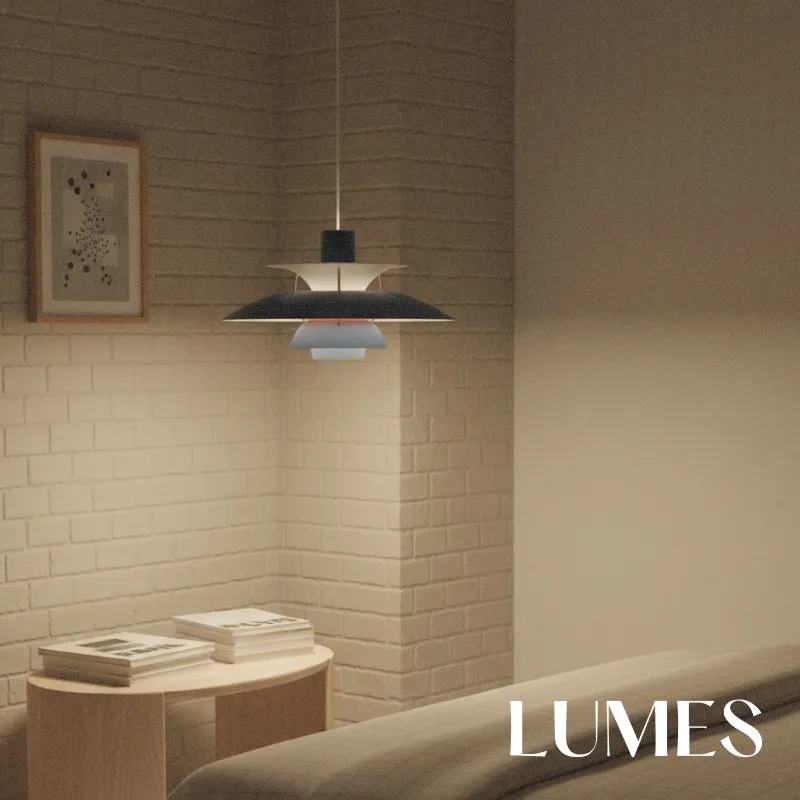
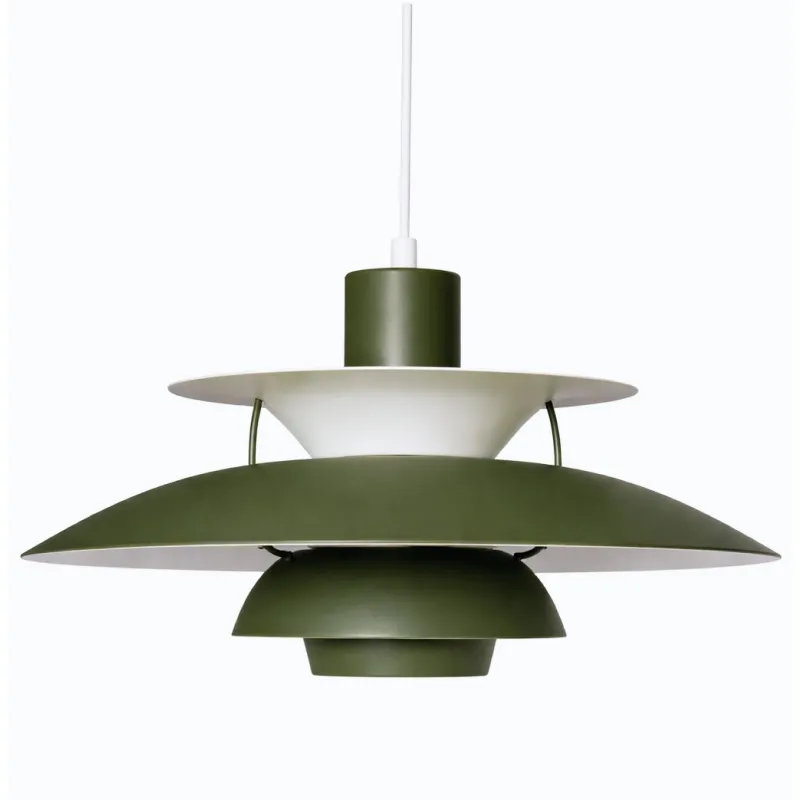
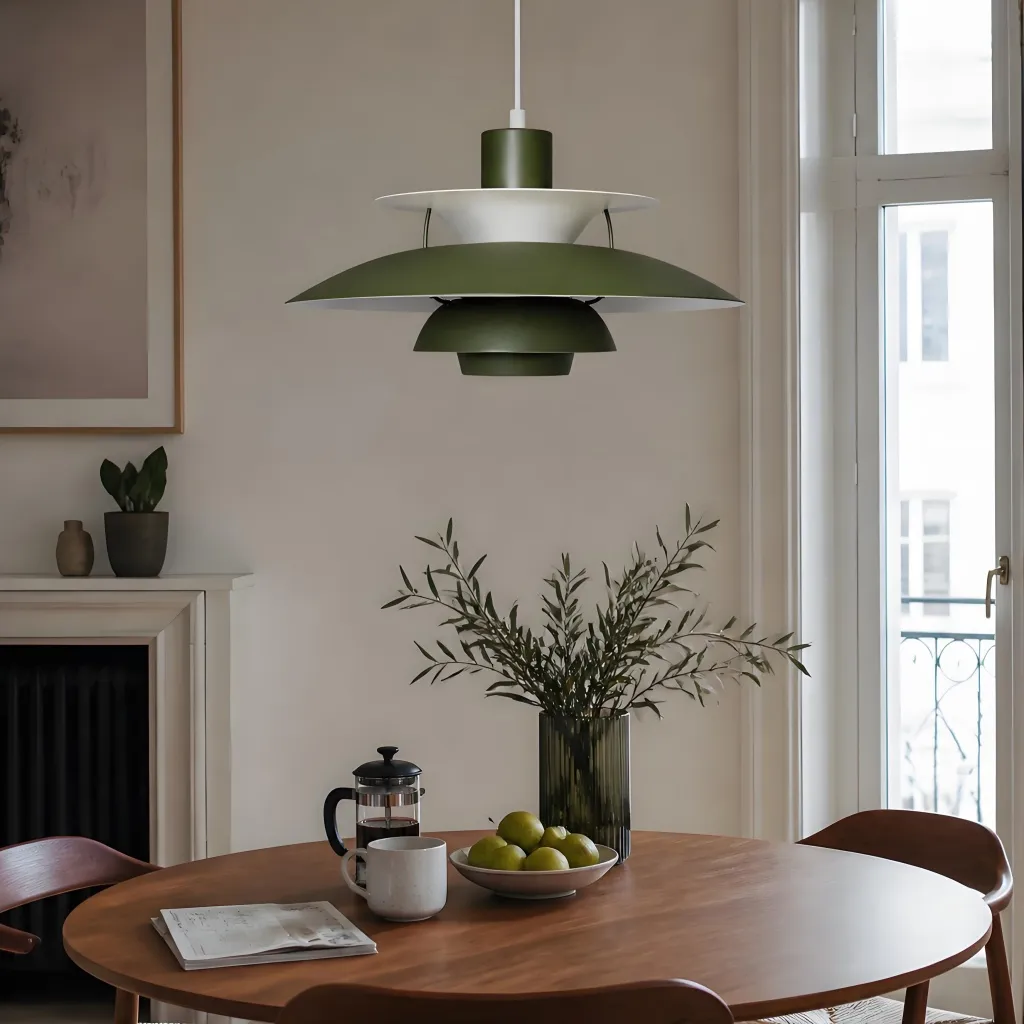
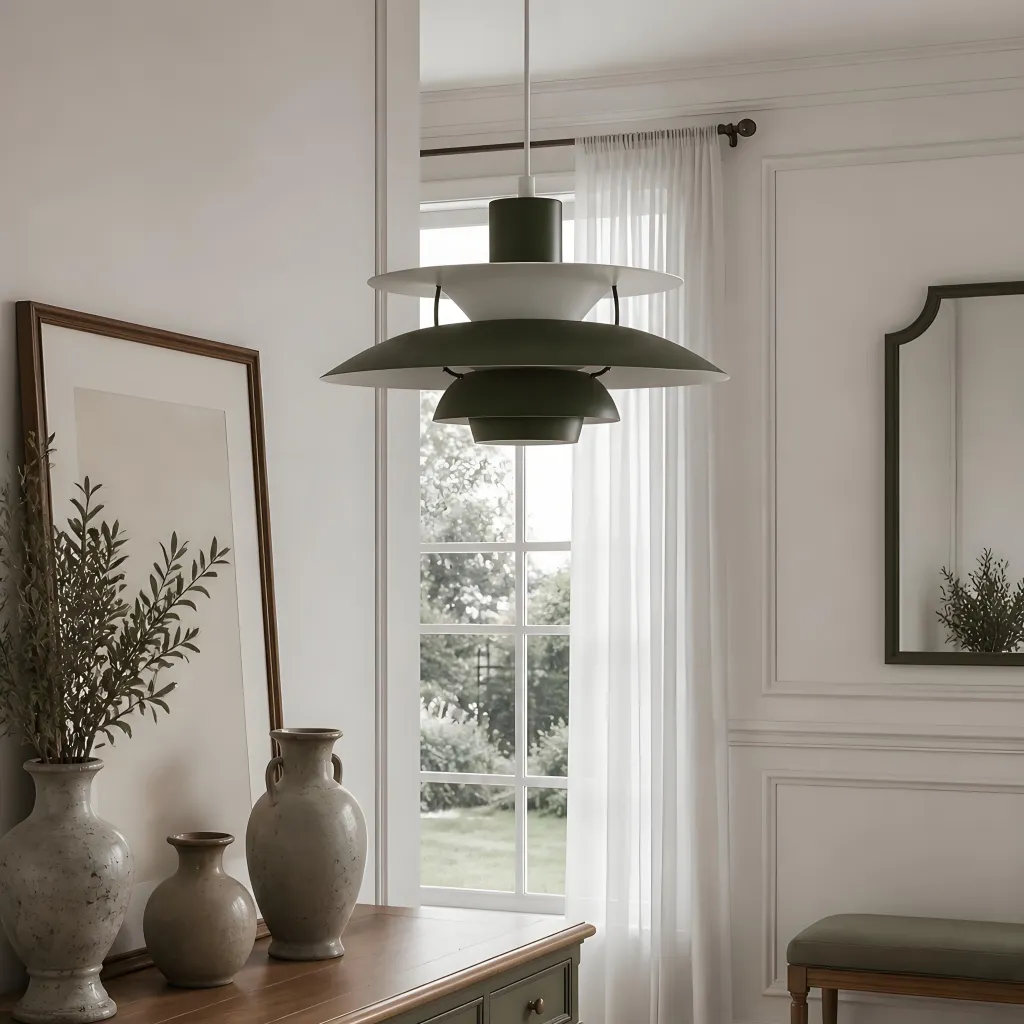
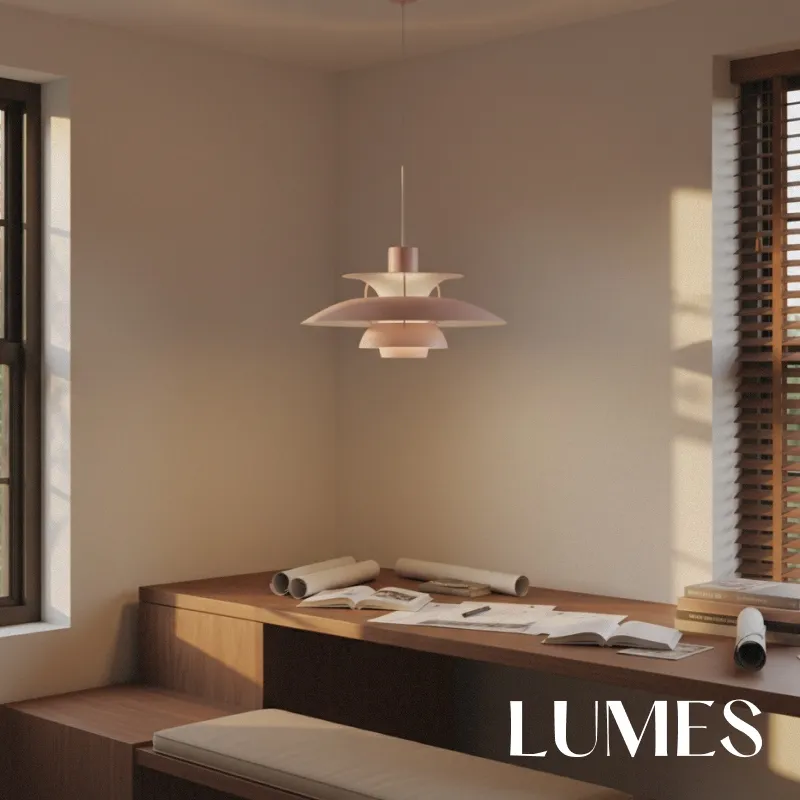
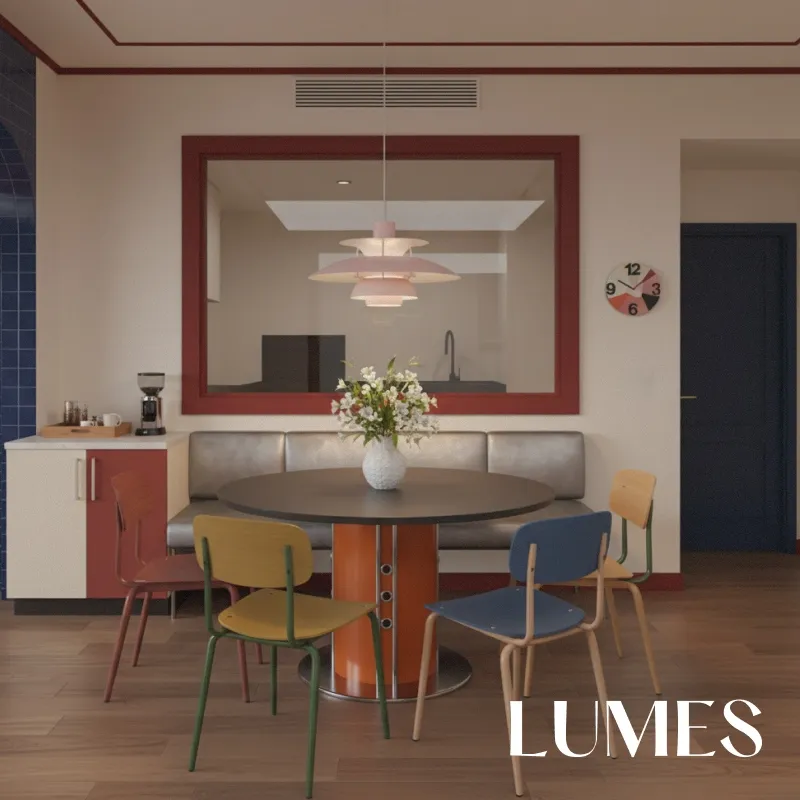
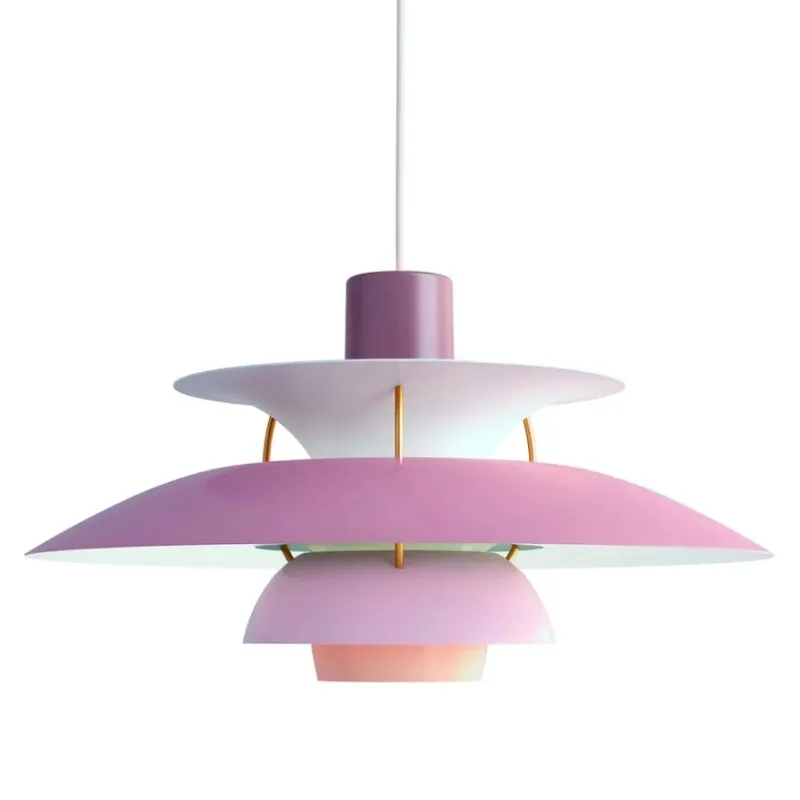
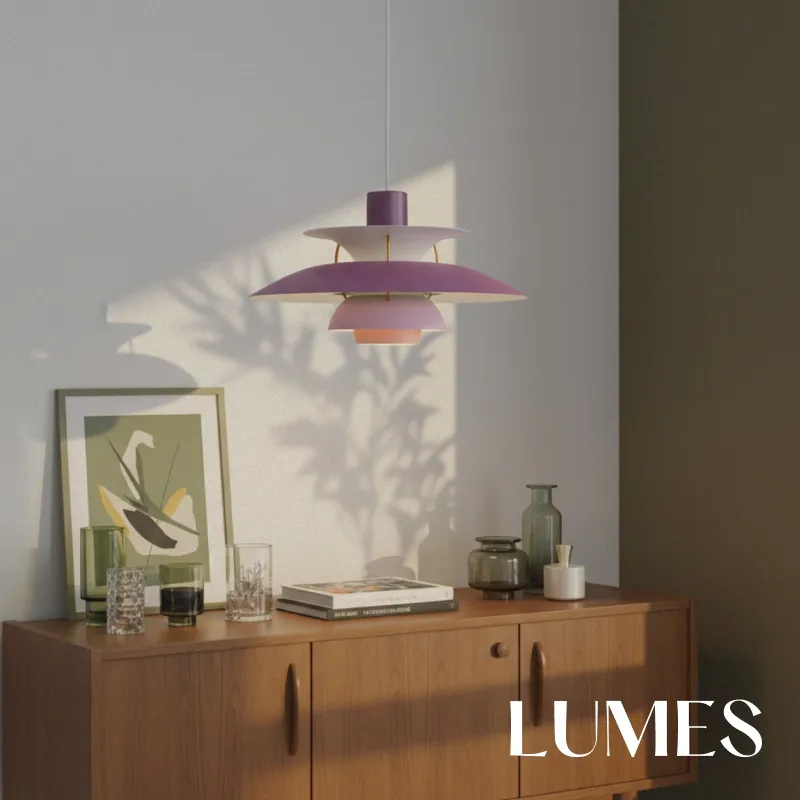
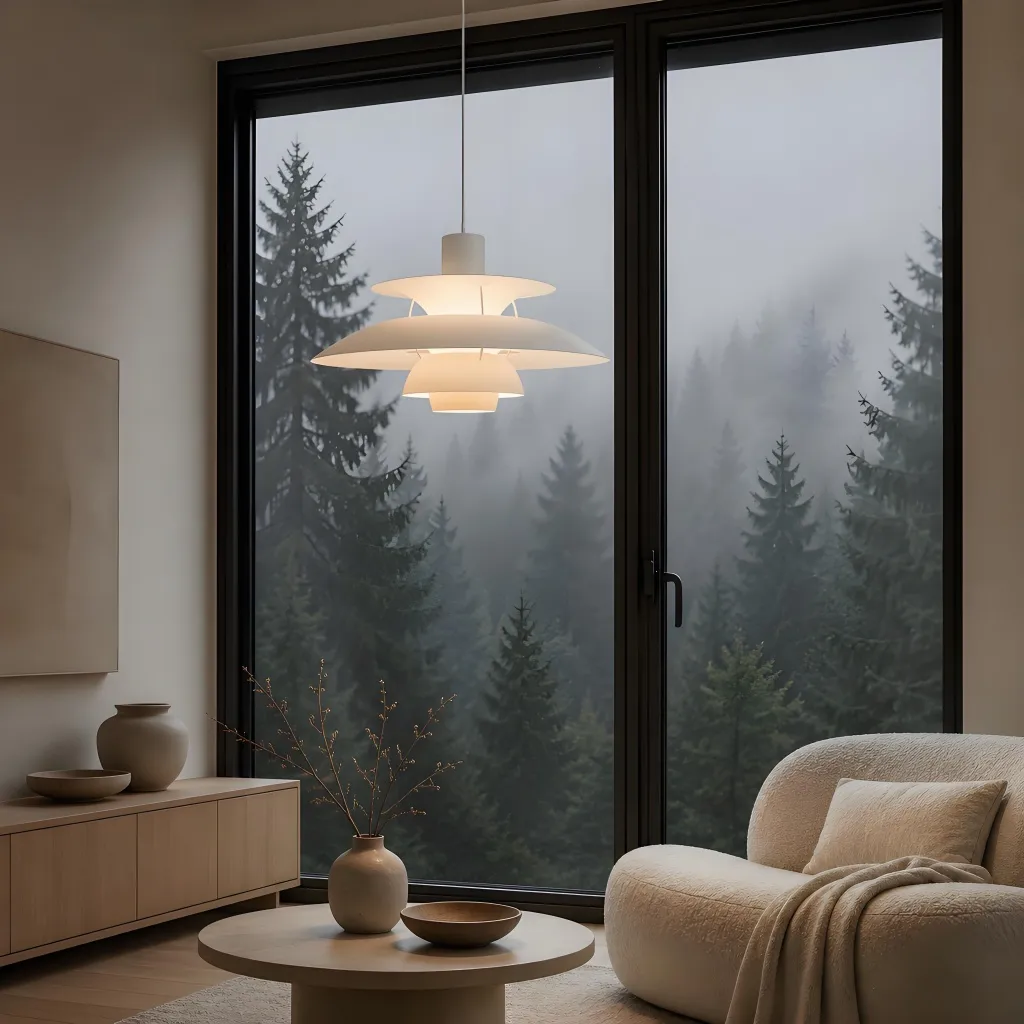
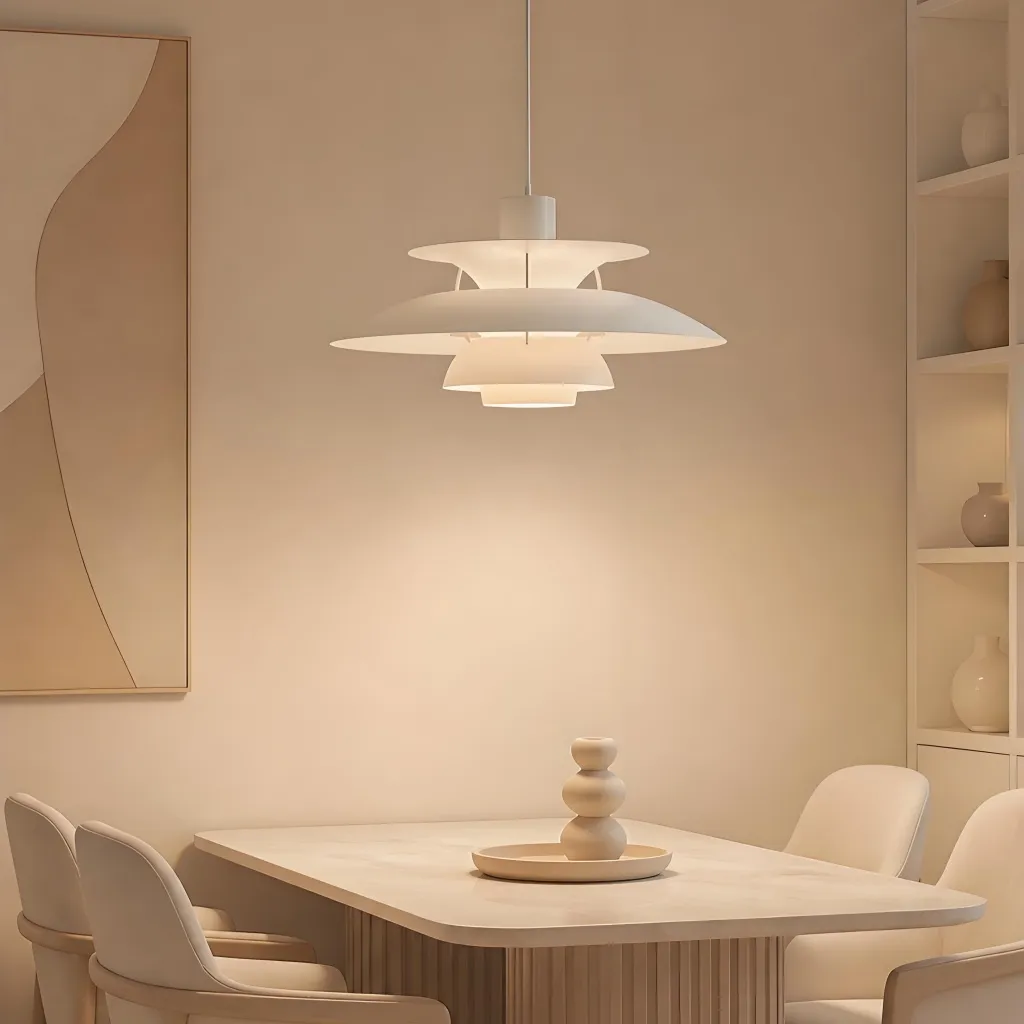
If you have confirmed the clearance and bulb limits, review the Danish multilayer metal pendant lamp before choosing the final E27 bulb.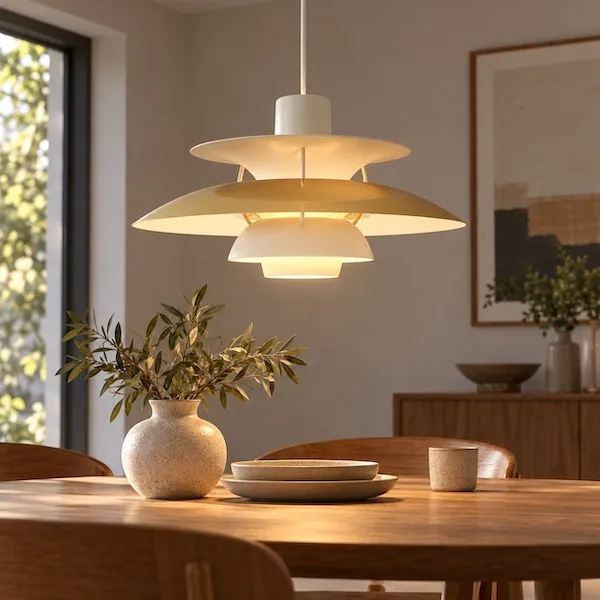
Warm white is a comfort choice, not a brightness setting
Colour temperature changes the atmosphere, while lumens change the amount of light. Around 2700K gives a cosy, amber-leaning feel that suits wood, linen and evening meals. Around 3000K stays warm but looks a little clearer for everyday dining and mixed-use rooms. ENERGY STAR's lighting guidance explains why lower Kelvin numbers appear warmer and higher numbers cooler.
Keep neighbouring lights in a compatible colour family so the pendant does not look yellow beside a cool kitchen or living-room source. If food, timber and artwork need accurate colour, compare the bulb's stated colour-rendering information as well as its Kelvin rating. Do not assume that a warmer bulb will solve glare: a bright source can still be uncomfortable at 2700K.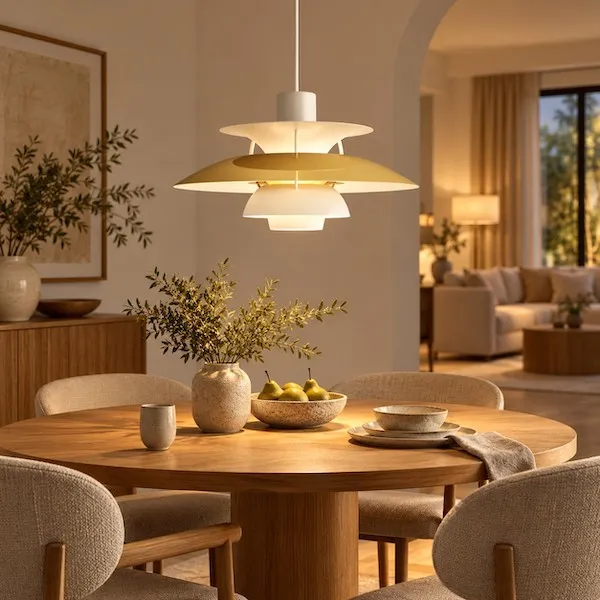
Dimming, glare and the safety checks shoppers skip
- Confirm dimming compatibility. The bulb, dimmer and fixture must be compatible; an E27 base alone does not guarantee dimming.
- Check the permitted wattage and environment. Never exceed the pendant's instructions, and confirm whether the bulb is allowed in an enclosed or partially enclosed shade.
- Look for the source from normal seats. If a bright dot catches your eye, try a frosted bulb, lower lumens or a different shape.
- Plan the whole room. A pendant can create the dining focus while wall, floor or table lights handle background illumination.
A bulb match for a layered metal pendant
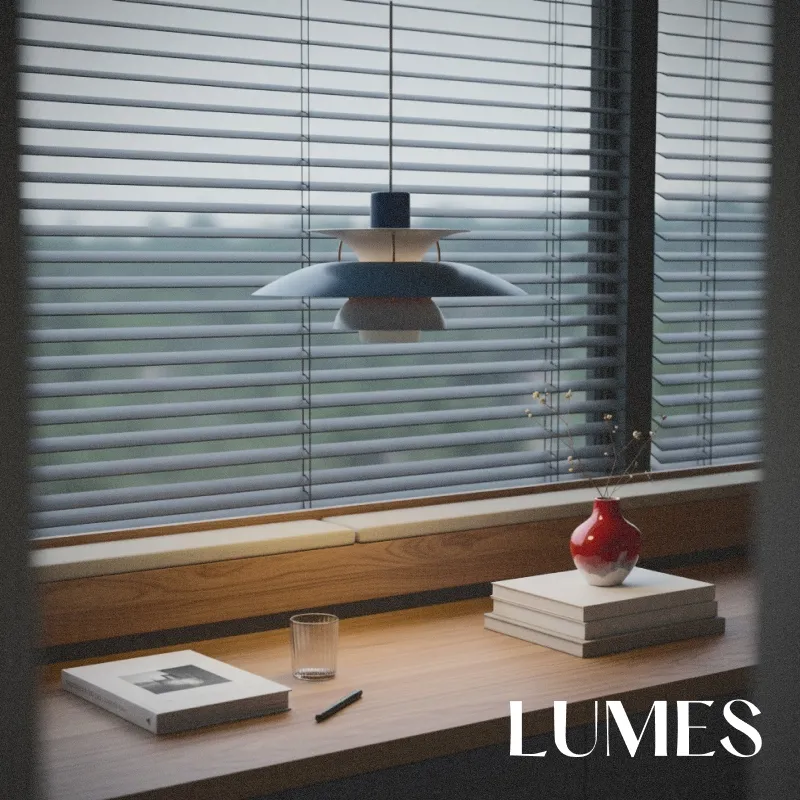
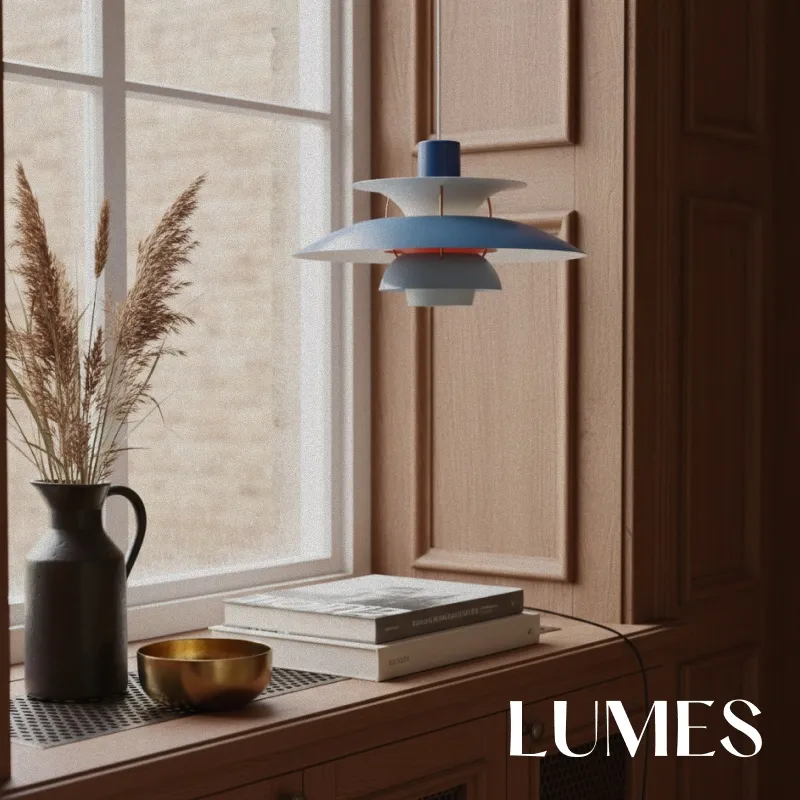
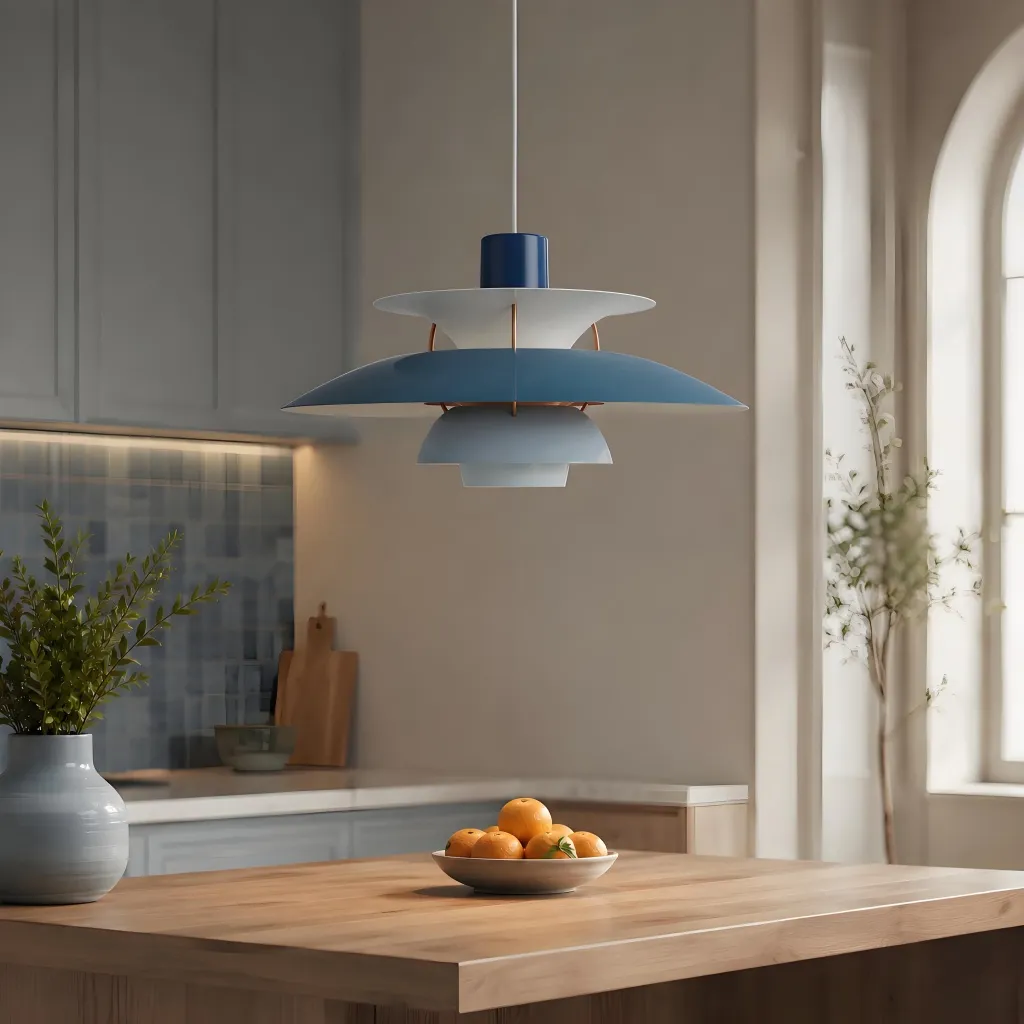
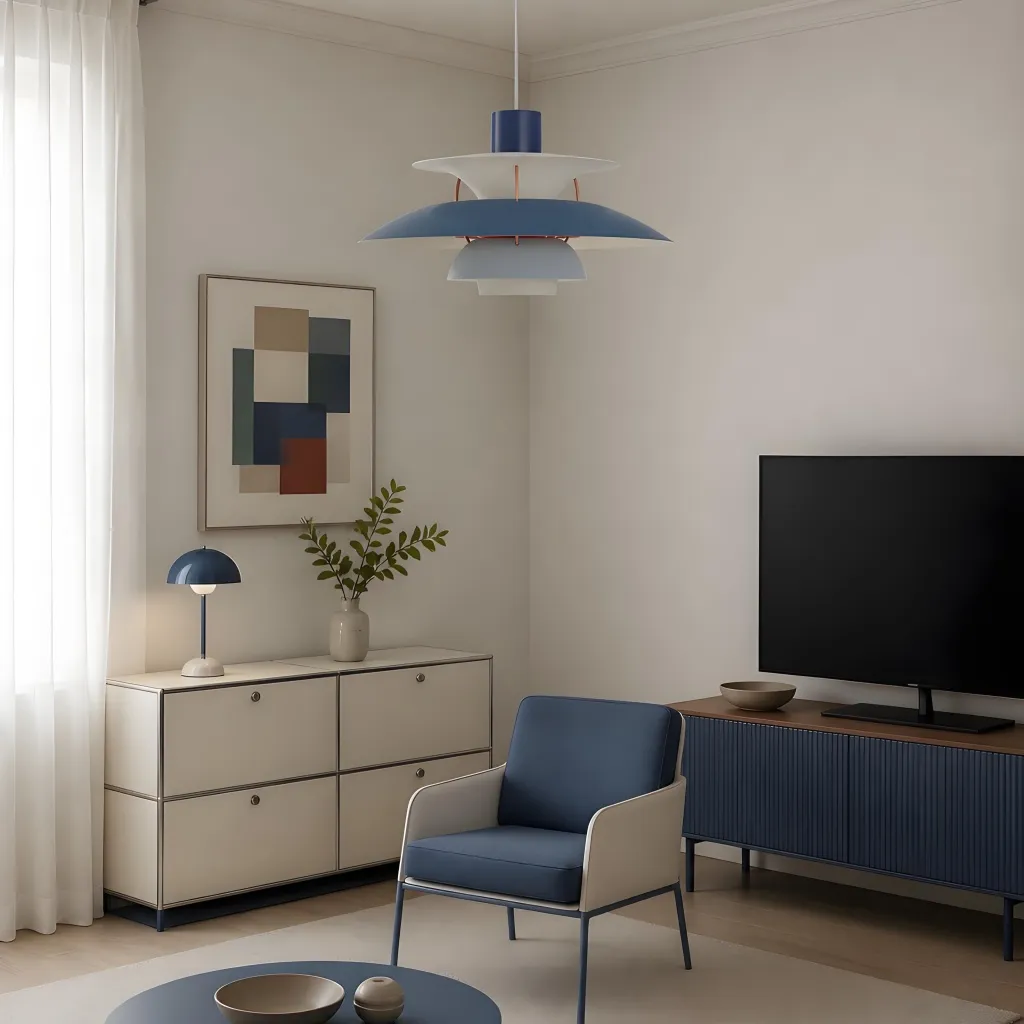
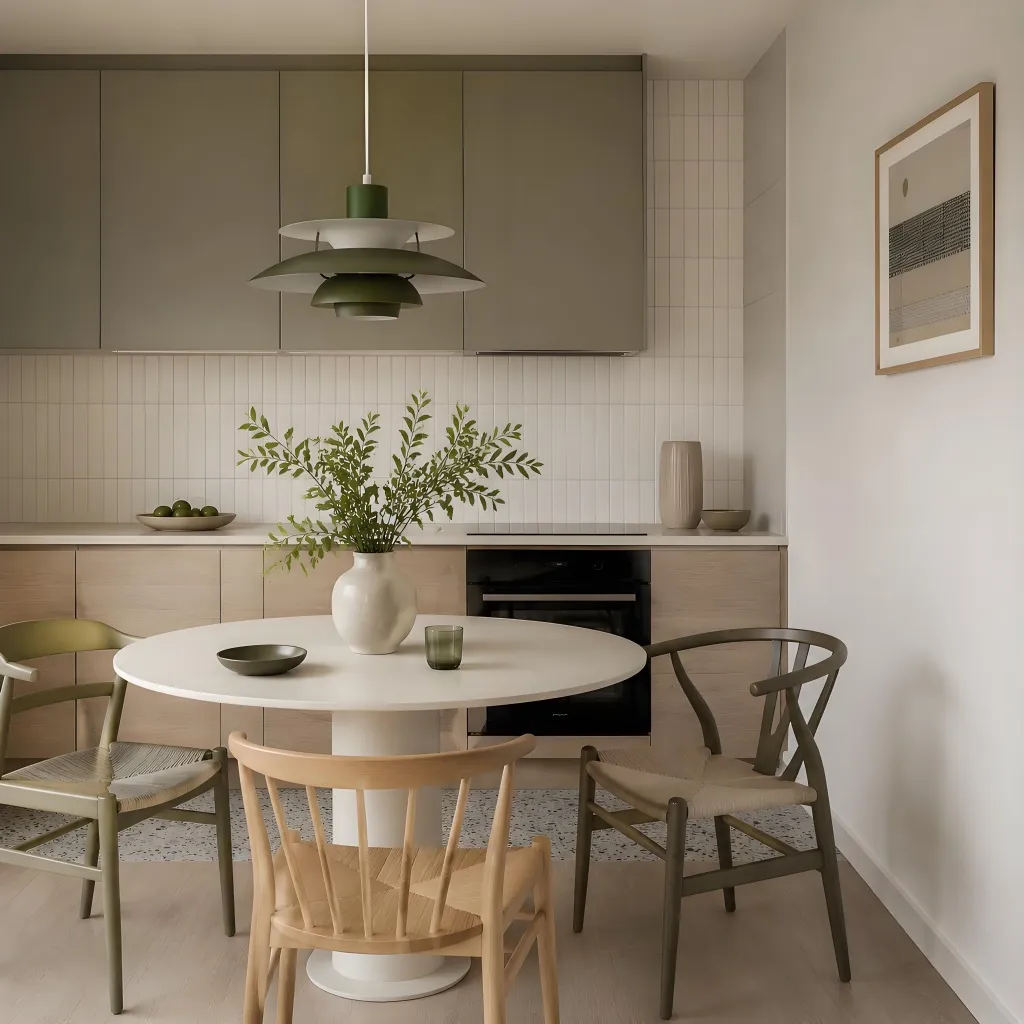
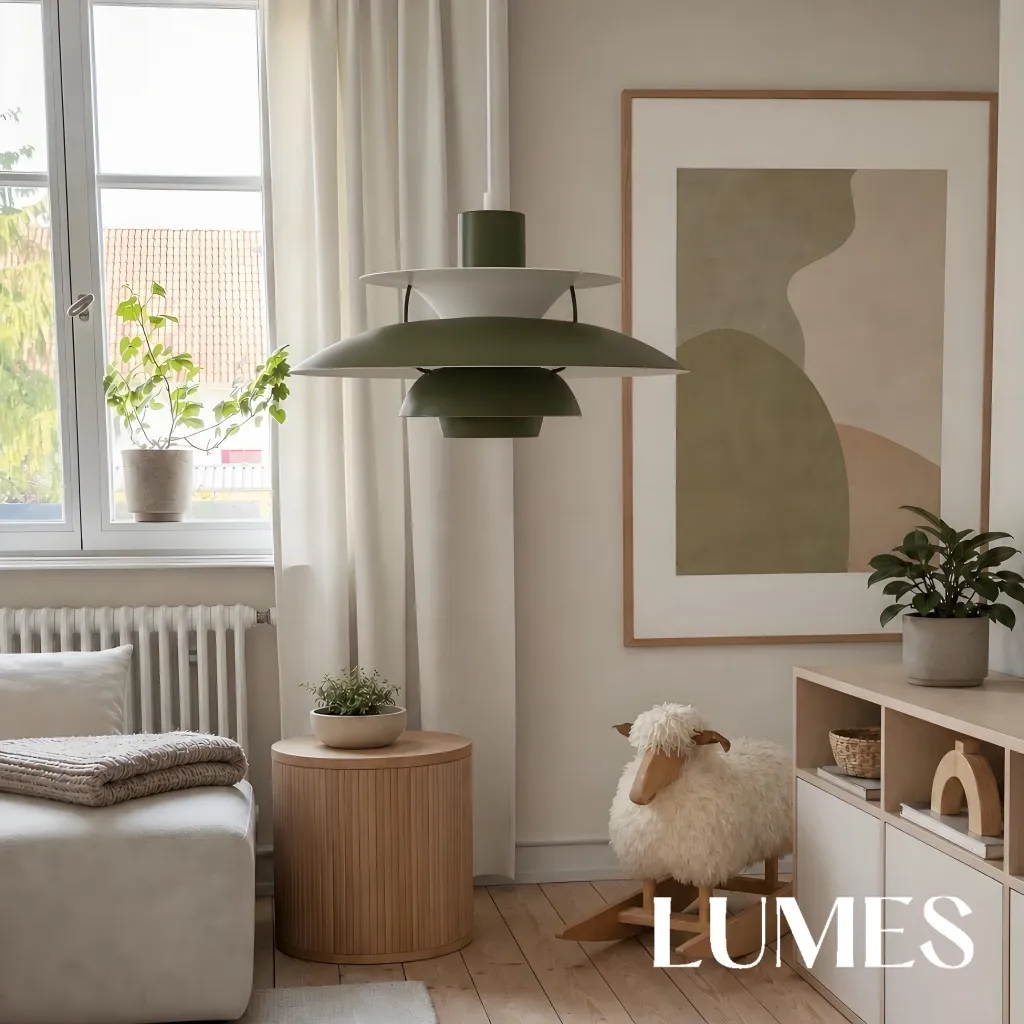
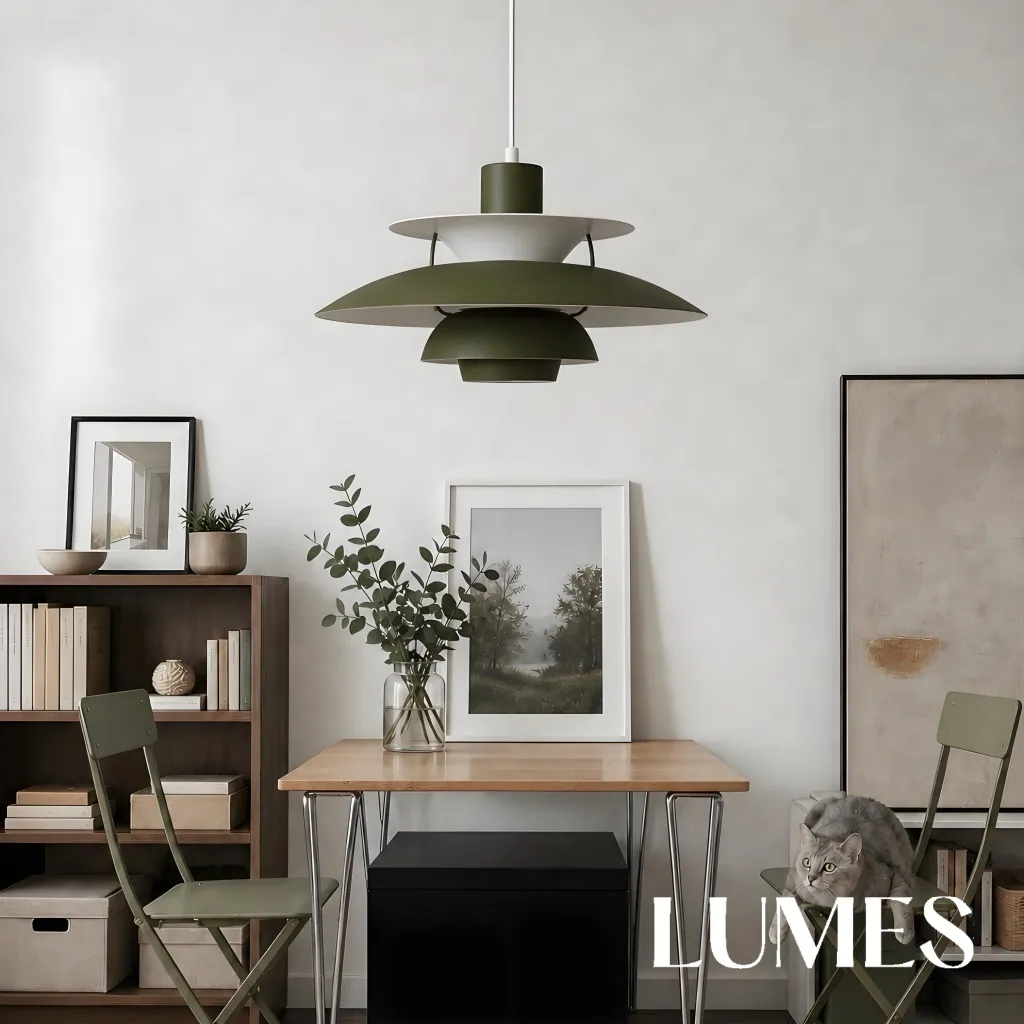
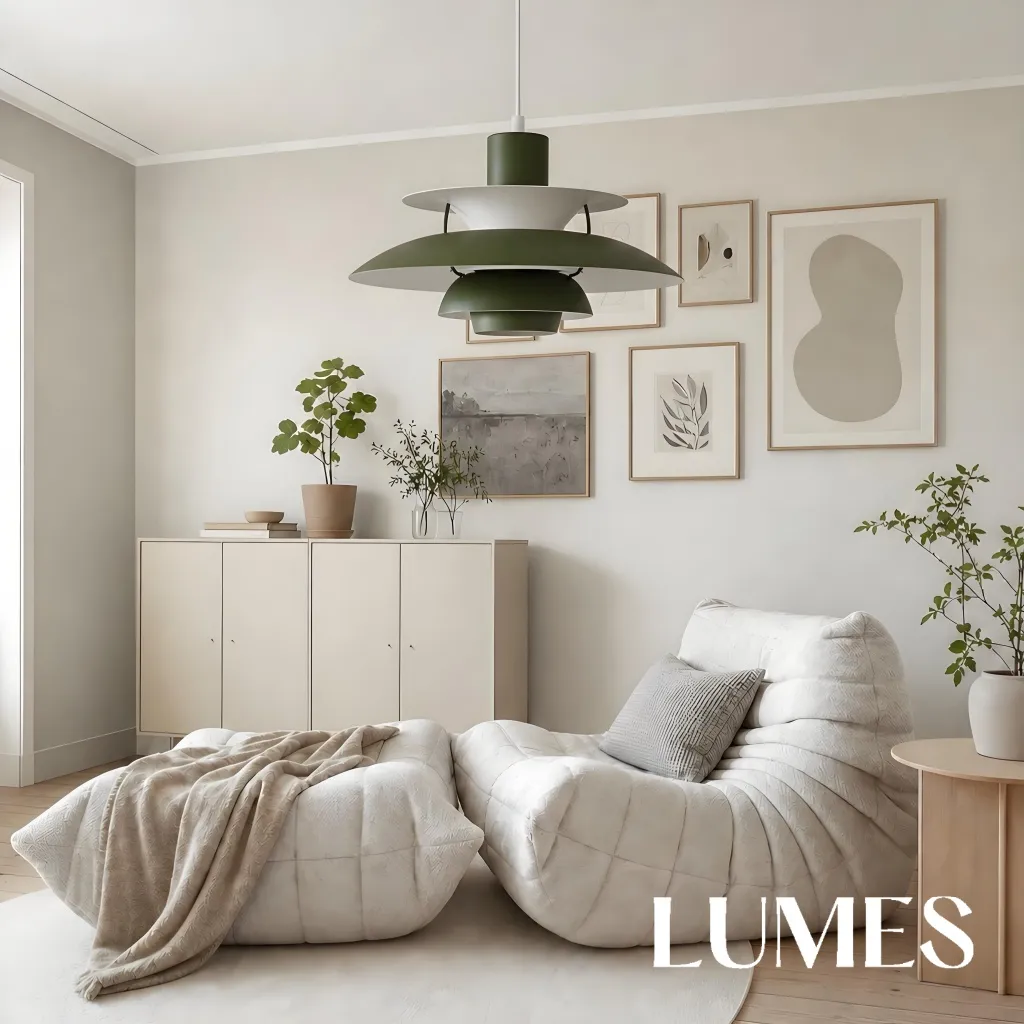
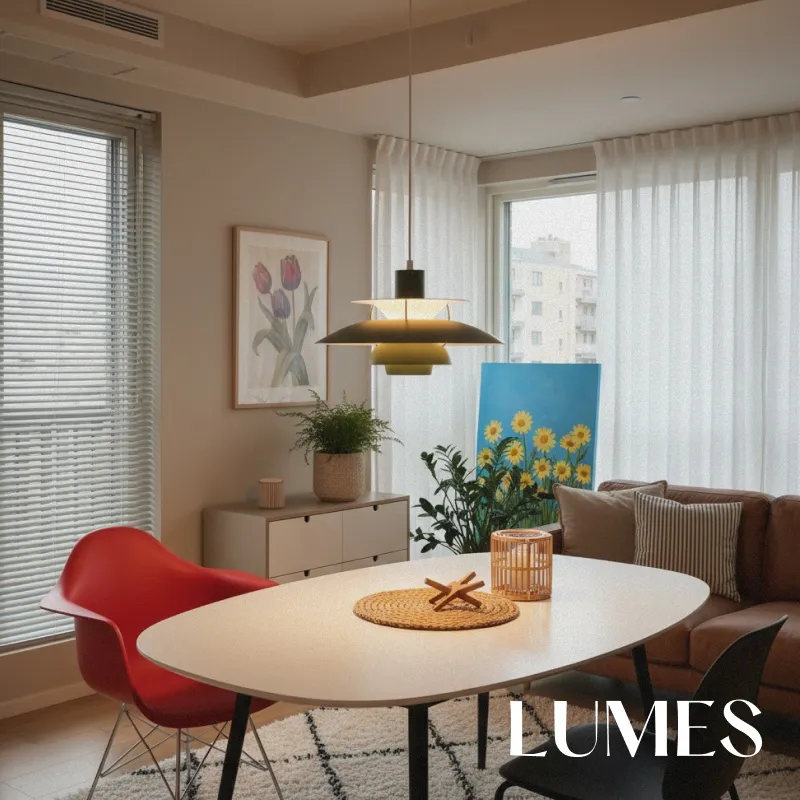
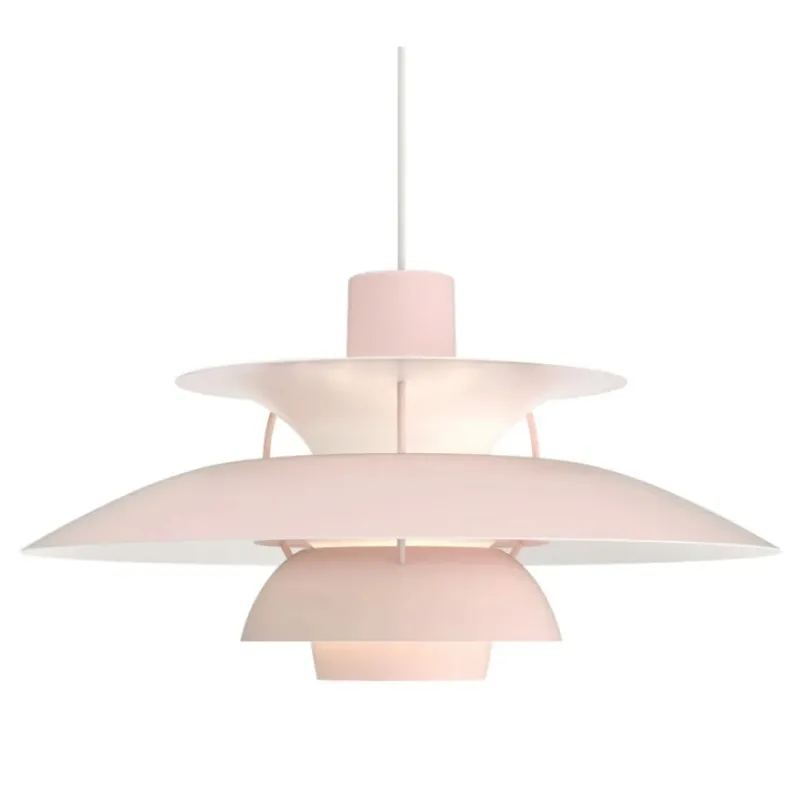
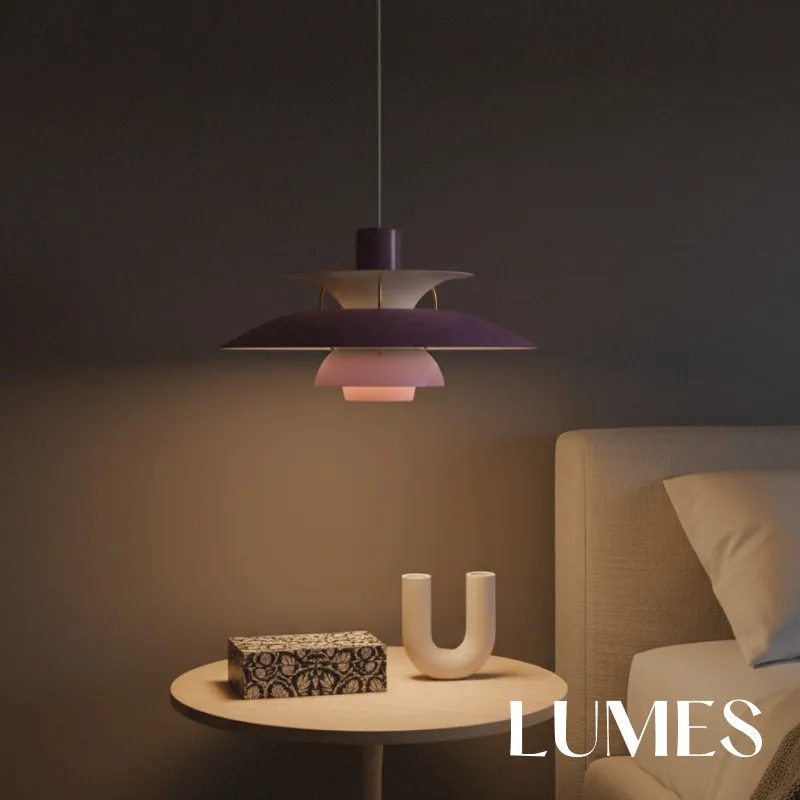
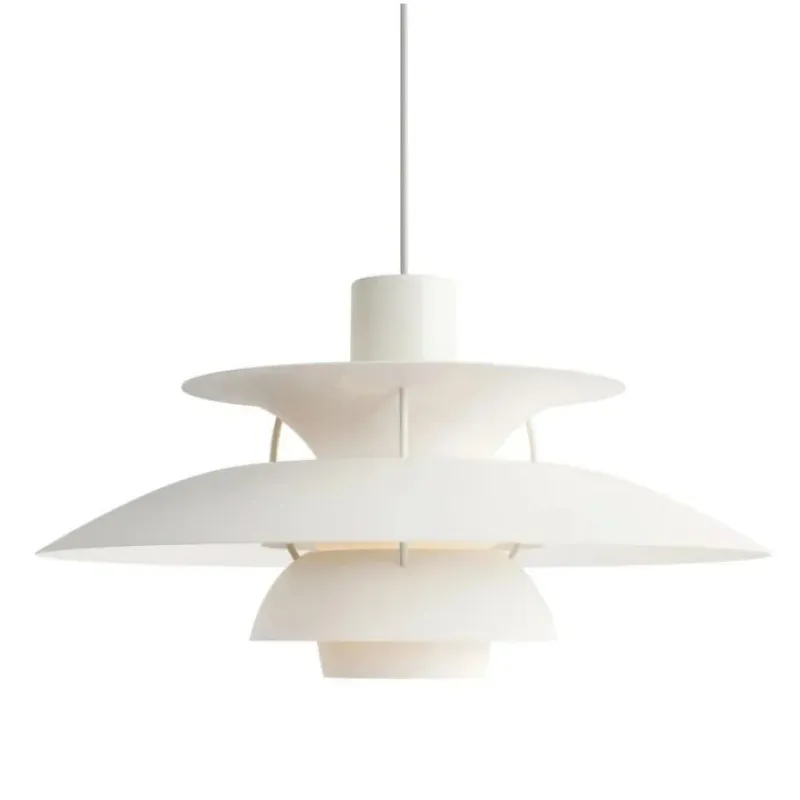
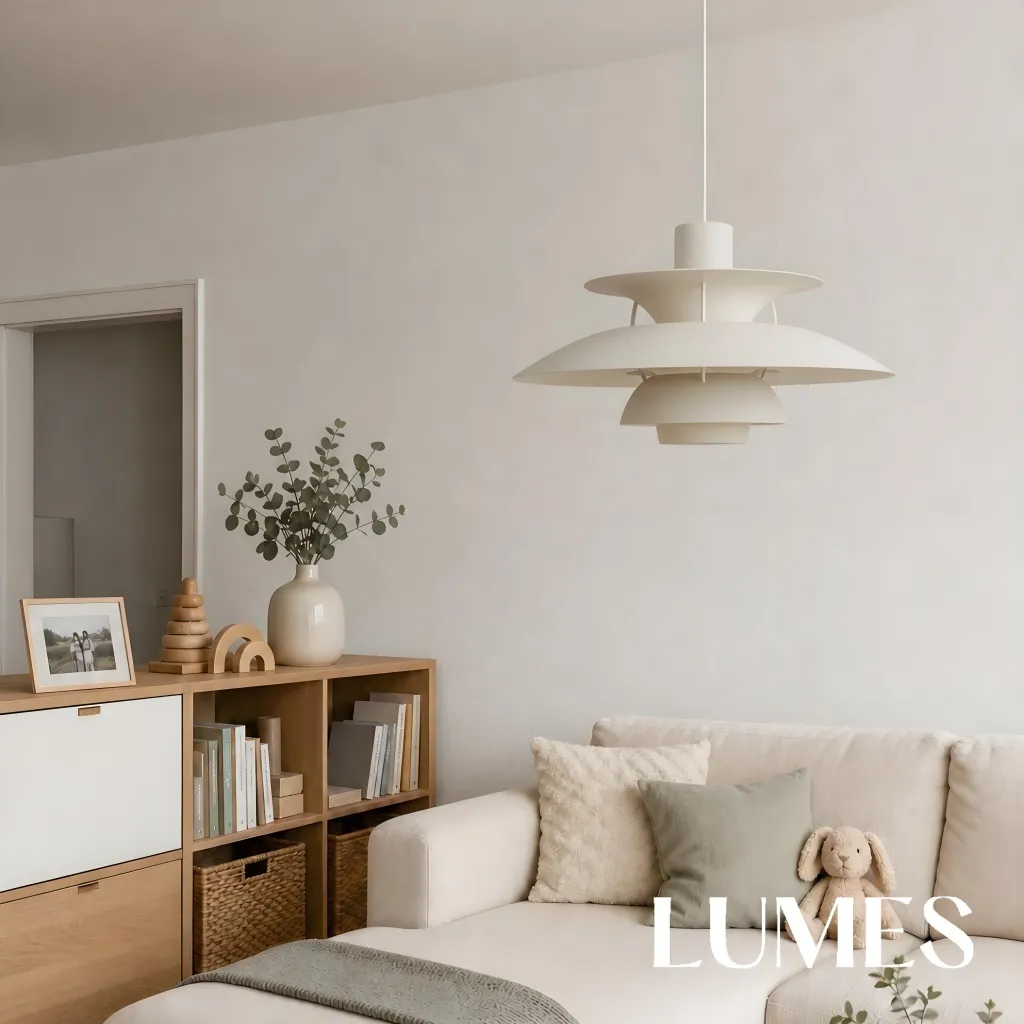
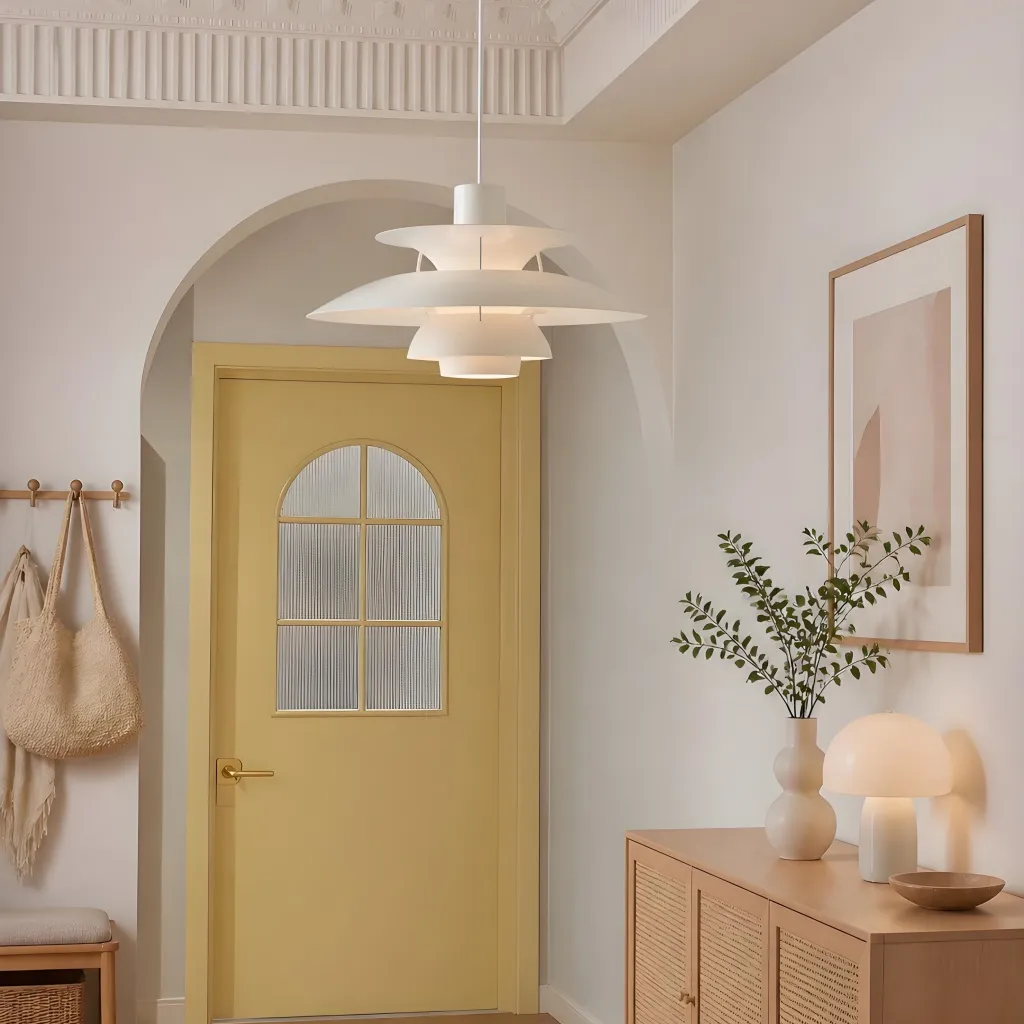
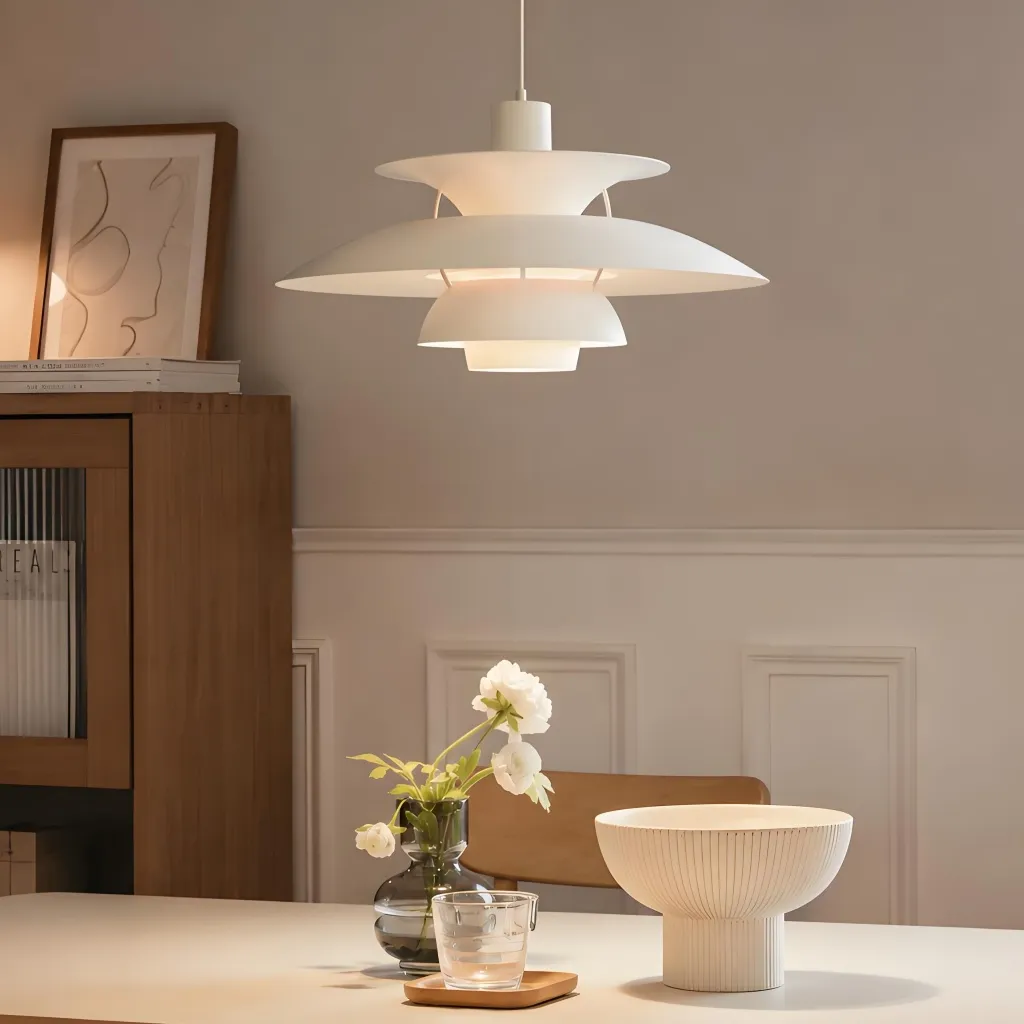
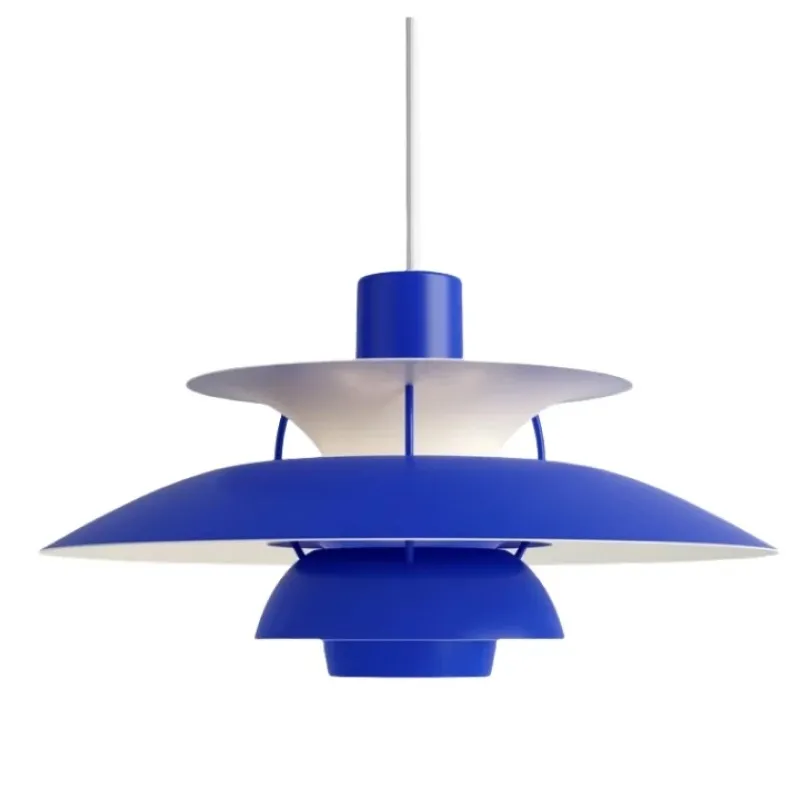
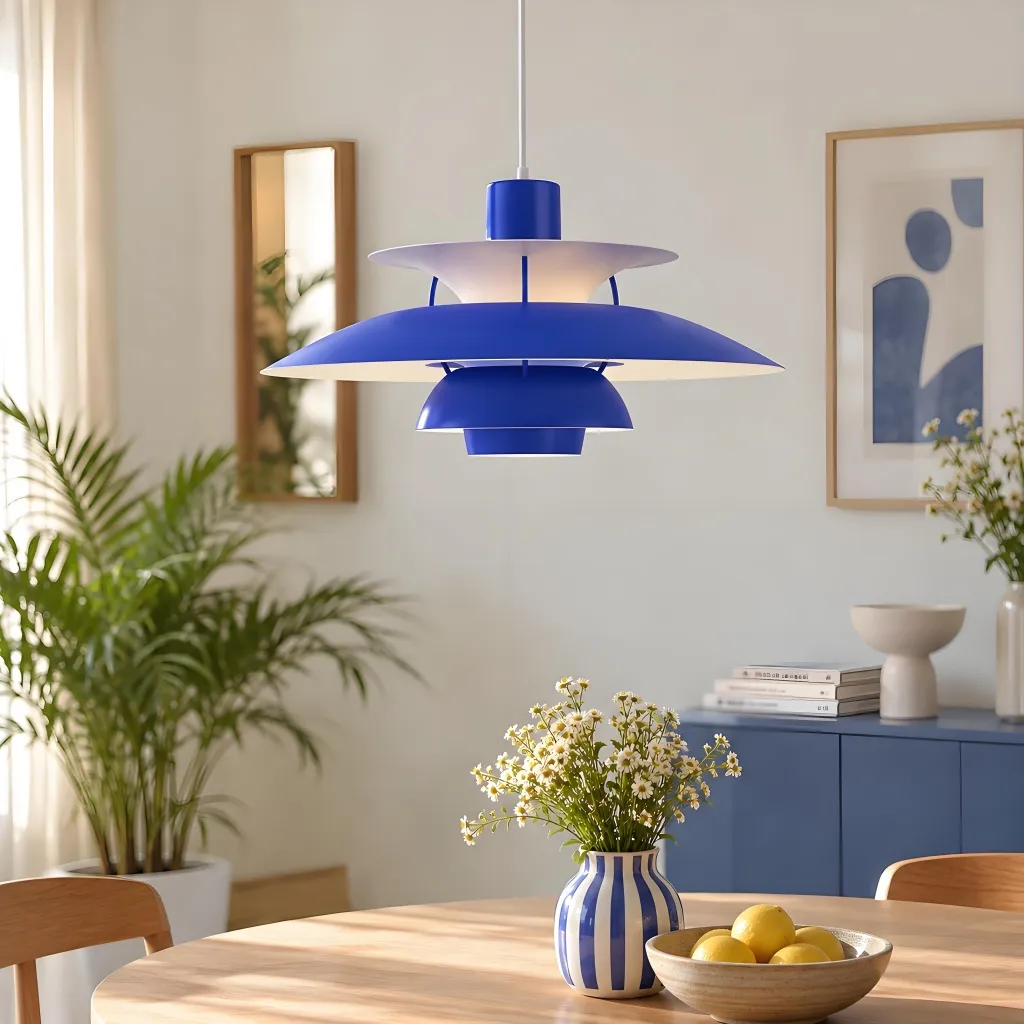
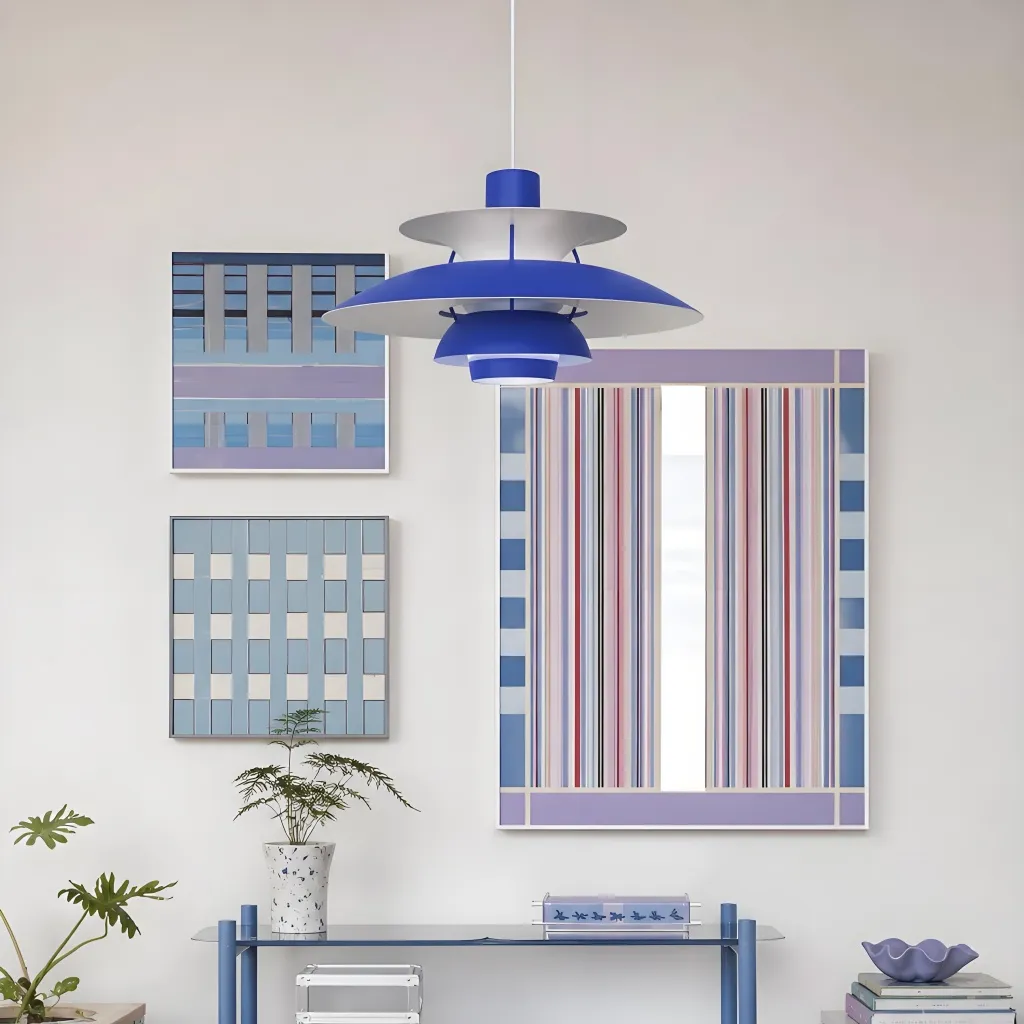
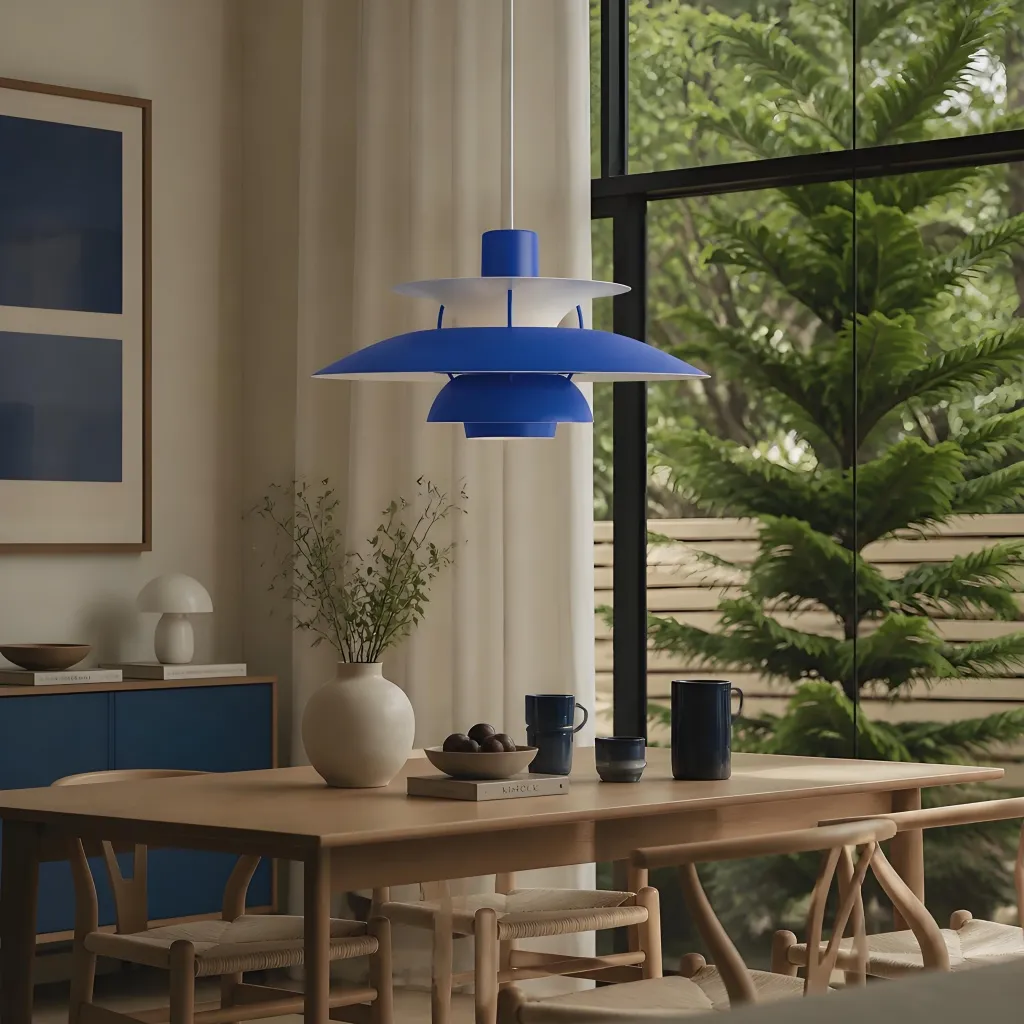
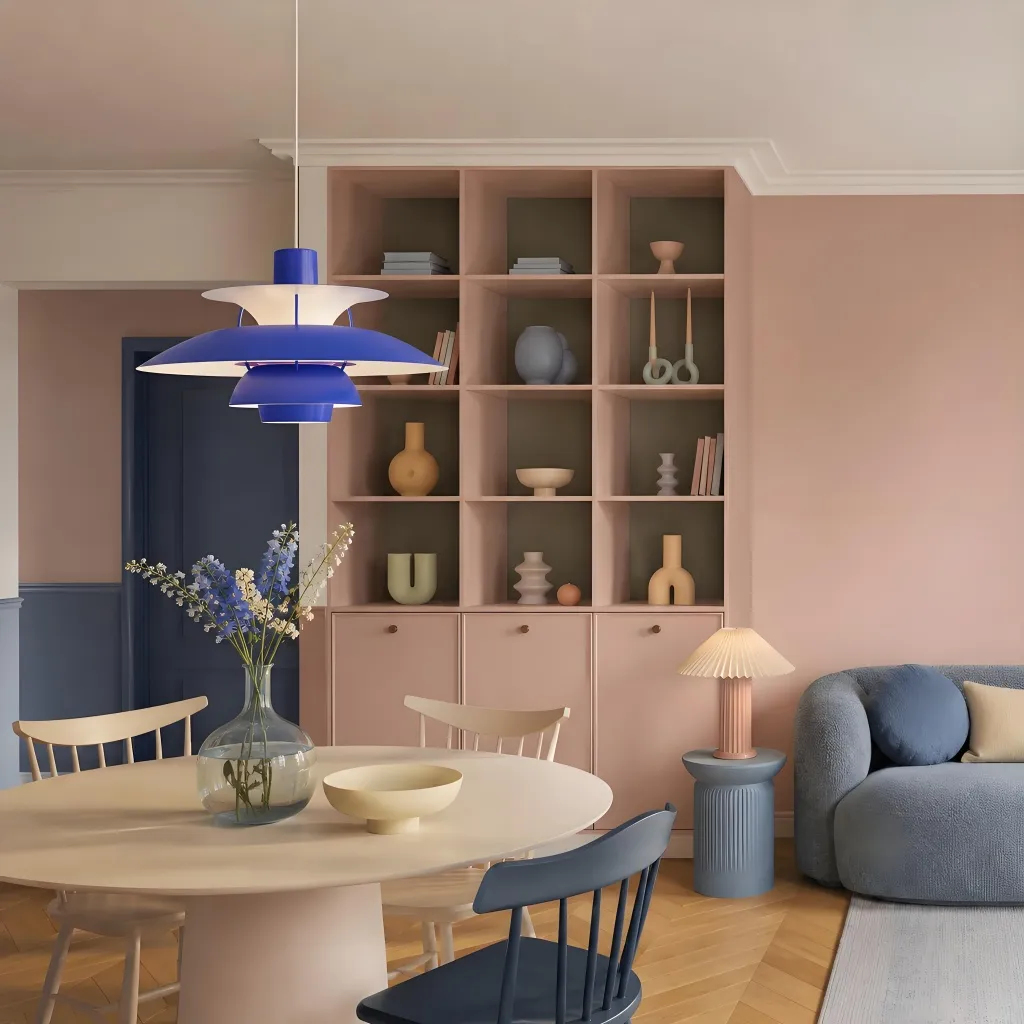
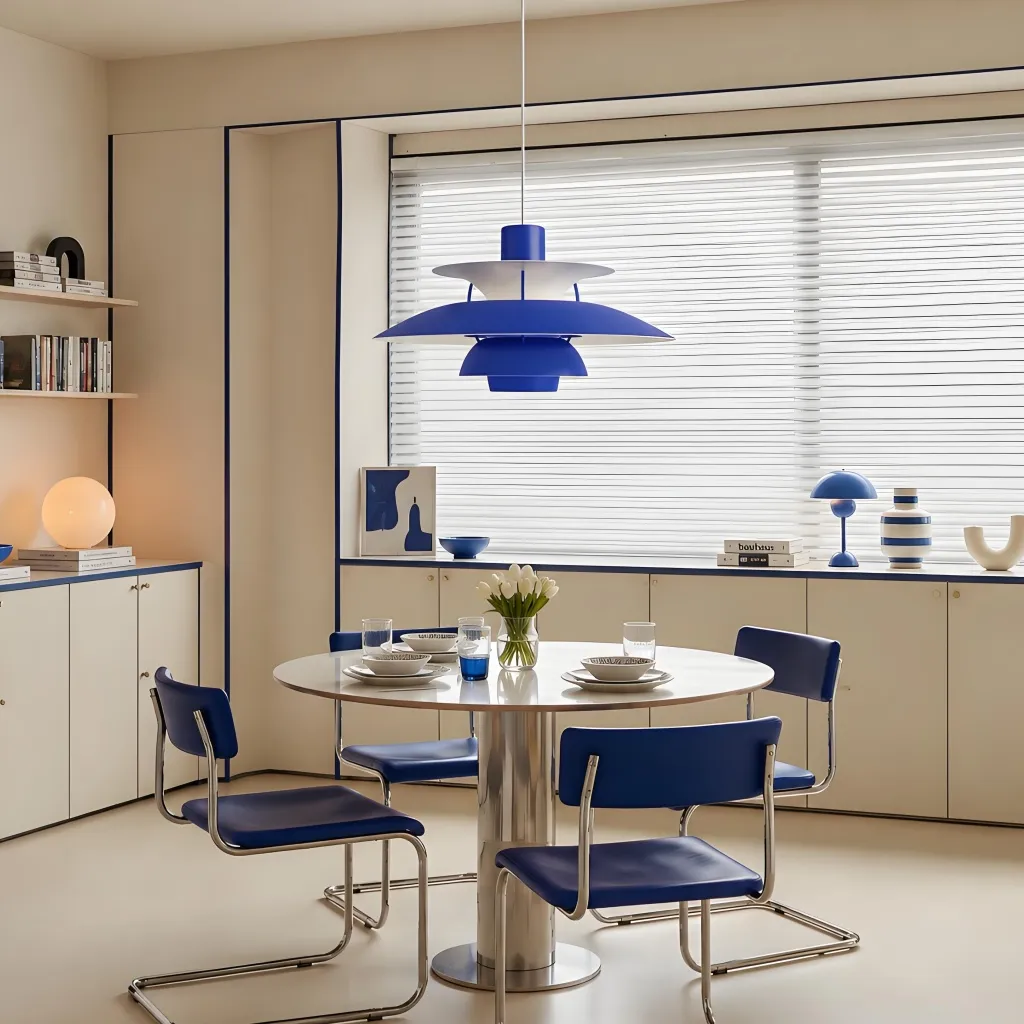
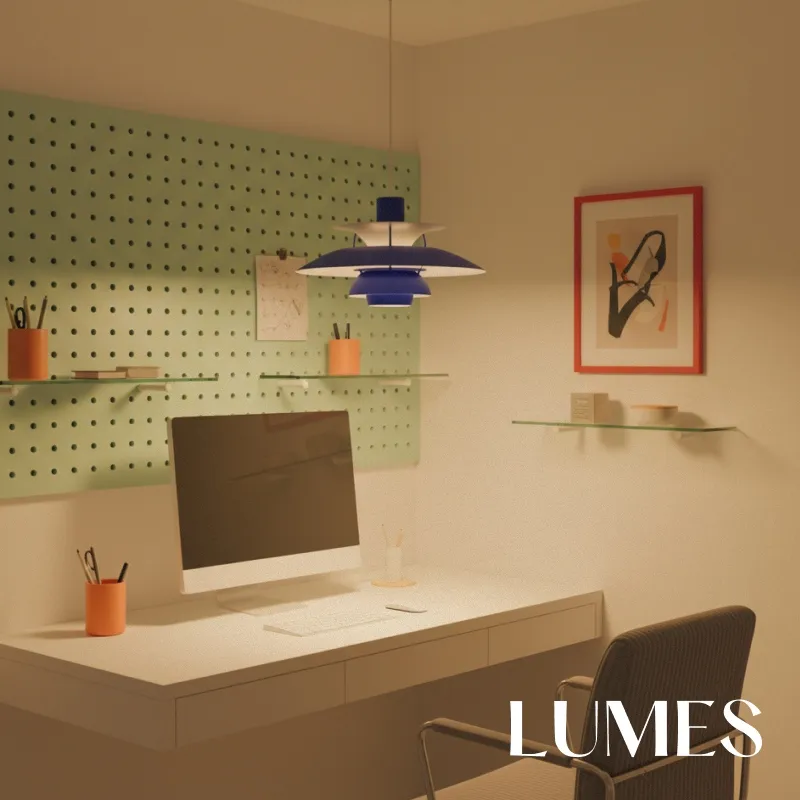
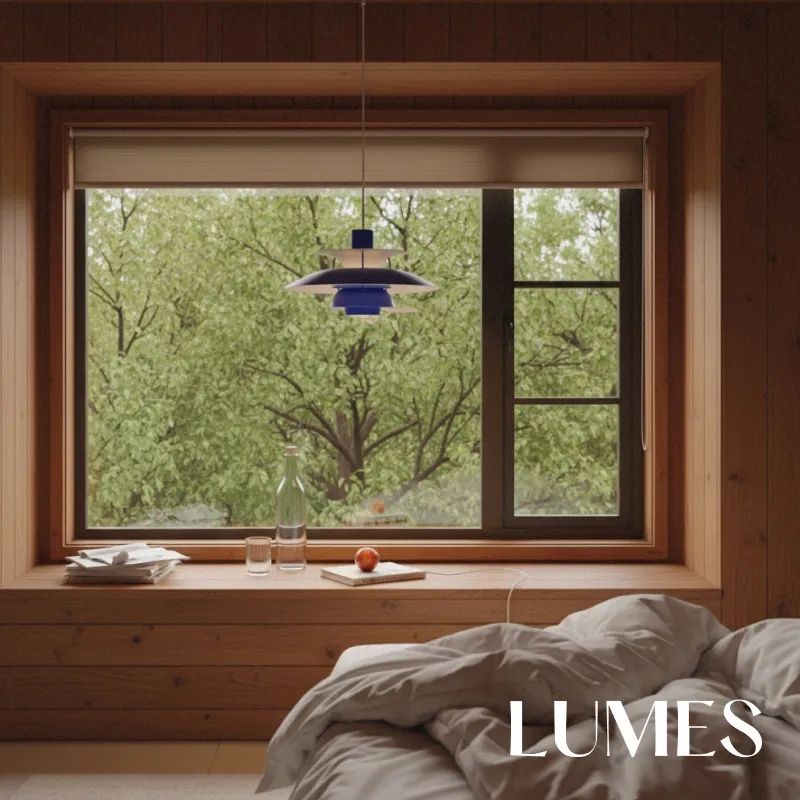
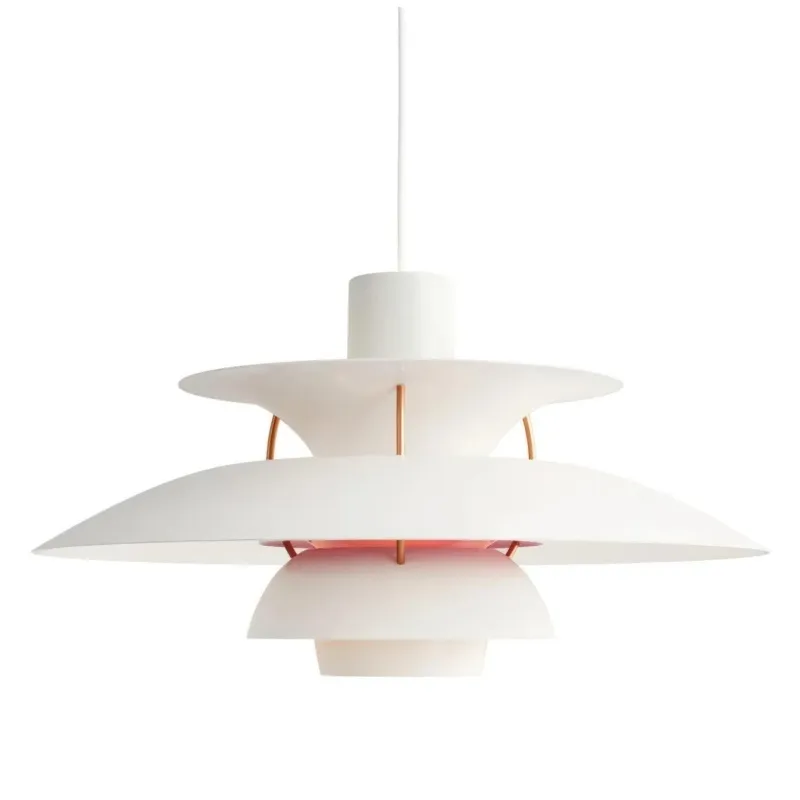
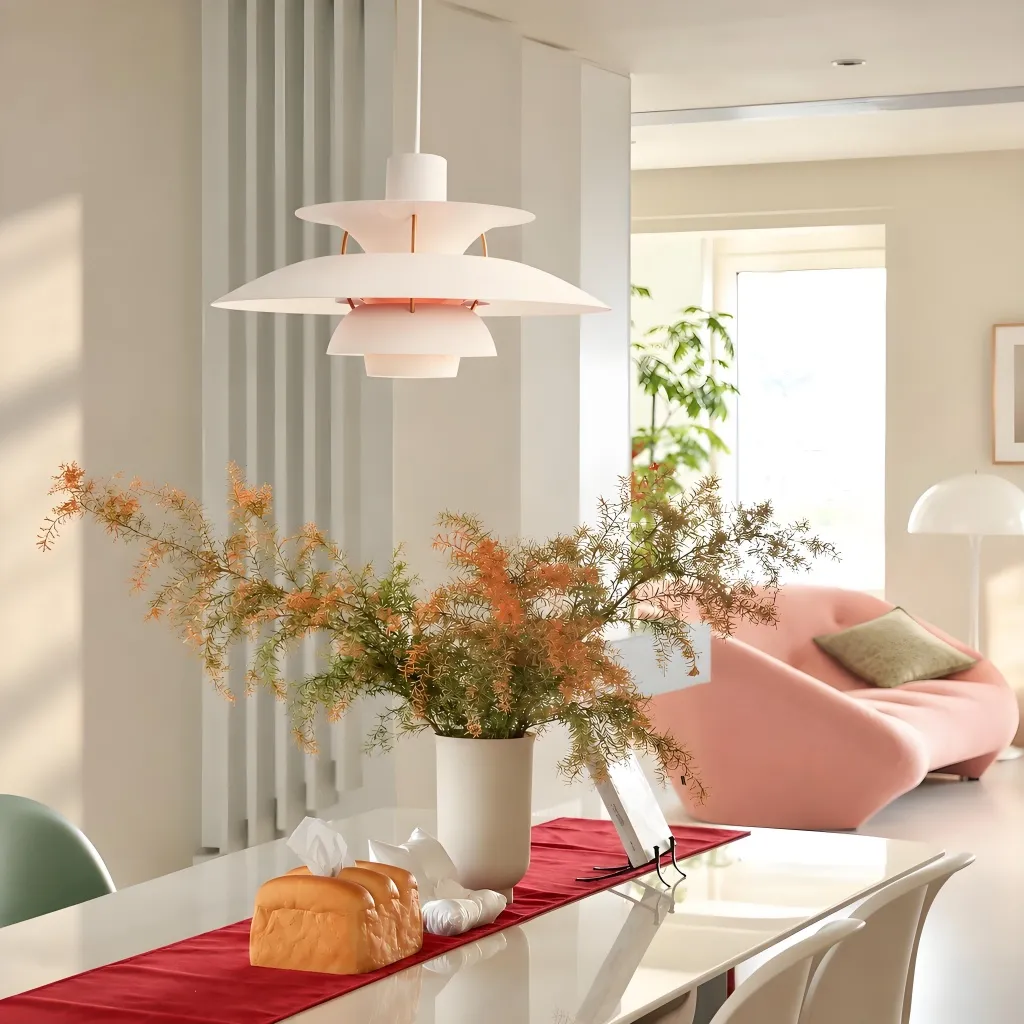
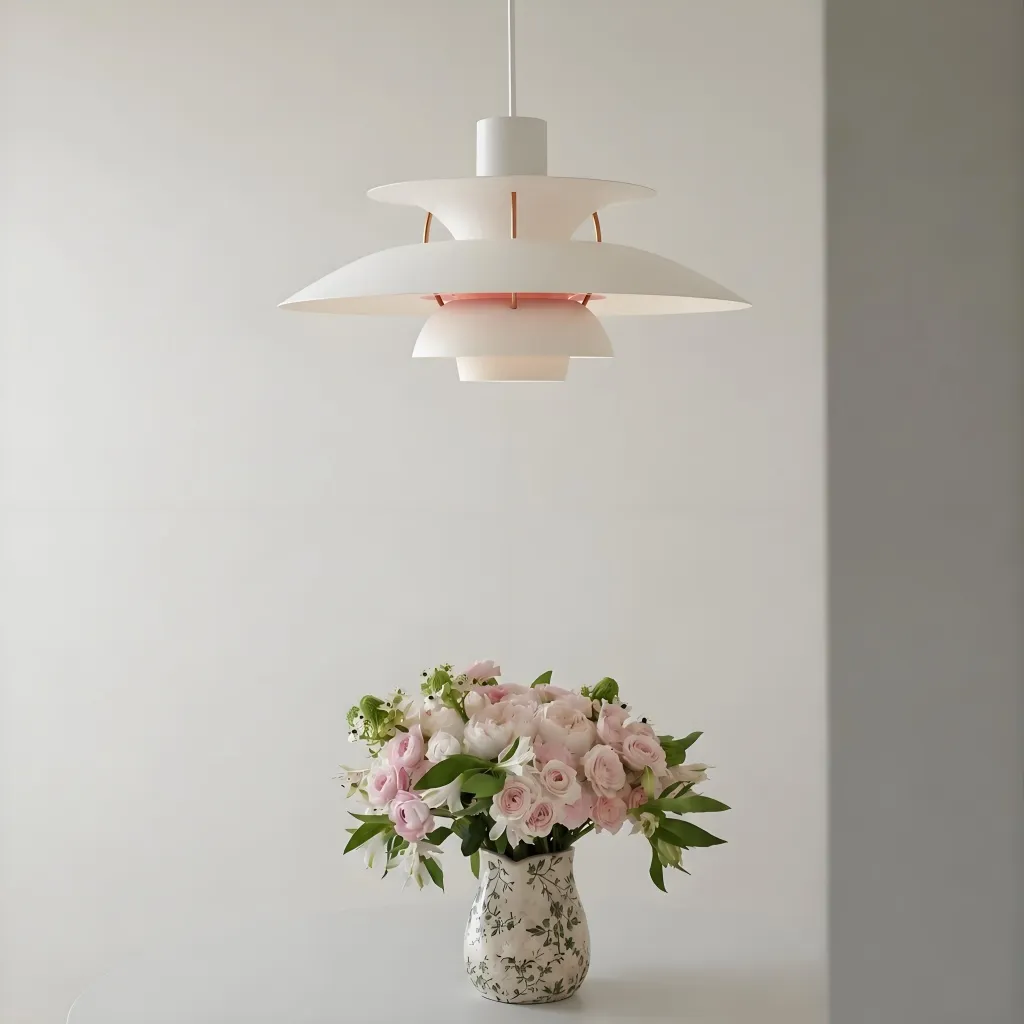
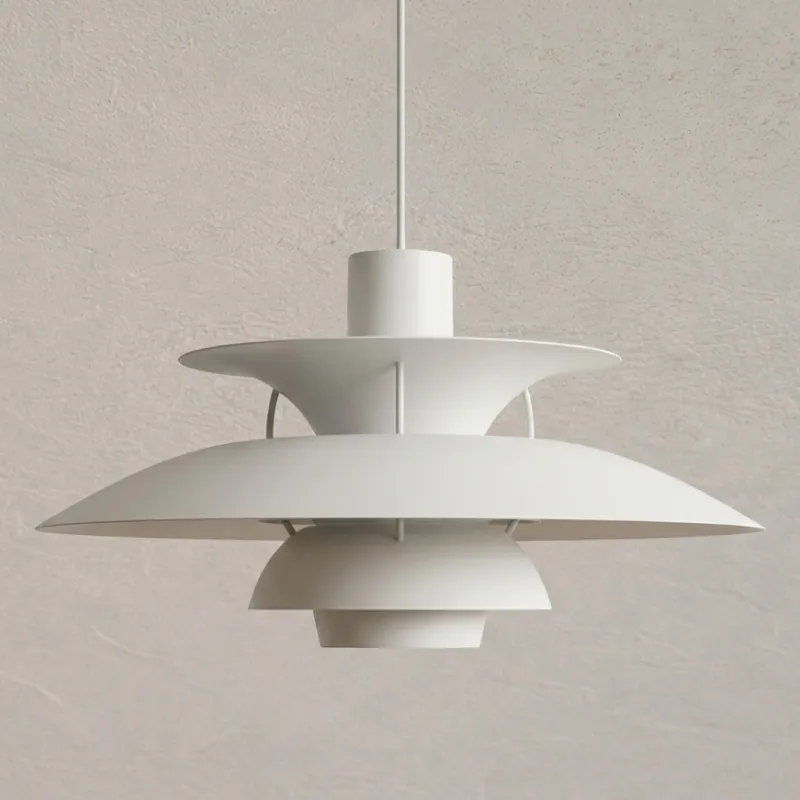
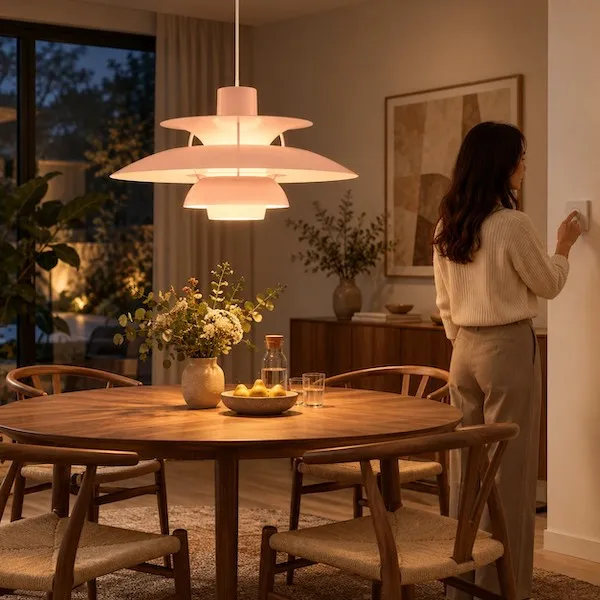
The Lumesdesign Danish multilayer metal pendant lamp is listed with a layered metal shade, aluminium details and an E27 bulb format. That combination gives you control over the replaceable light source. A warm-white frosted A-shape or globe is a sensible first comparison; select the final shape only after checking the opening, clearance and the brightness you need.
For the fixture-level eye-line and shade checks that sit alongside bulb choice, read Best Low-Glare Pendant Lights for Dining Rooms: What to Check Before Buying. When you are ready to compare the product with your room, view the current pendant details and verify the selected bulb requirements before purchase.
A 60-second E27 checklist
- Base matches: E27.
- Bulb fits the opening and does not touch the shade.
- Lumens suit the table's job and the room's other layers.
- Shape and finish hide or soften the brightest source.
- 2700K-3000K works with nearby lighting.
- Dimming, wattage and enclosure requirements are confirmed.
FAQ: E27 bulbs for pendant lights
What is the best E27 bulb for a dining pendant?
Start with a warm-white, frosted LED around 2700K-3000K, then choose lumens and shape for the table and shade. There is no single best bulb for every room.
Is 800 lumens enough for a dining room?
It can work for a single table layer, especially with other lights. Use more than one source rather than relying on one very bright bulb for a large open room.
Are filament bulbs comfortable above a table?
Only when the shade hides the LED points and the output is appropriate. If the bulb is visible from a seat, frosted glass is usually calmer.
Can every E27 LED bulb be dimmed?
No. Confirm that the bulb is dimmable and that the dimmer and pendant are compatible before installing it.
Does warm white remove glare?
No. Warmth changes colour appearance. Glare is also affected by source visibility, lumens, shade depth and the viewing angle.