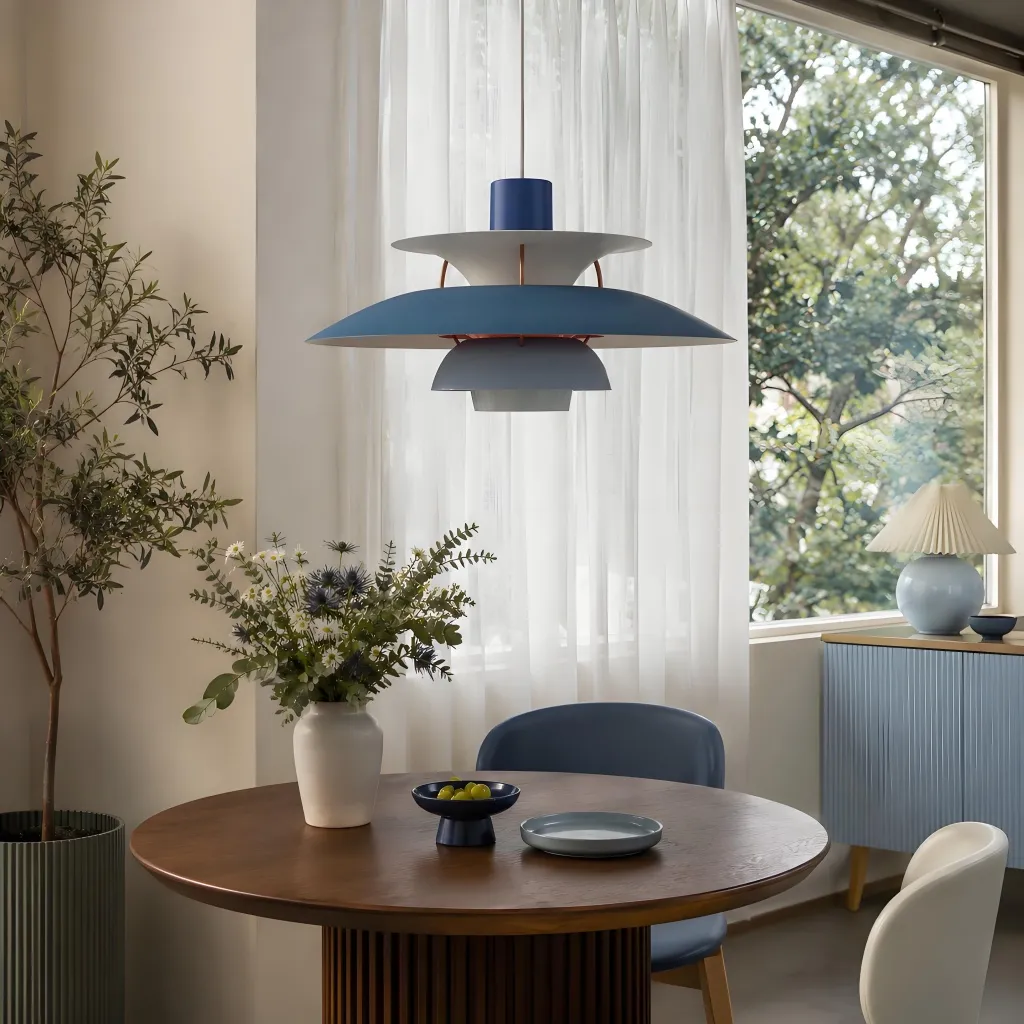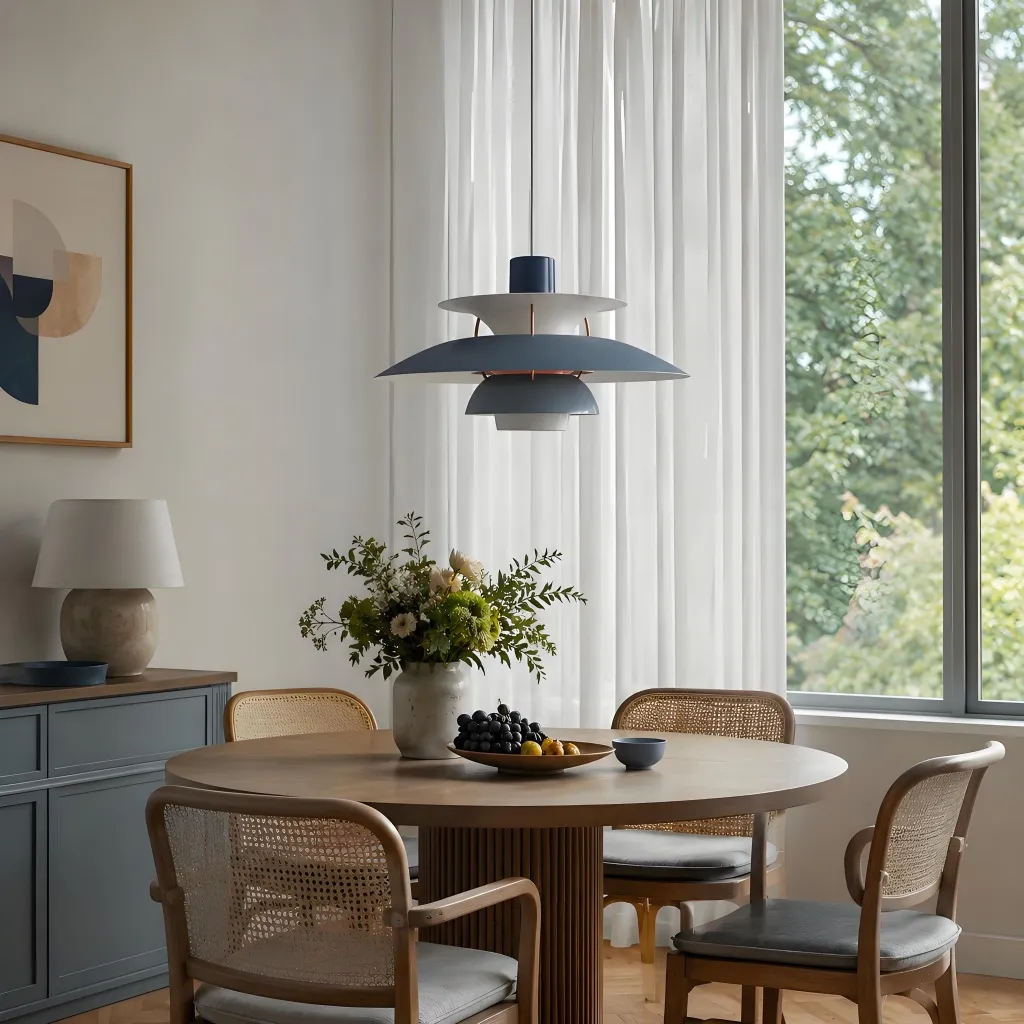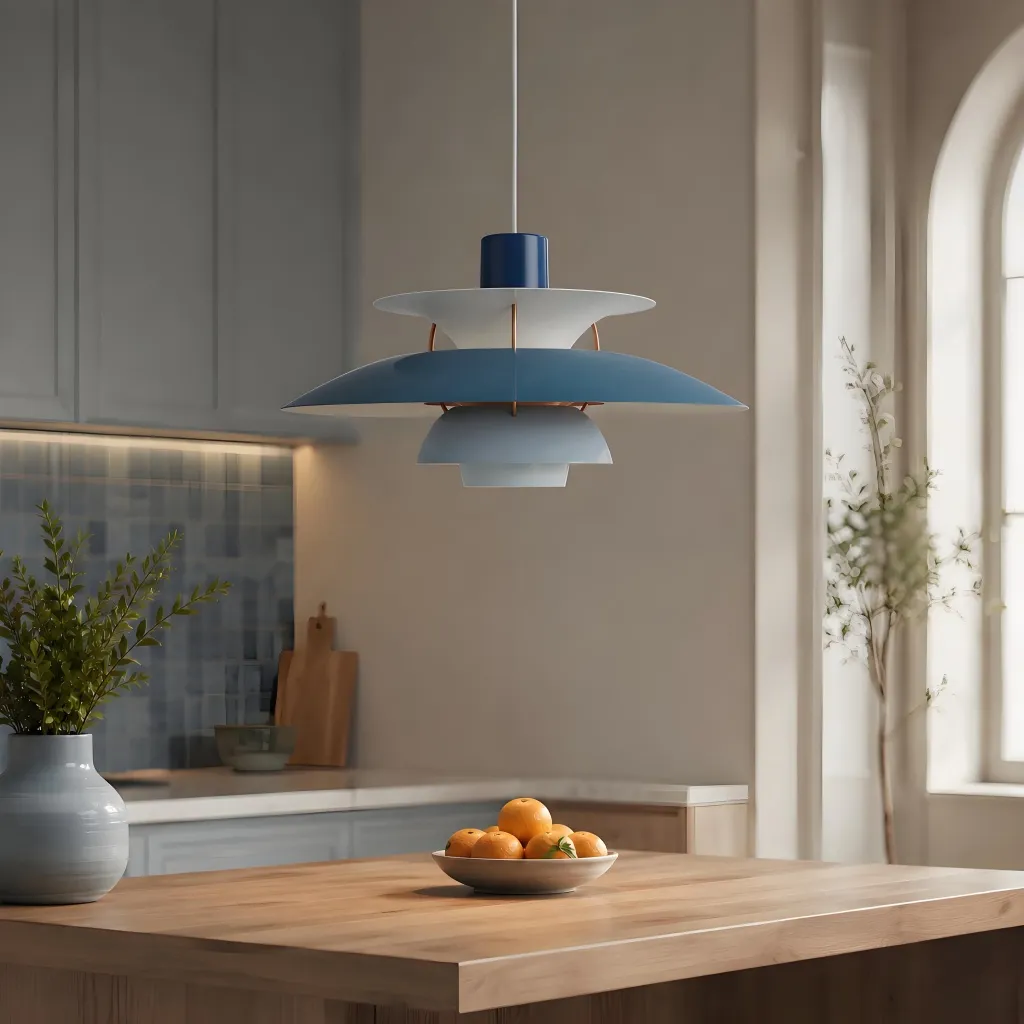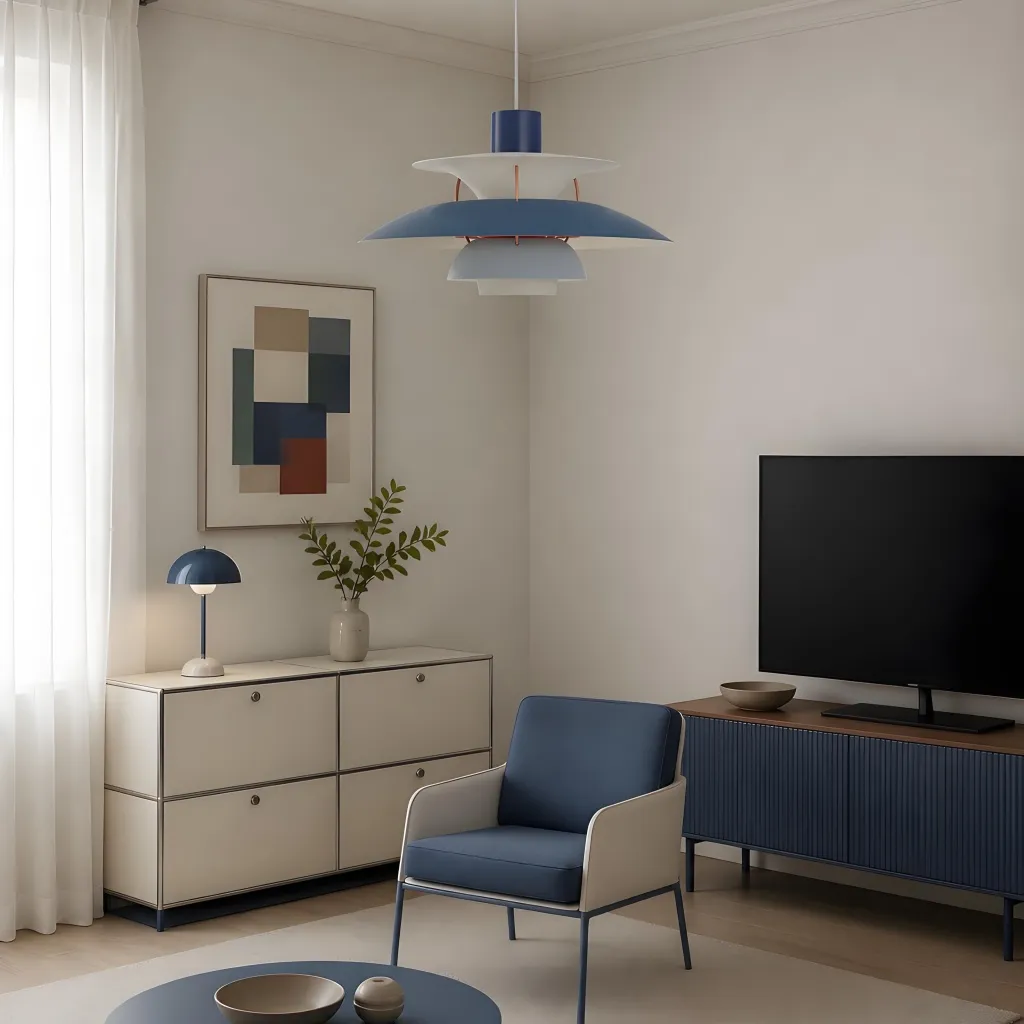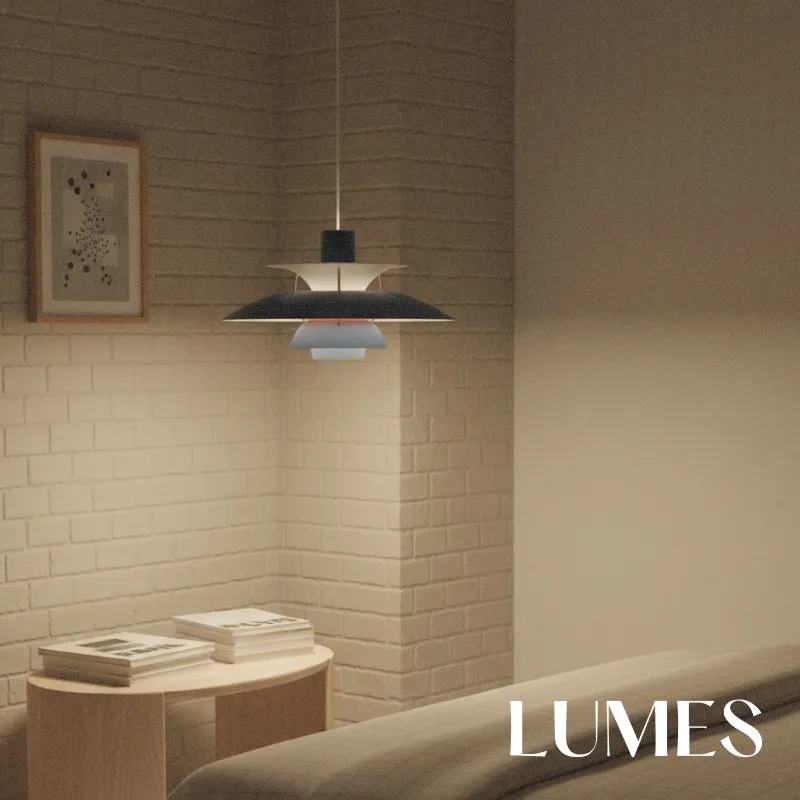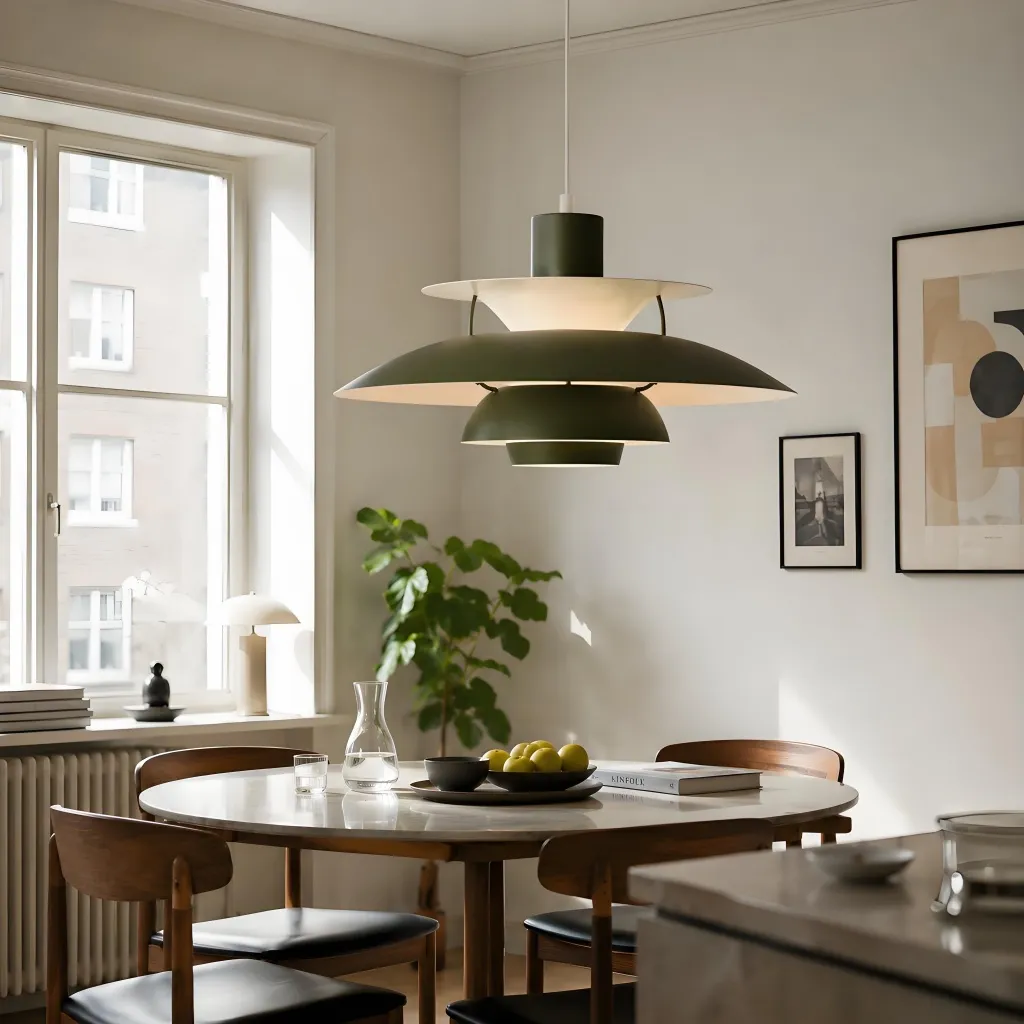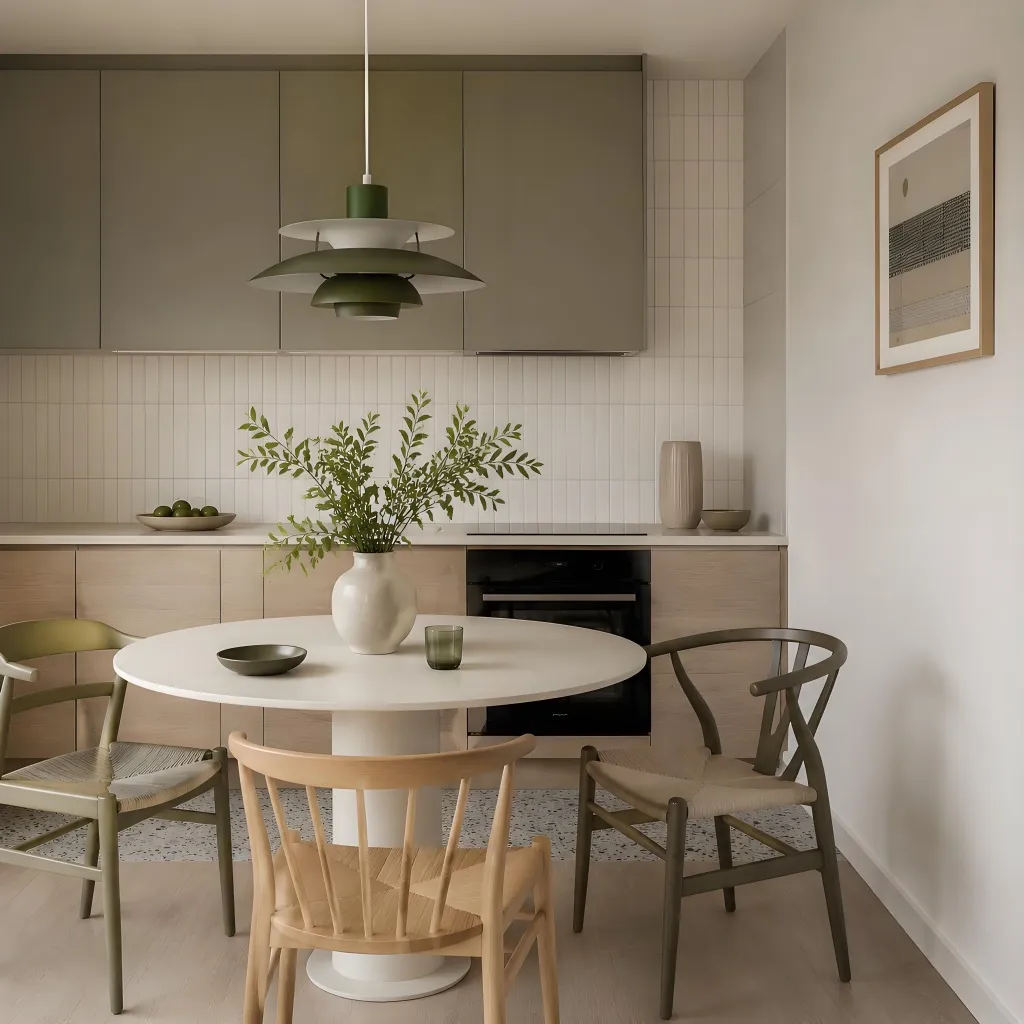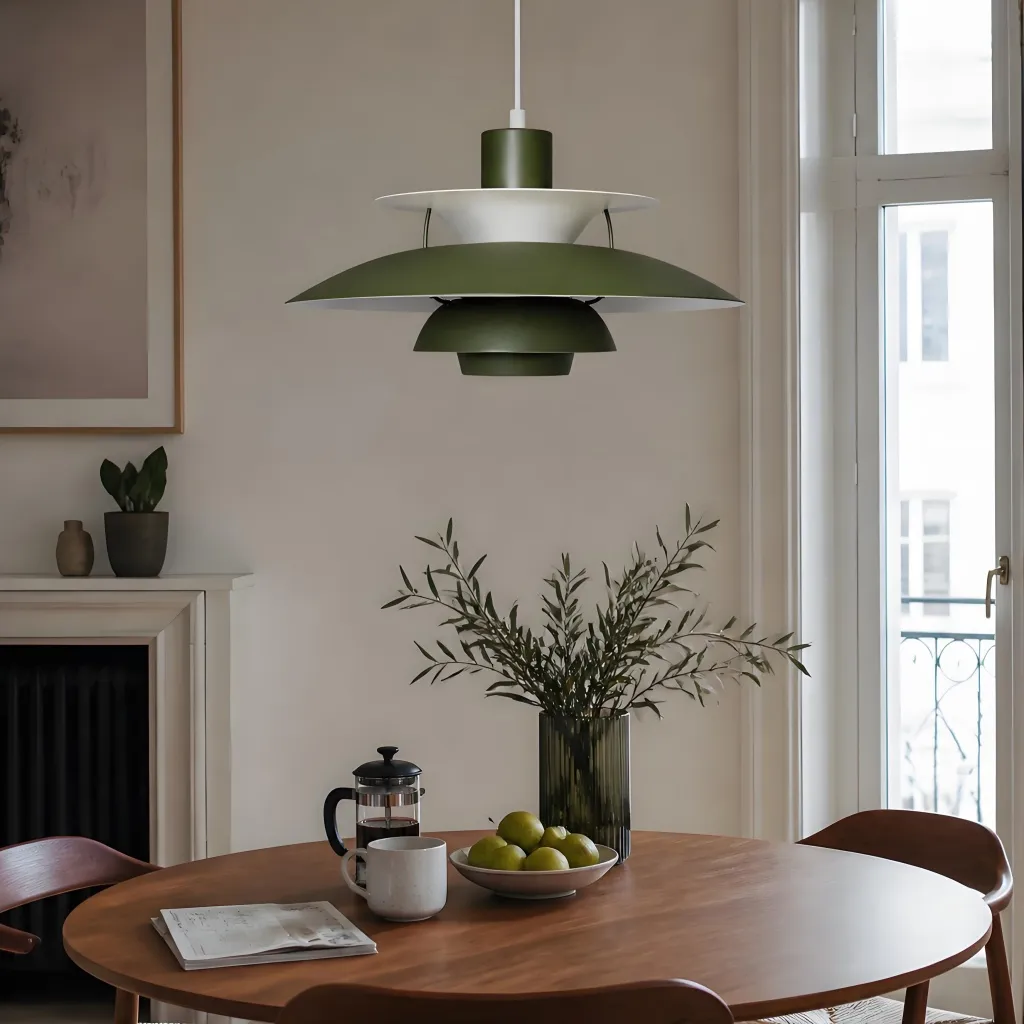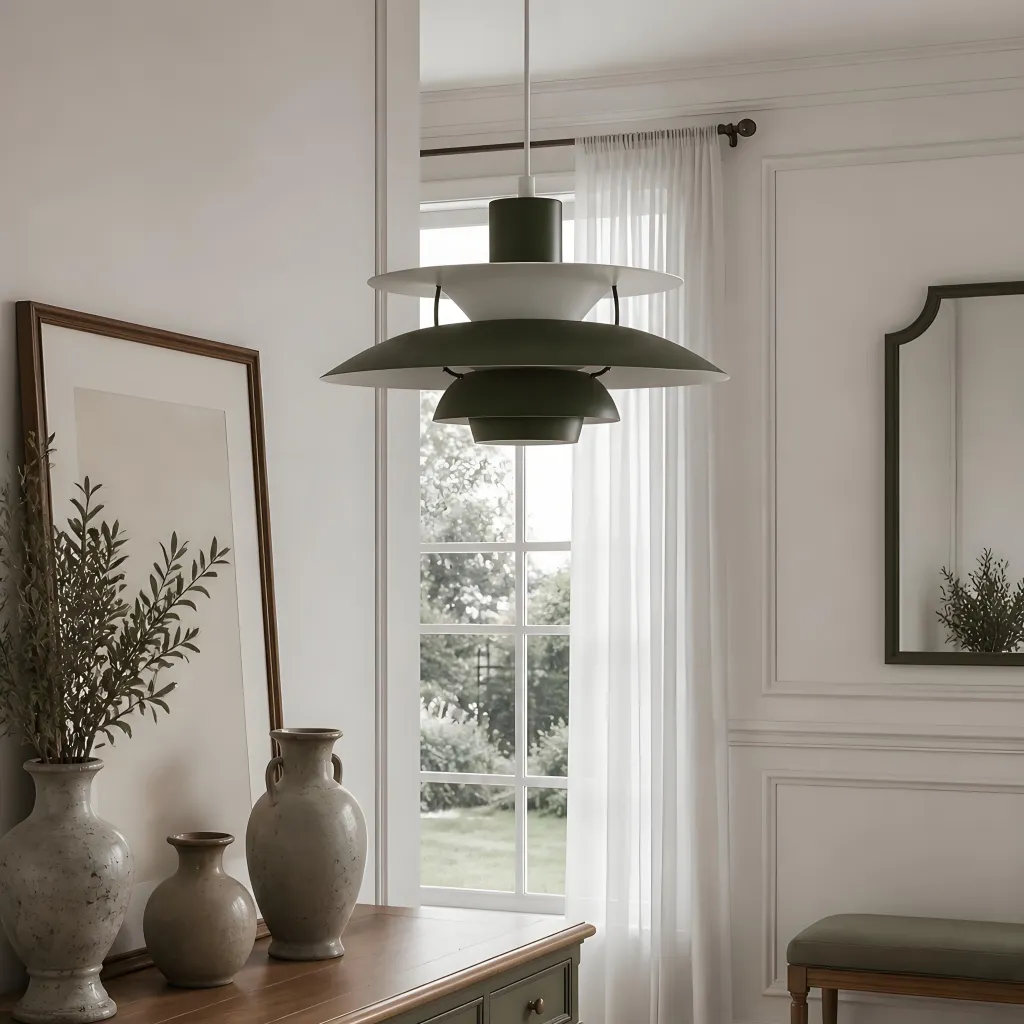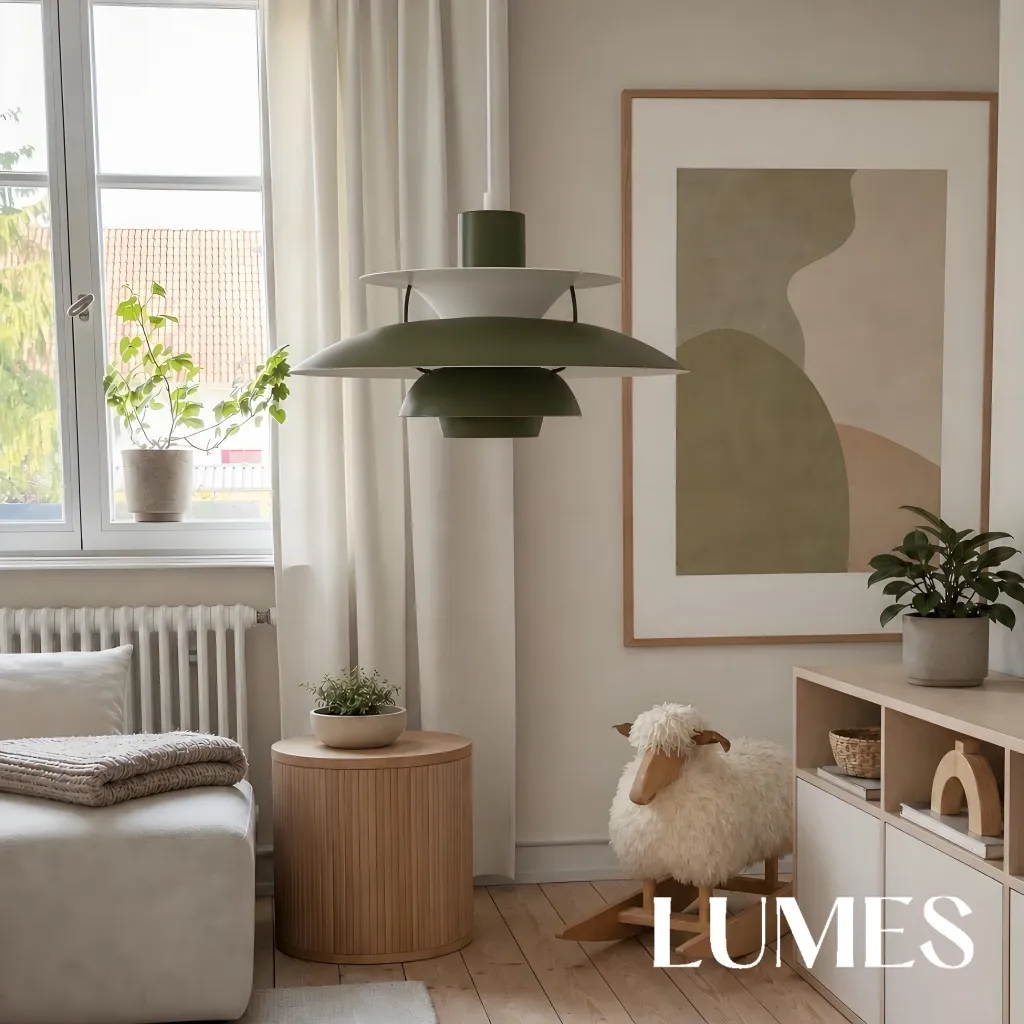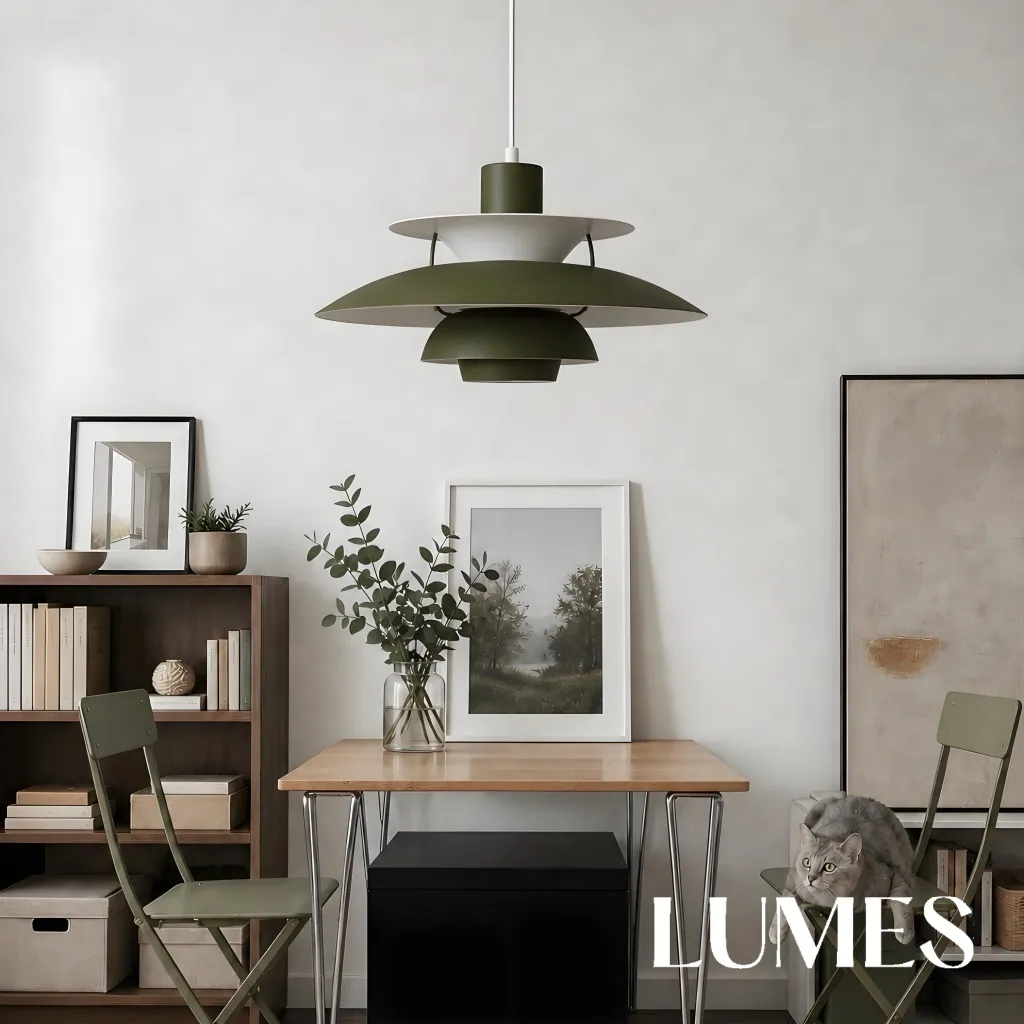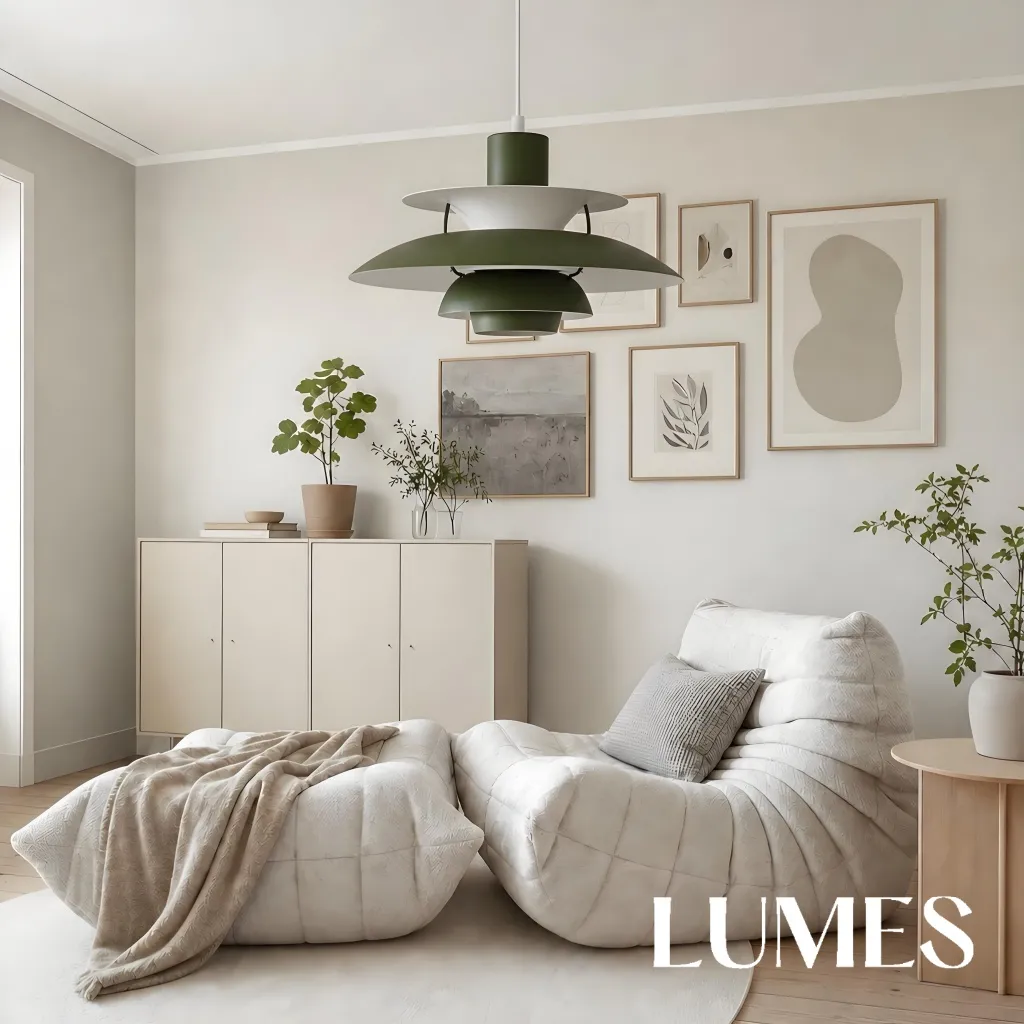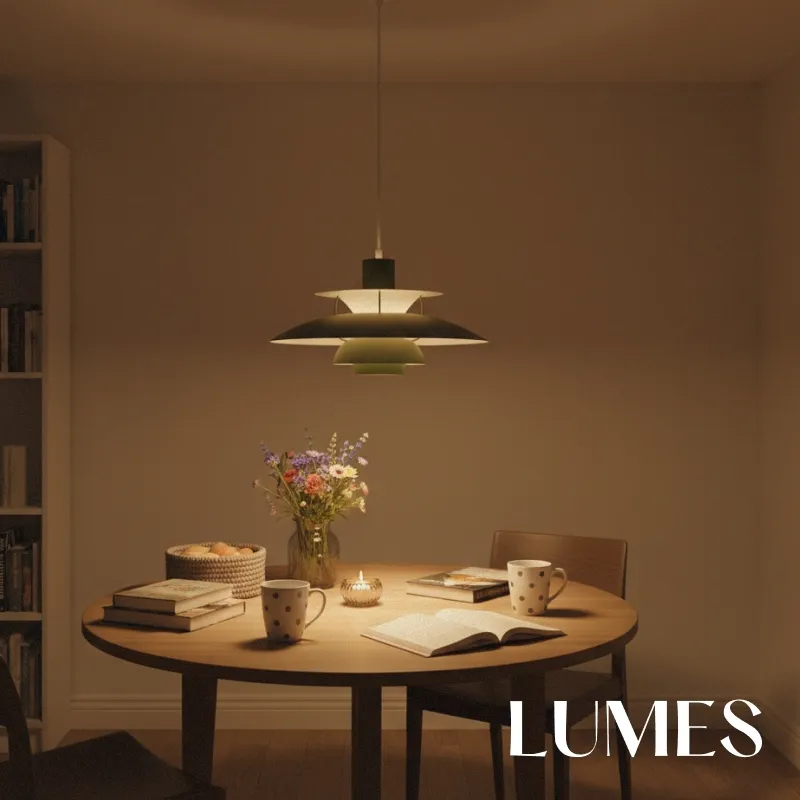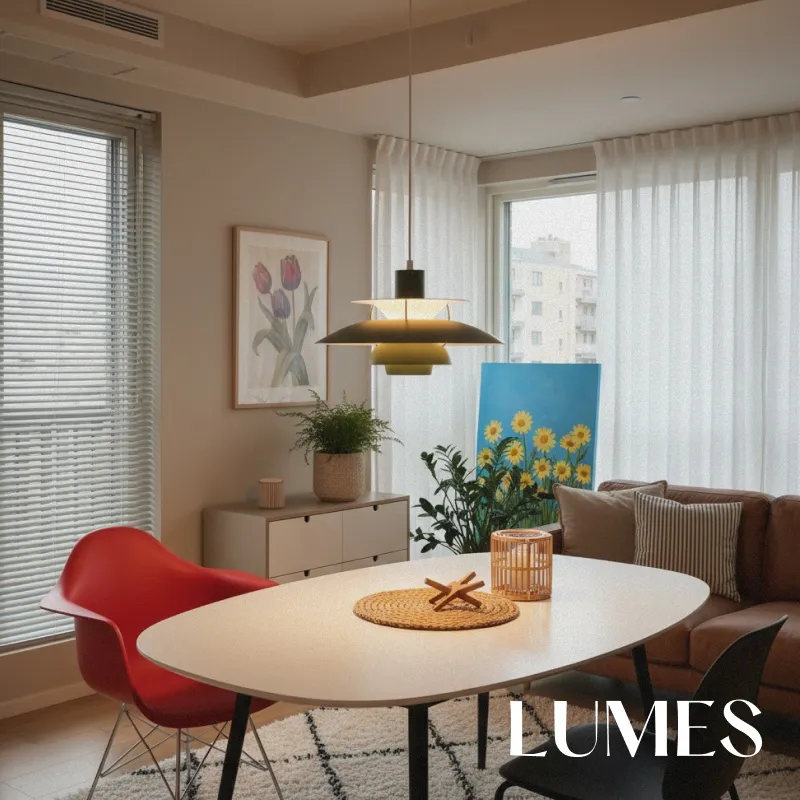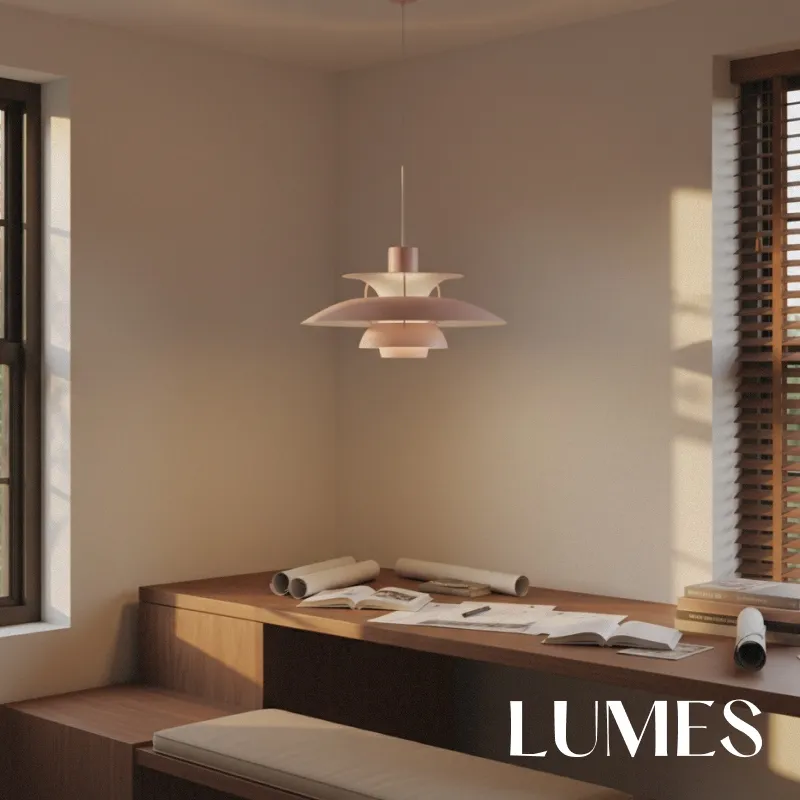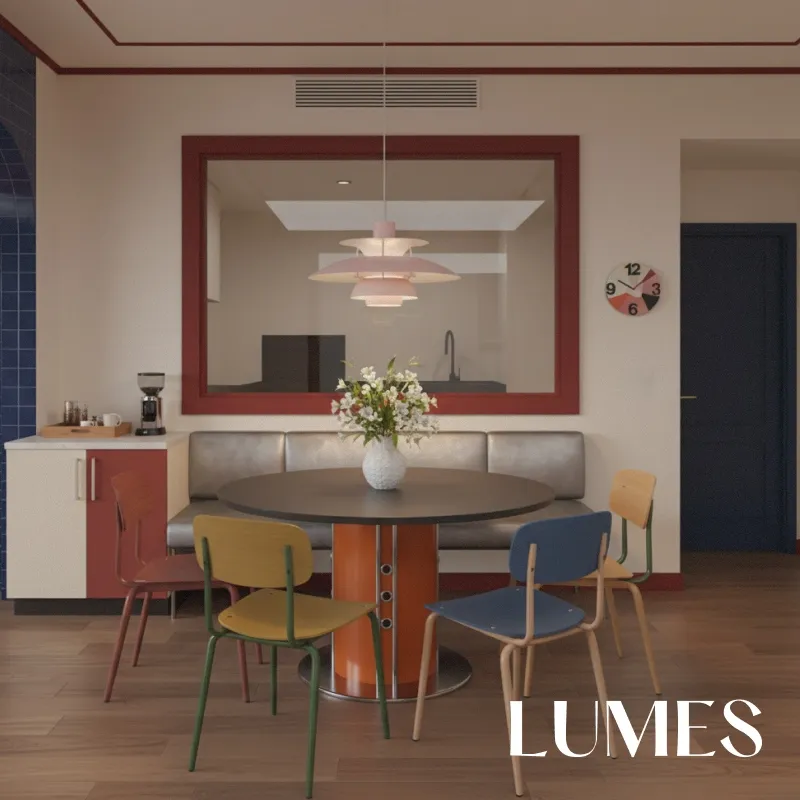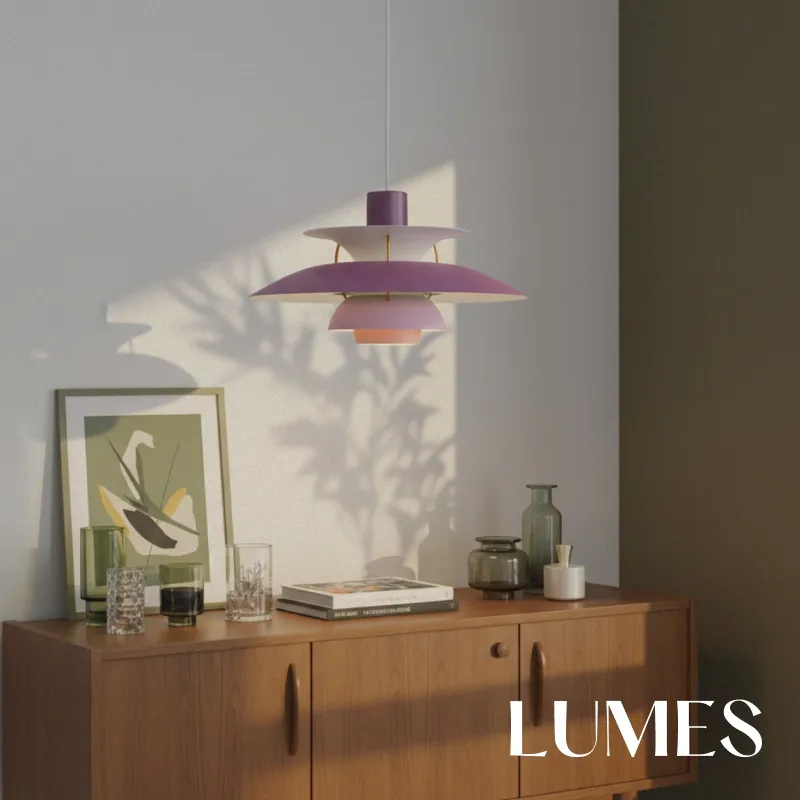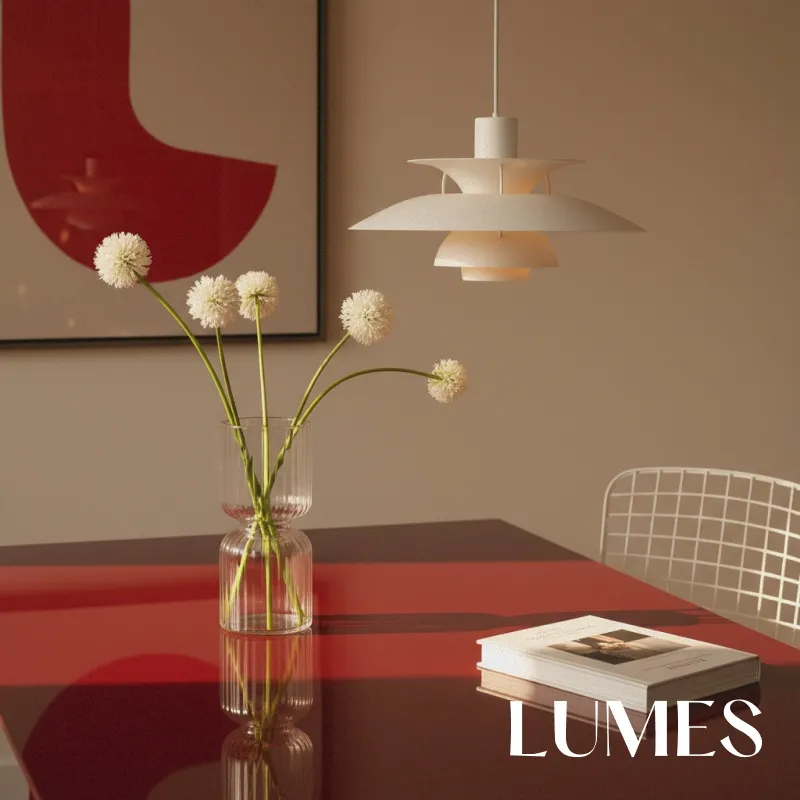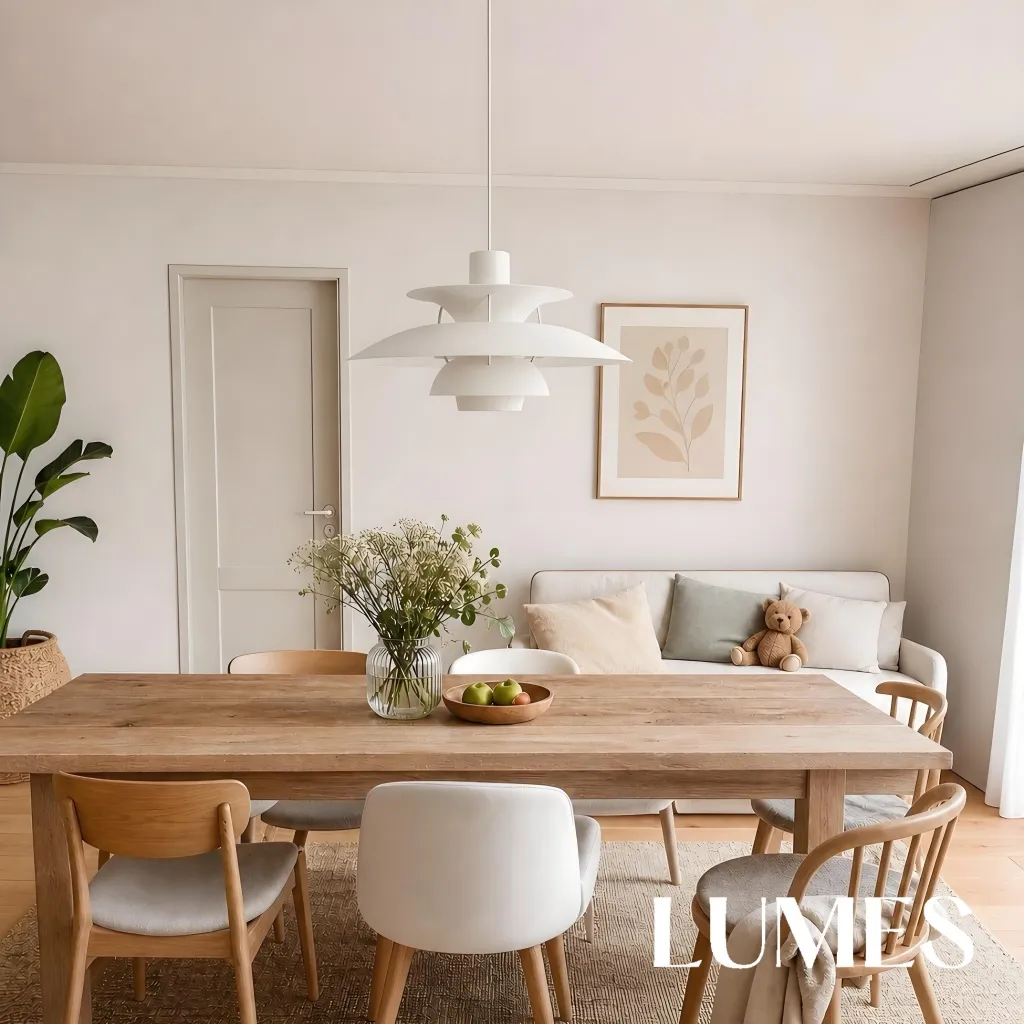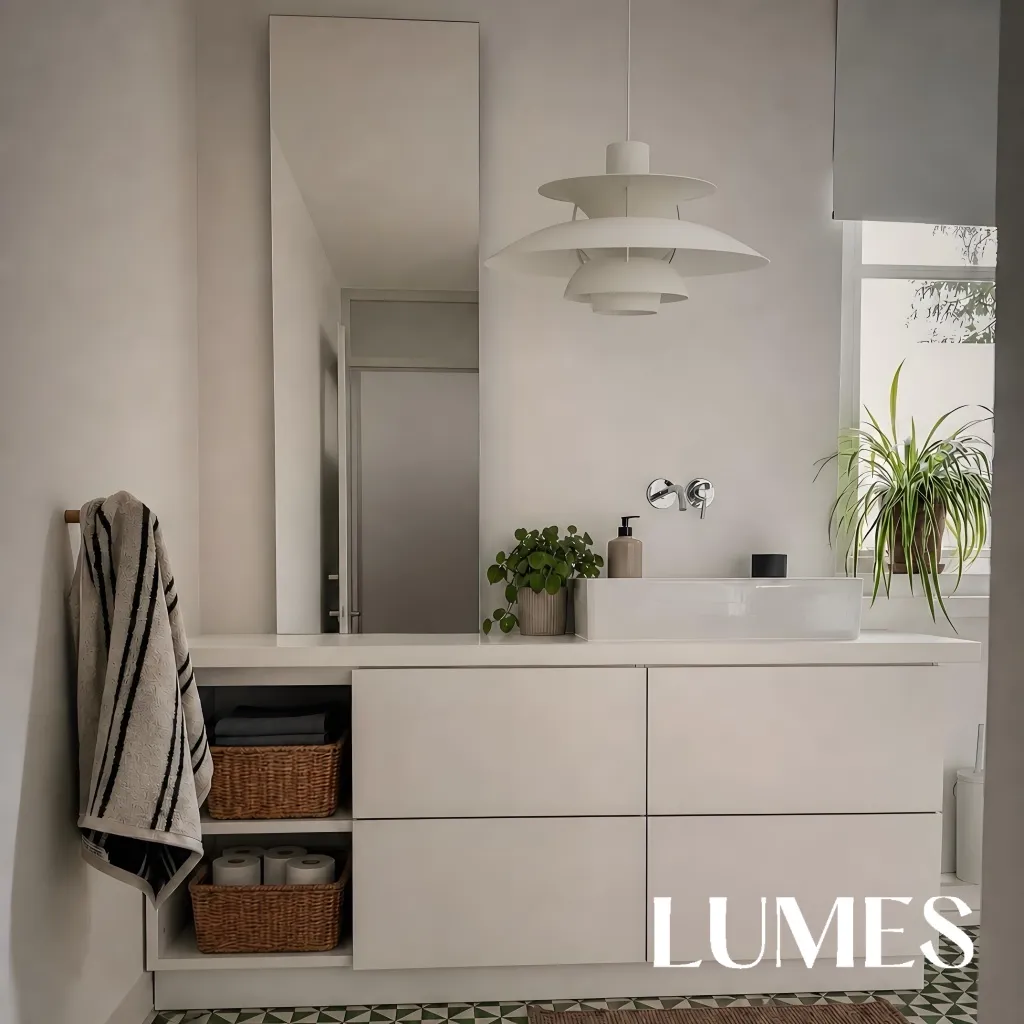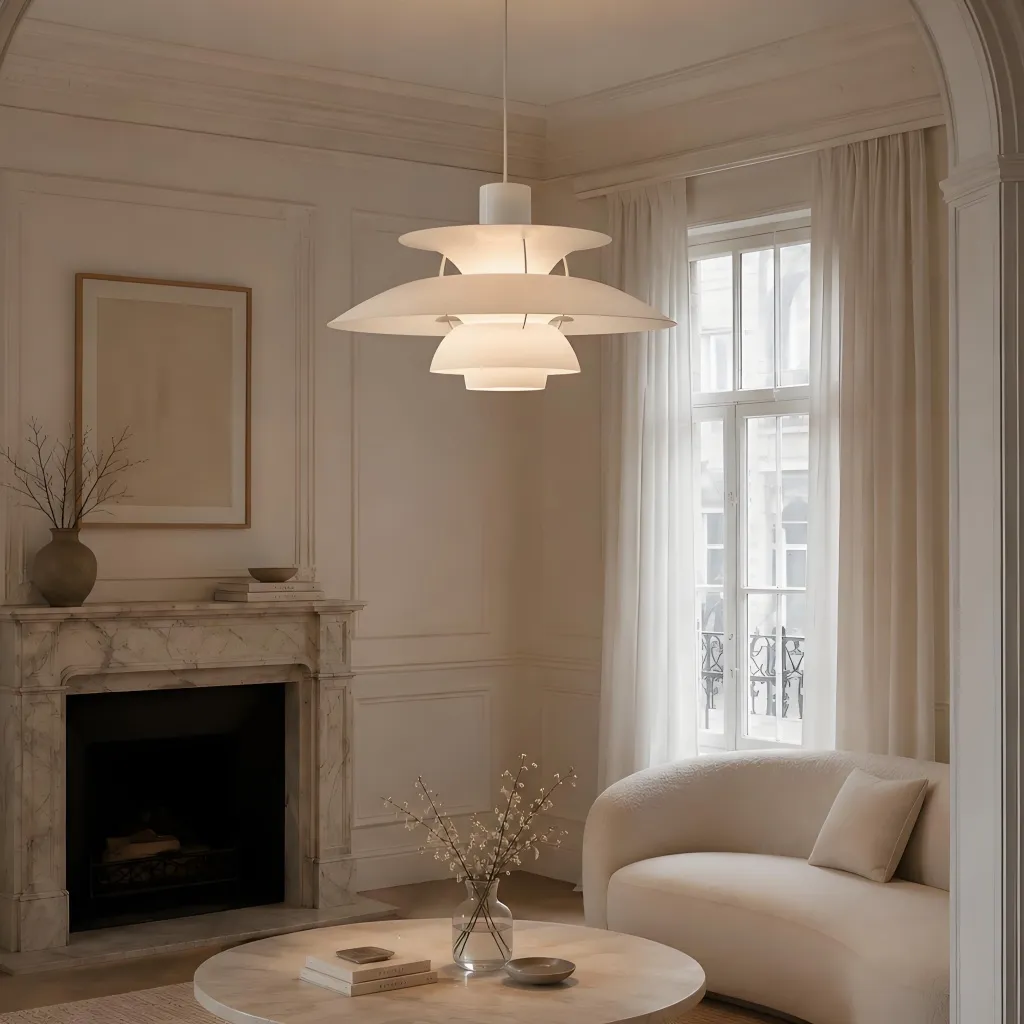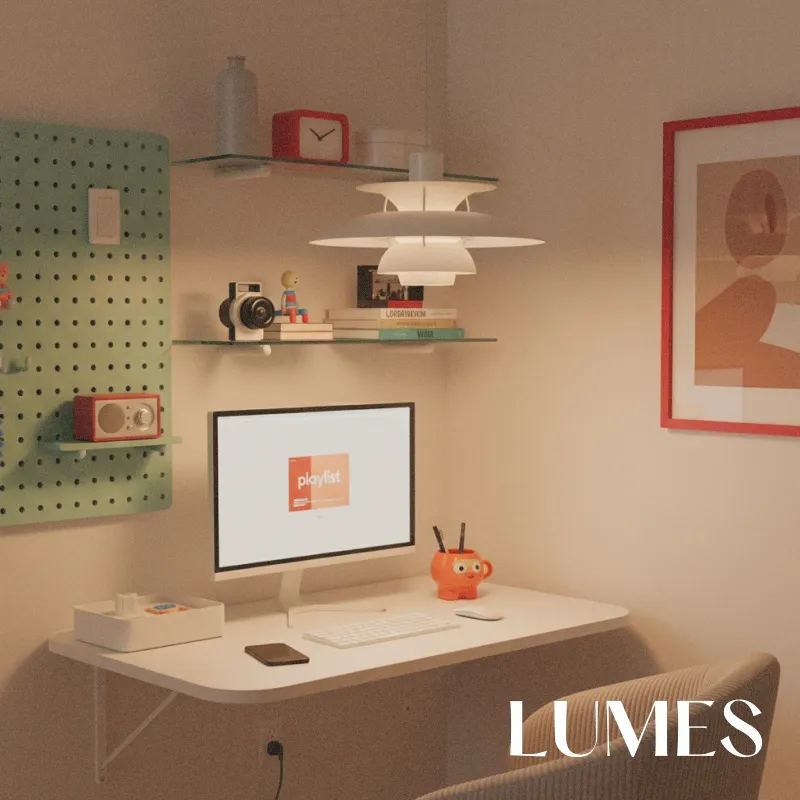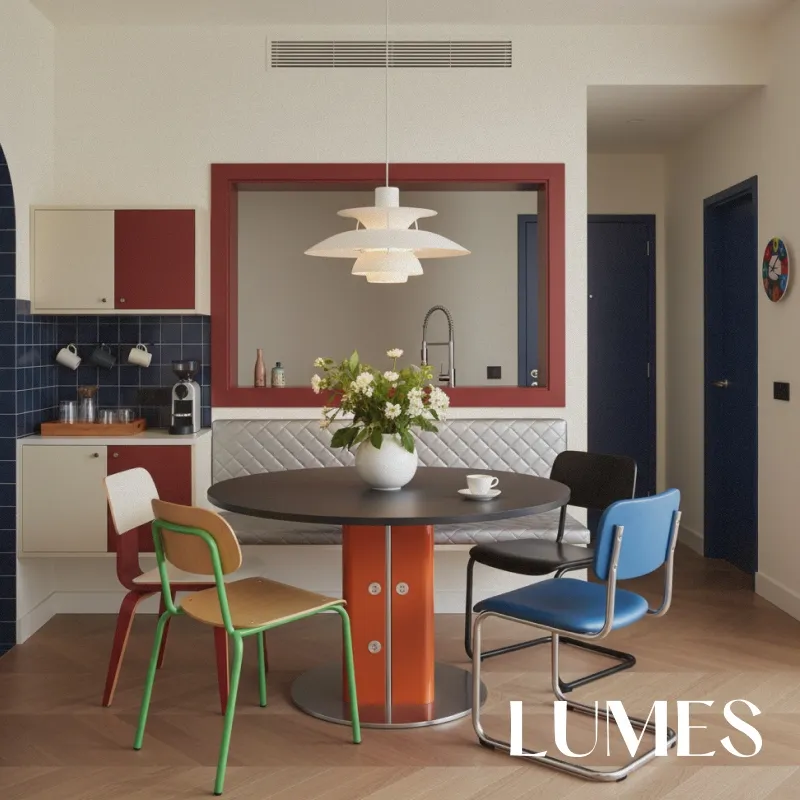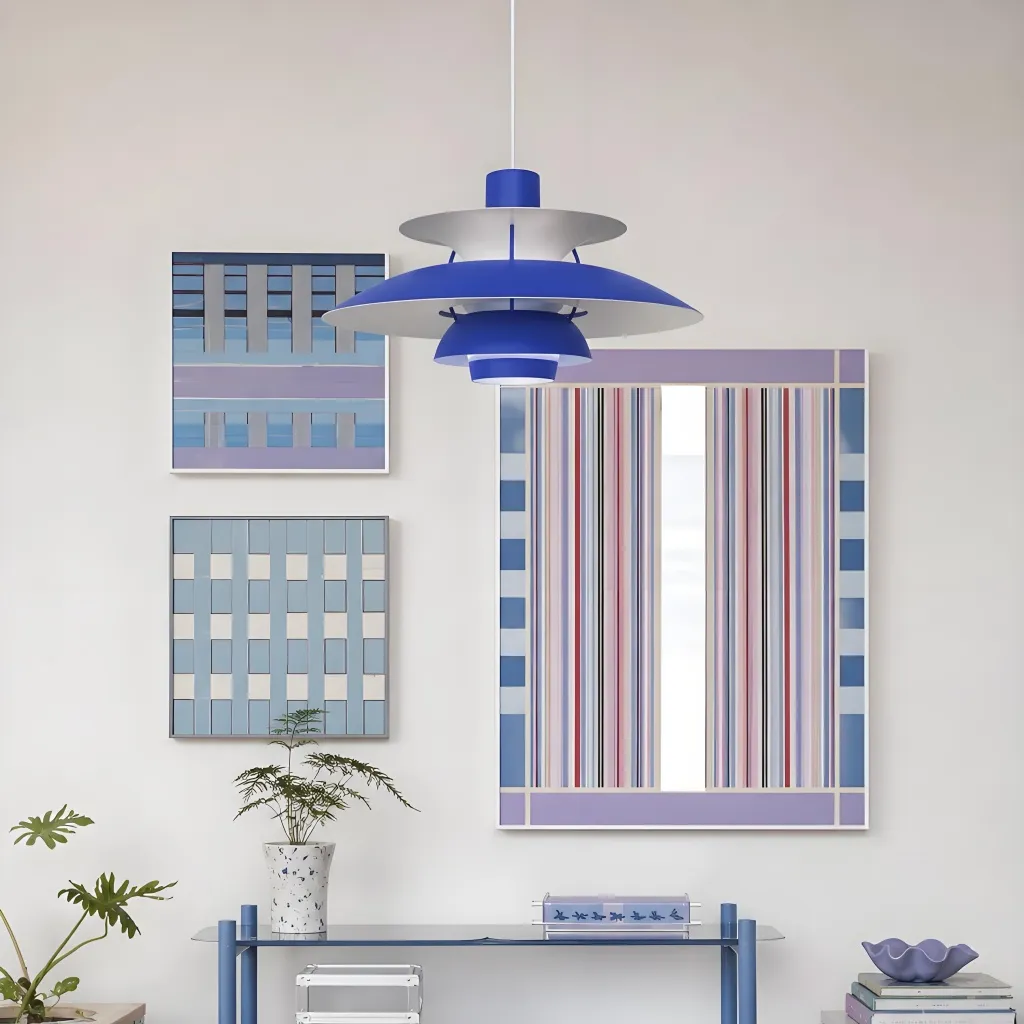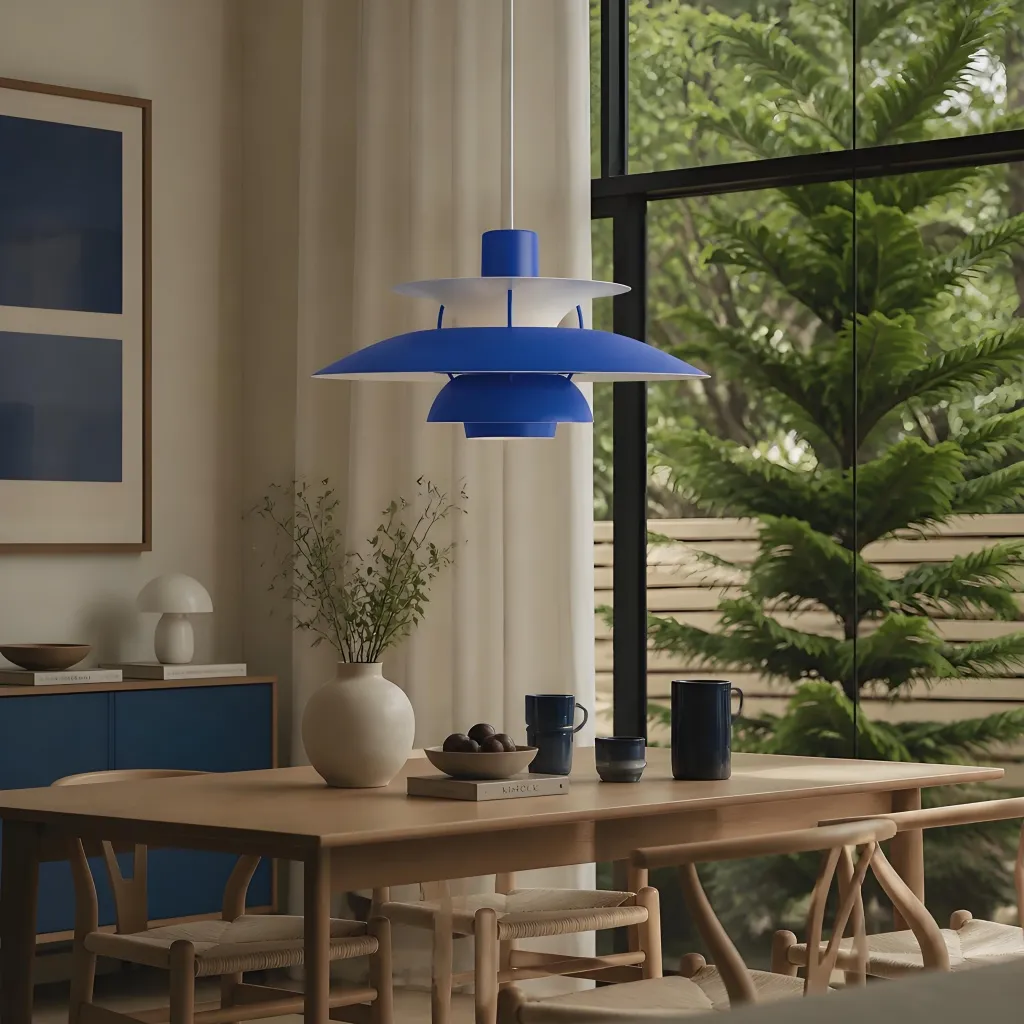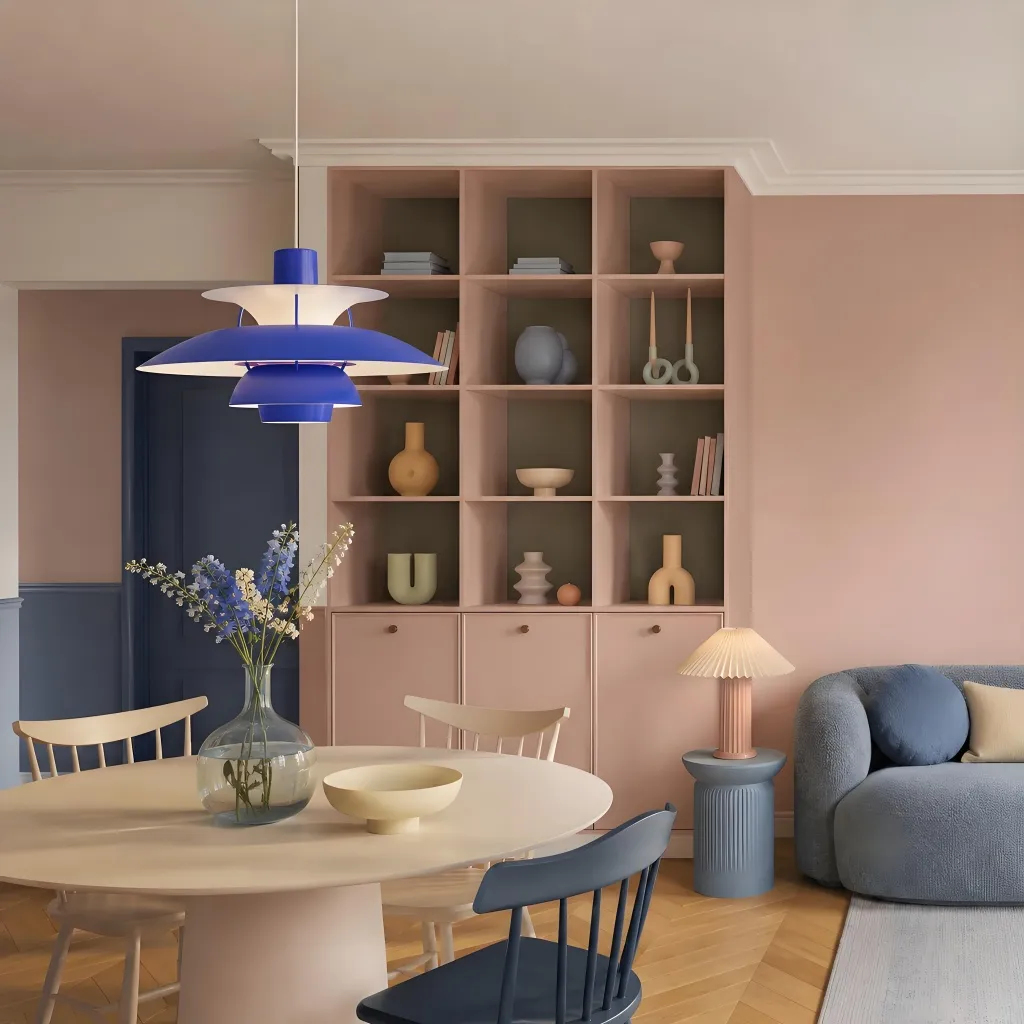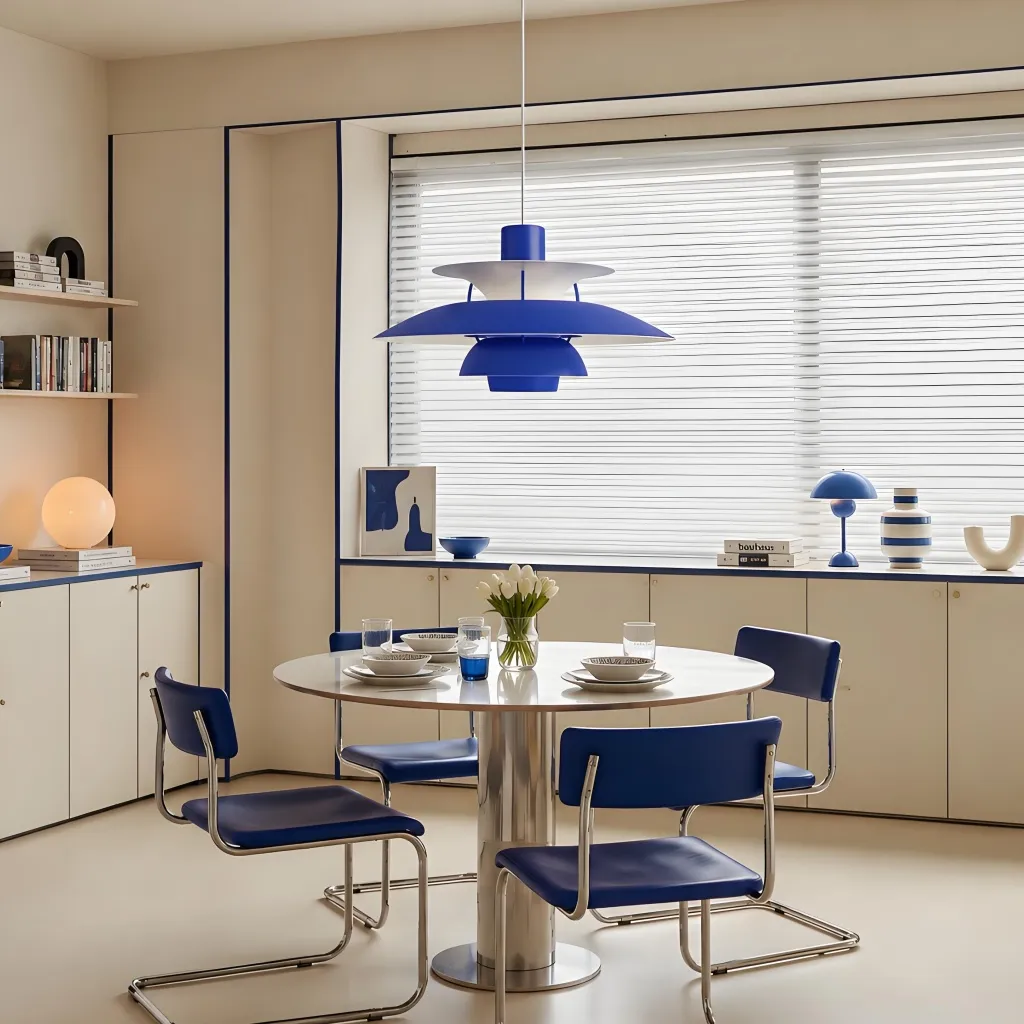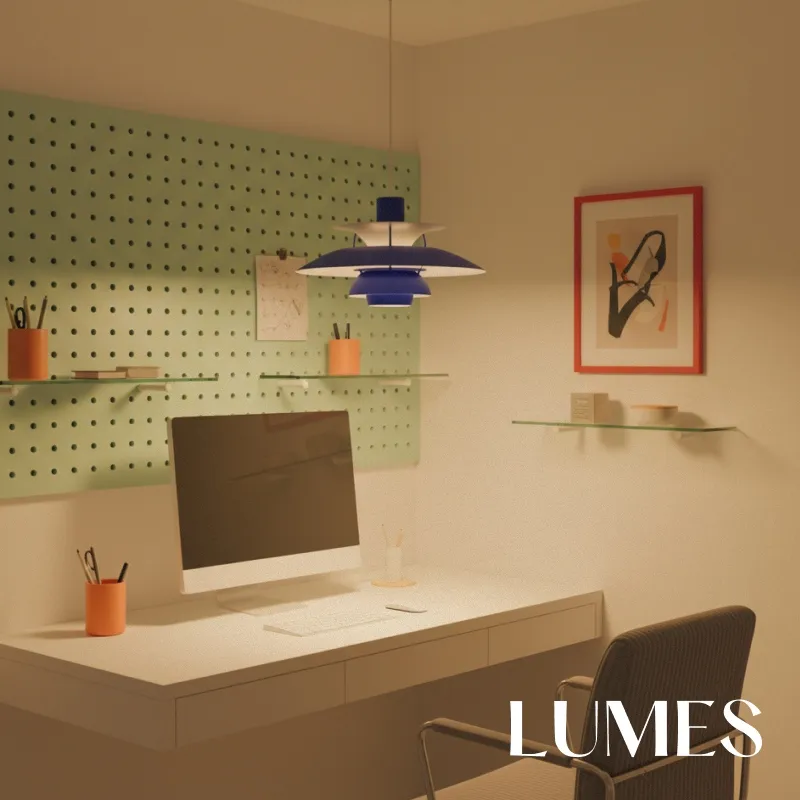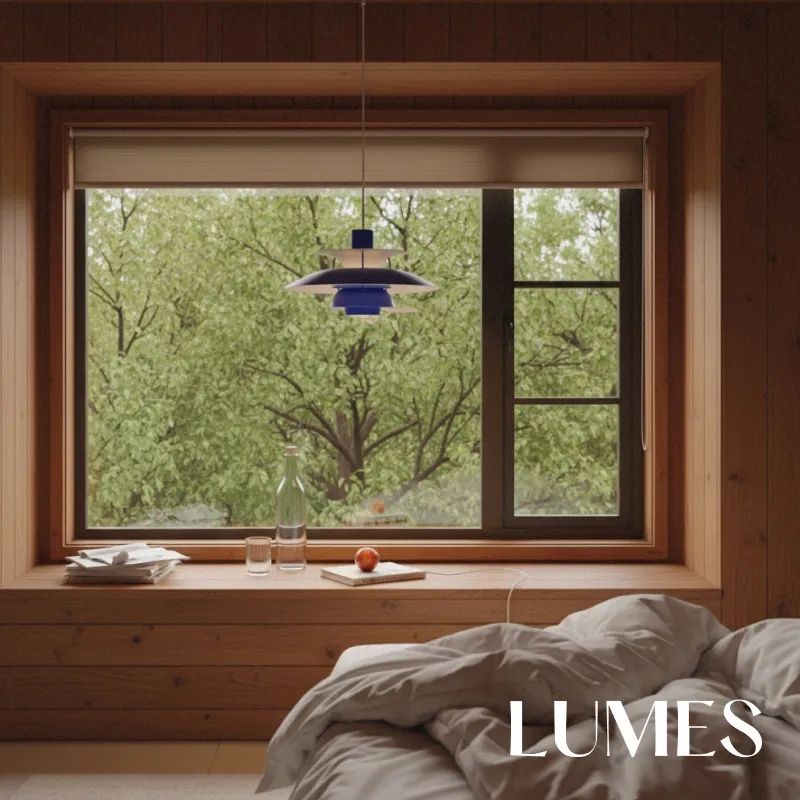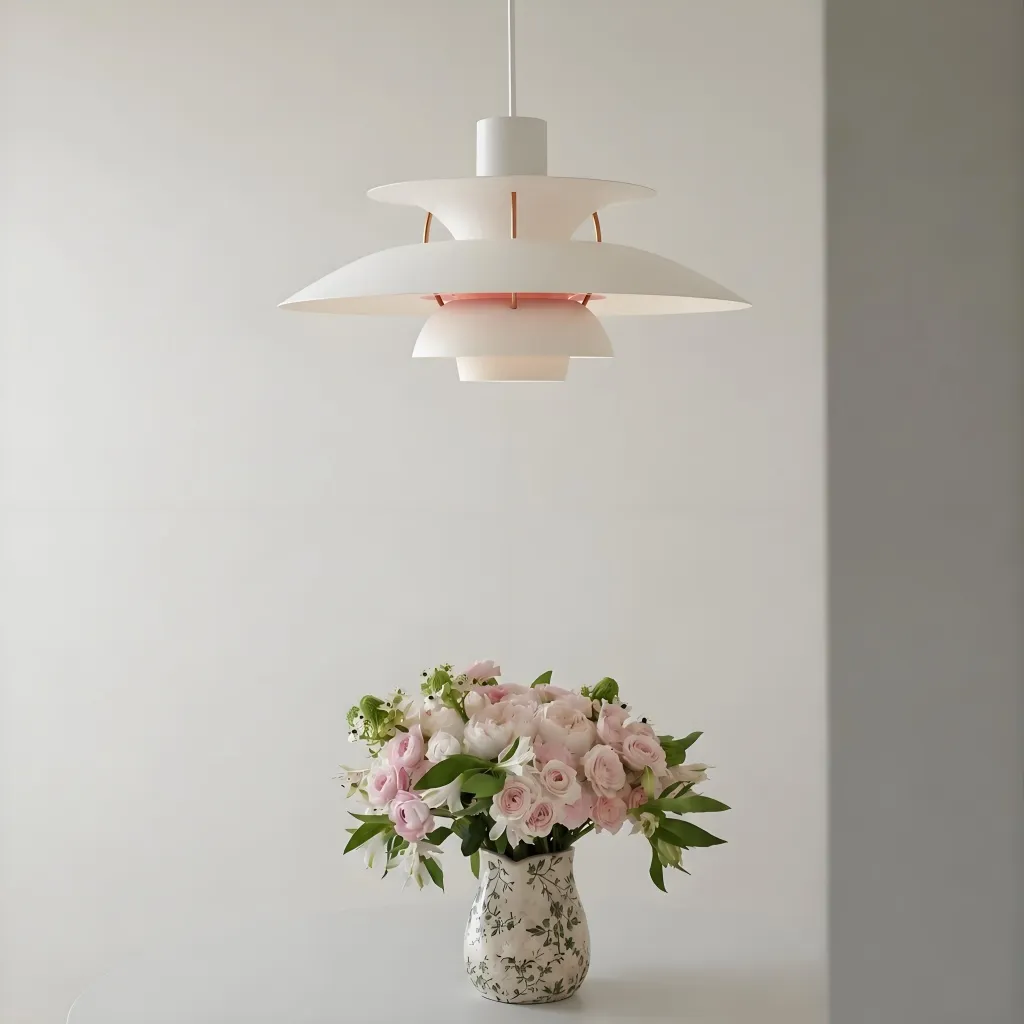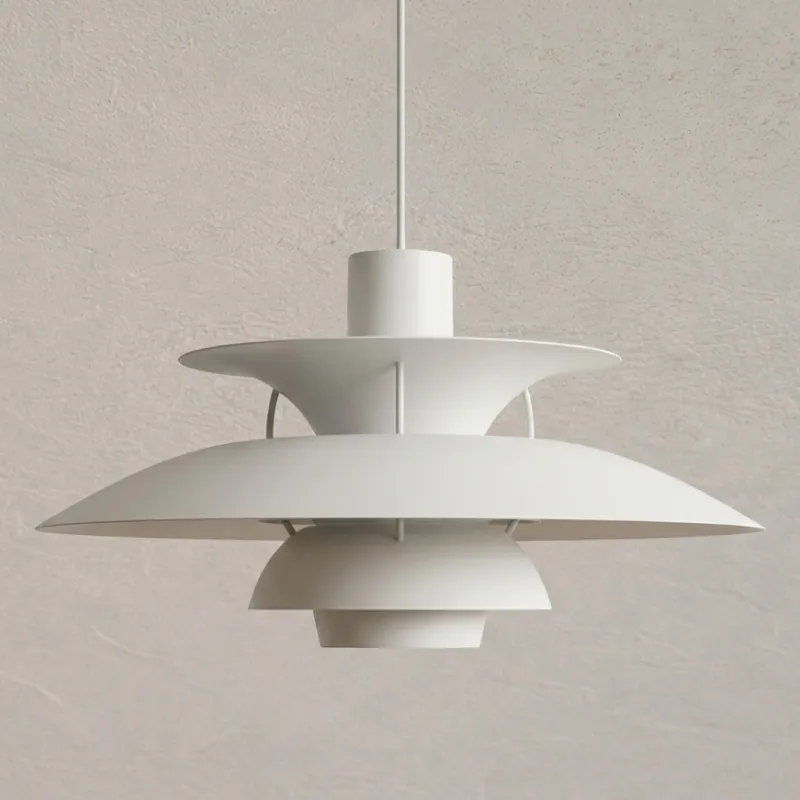
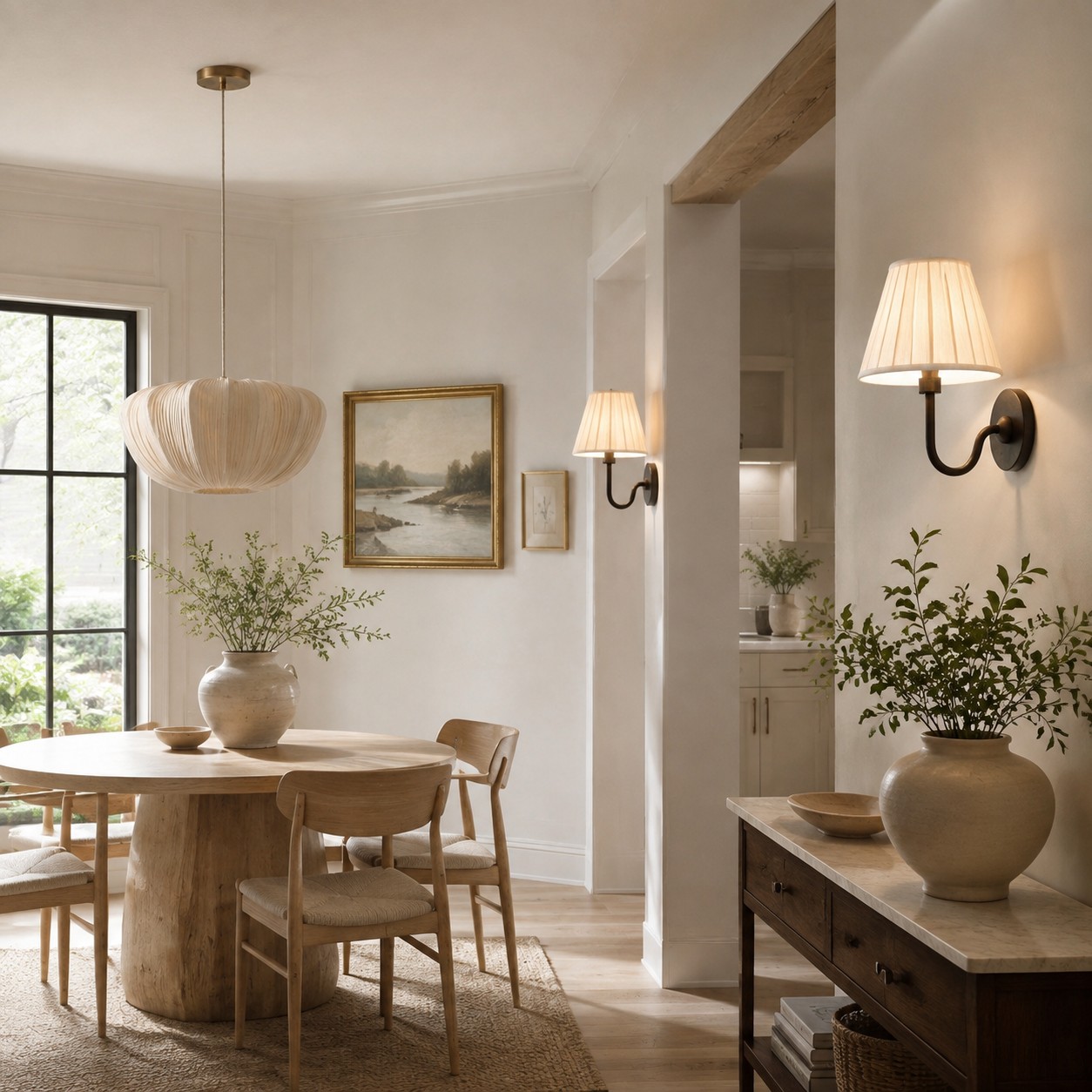
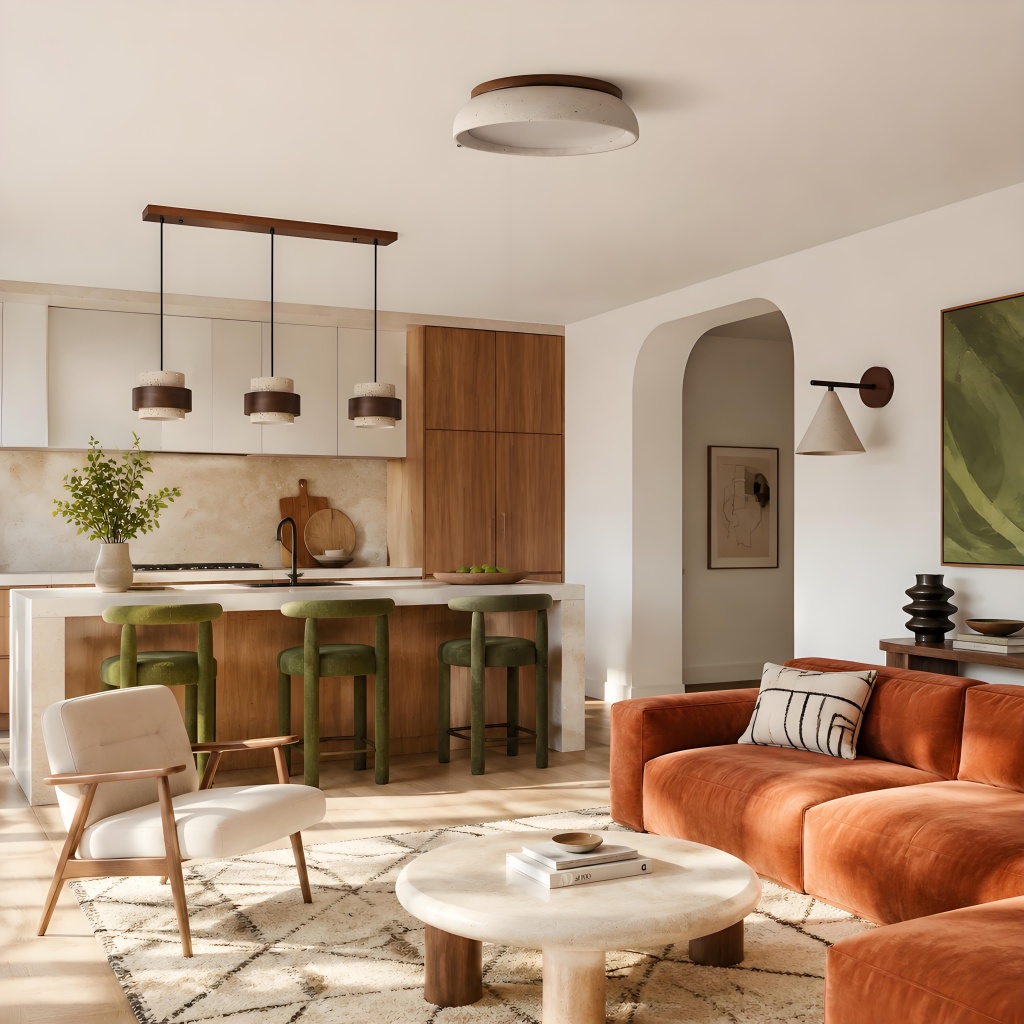
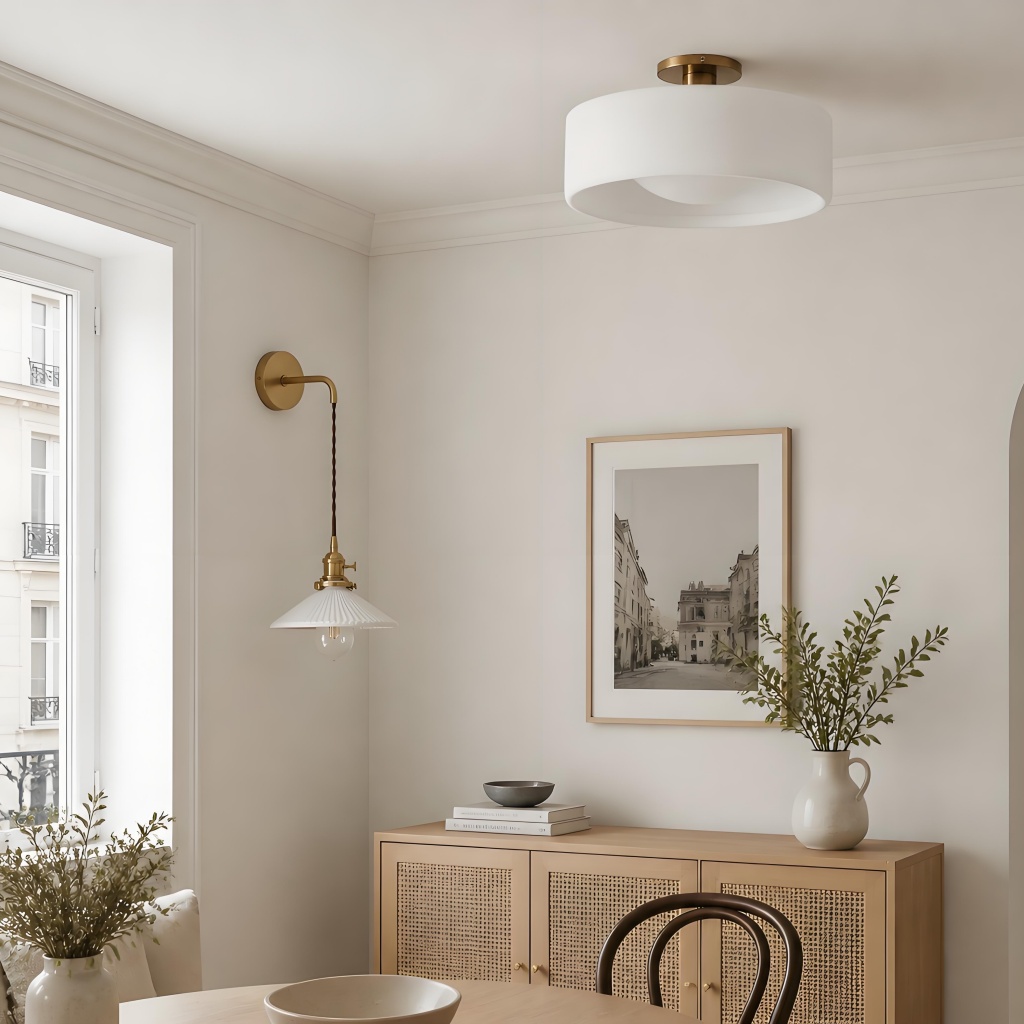
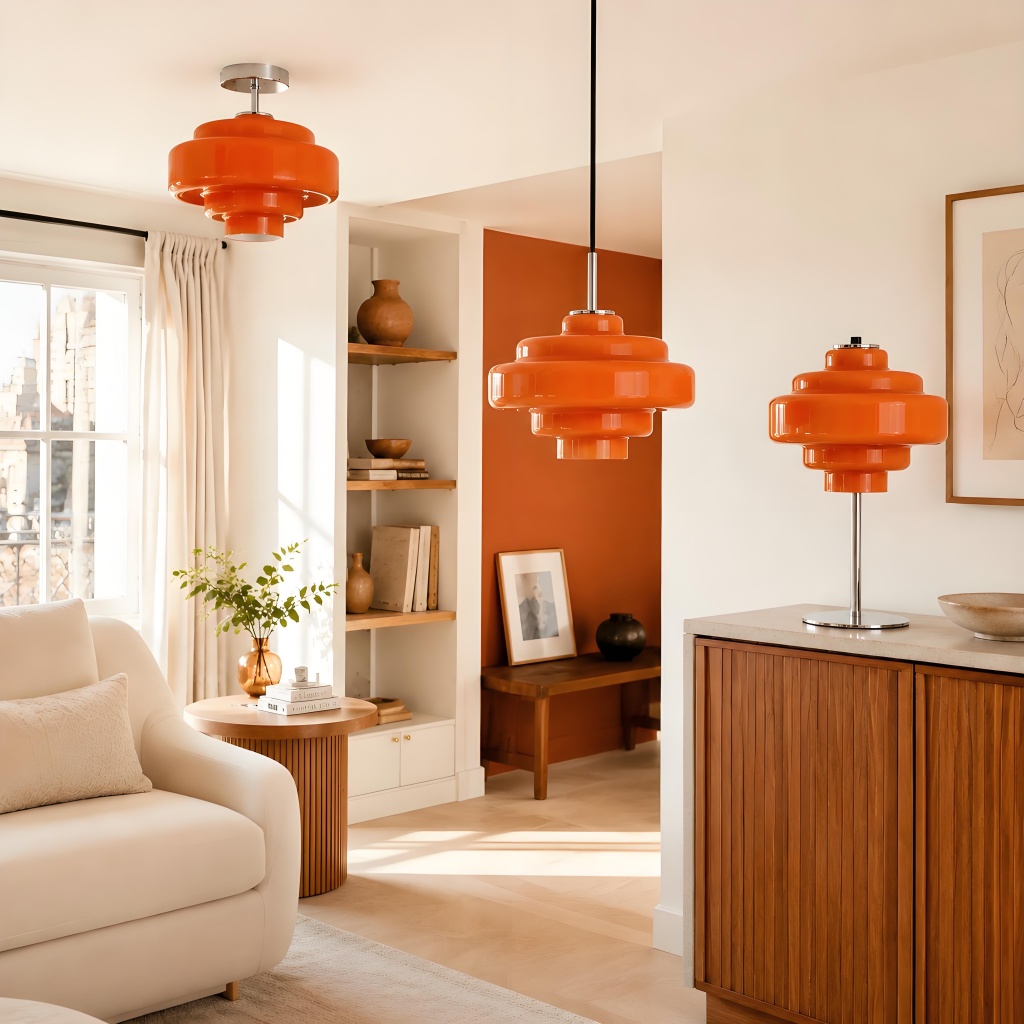
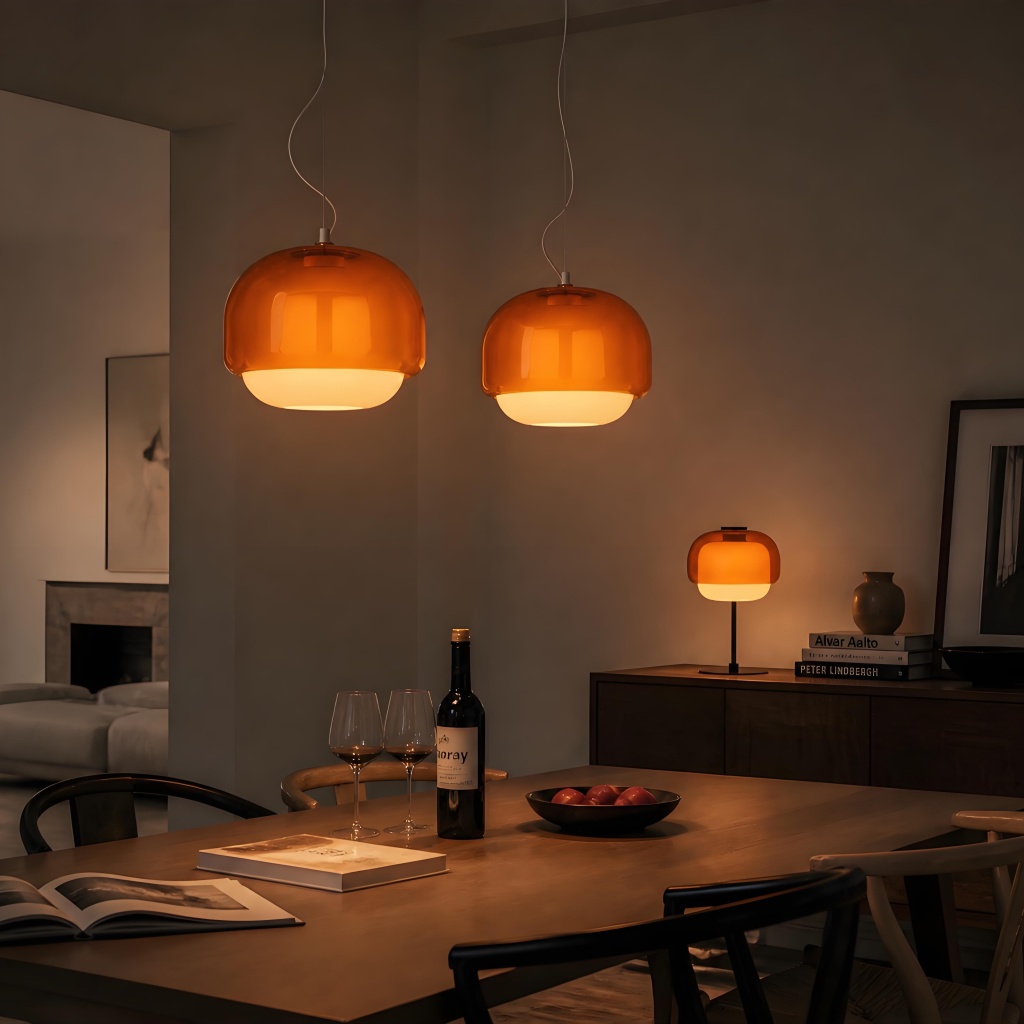
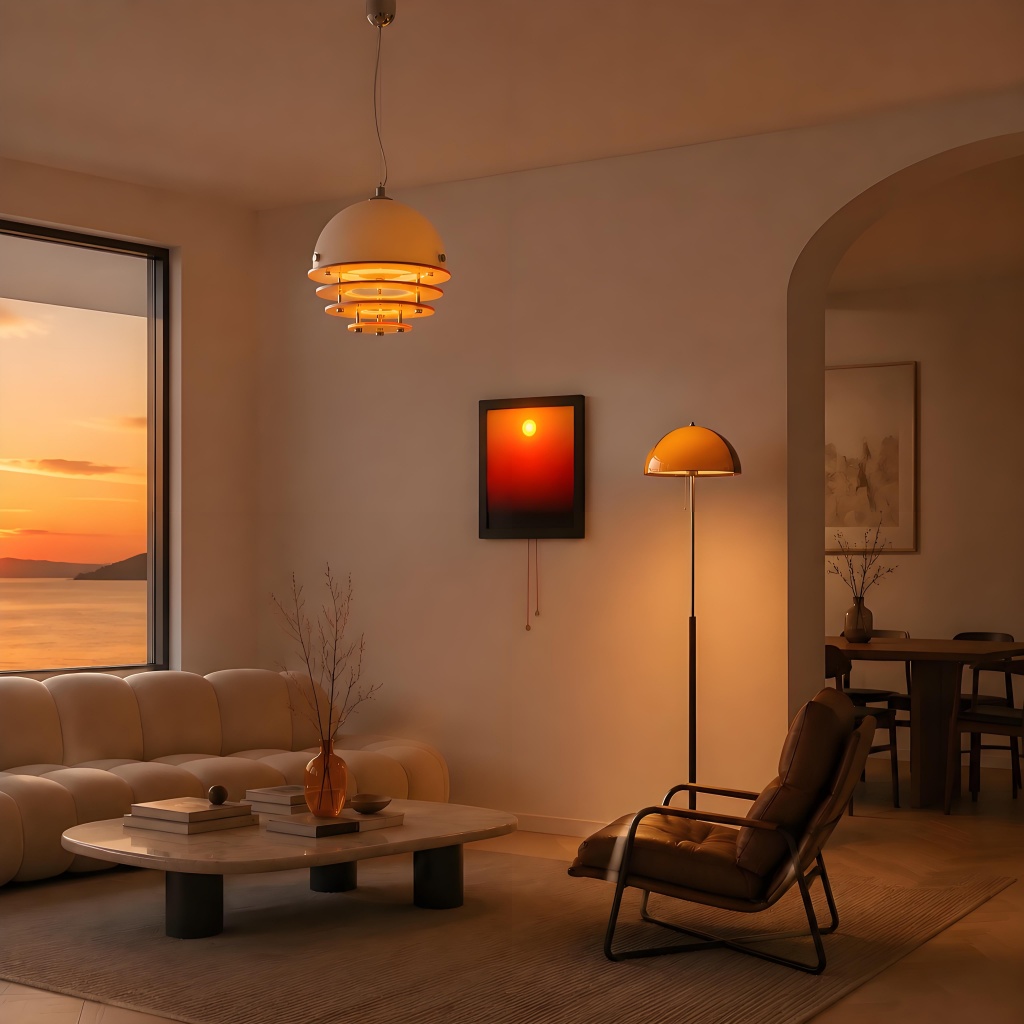



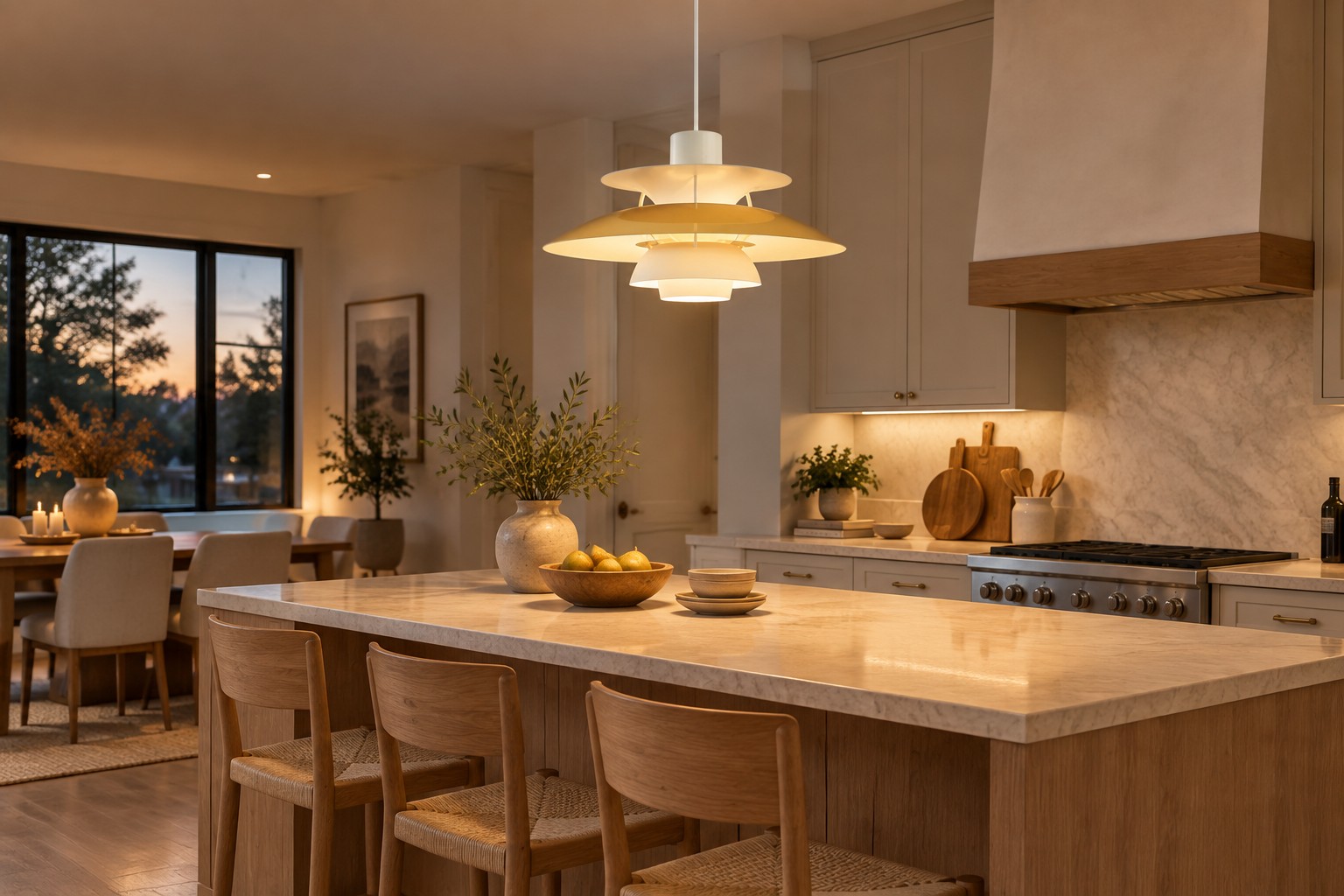
A modern kitchen feels clinical when the light is flat, overly blue, or aimed at every surface with the same intensity. The fix is not simply choosing a warmer bulb. Give the room three jobs: useful light for preparation, a softer center over the island or table, and a low evening glow that connects the kitchen to the rest of the home.
Quick answer: warm does not mean dim
Use a warm or neutral-warm appearance for the decorative and dining layer, keep task areas bright enough to work safely, and add a dimming option so the same kitchen can change from chopping to conversation. A shaped pendant over an island can soften hard cabinetry while still giving the room a clear center.
Build the kitchen in three lighting layers
1. Task light for the work surface
Preparation areas need enough light to see ingredients, knife edges, and spills. Under-cabinet sources or well-placed ceiling fixtures can cover this job. Keep their beam on the counter rather than directly at eye level. If your kitchen has a dark worktop, you may need more output than a white worktop reflects.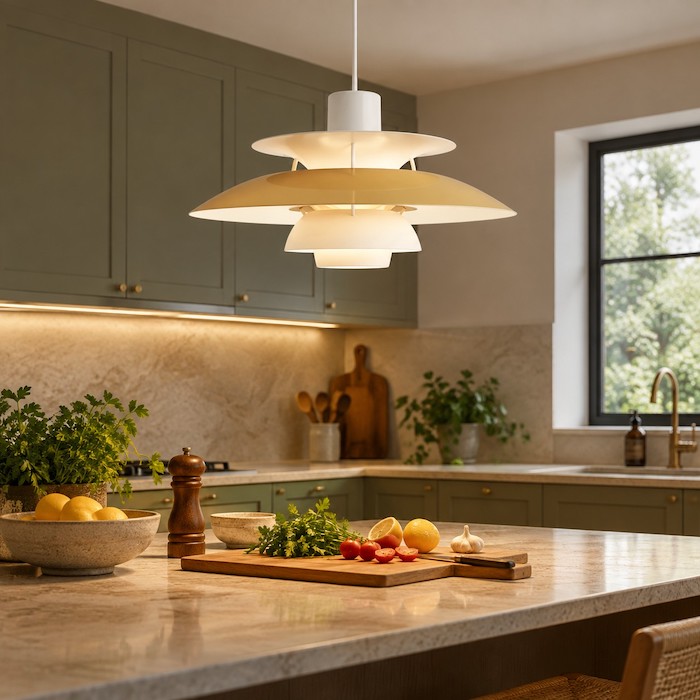
2. A pendant that defines the island
The island is where a kitchen becomes social. A pendant gives it a visual center, softens the hard lines of cabinets, and helps the kitchen feel like part of the home rather than a work zone. Choose the shade for seated and standing sightlines, not only for the photograph.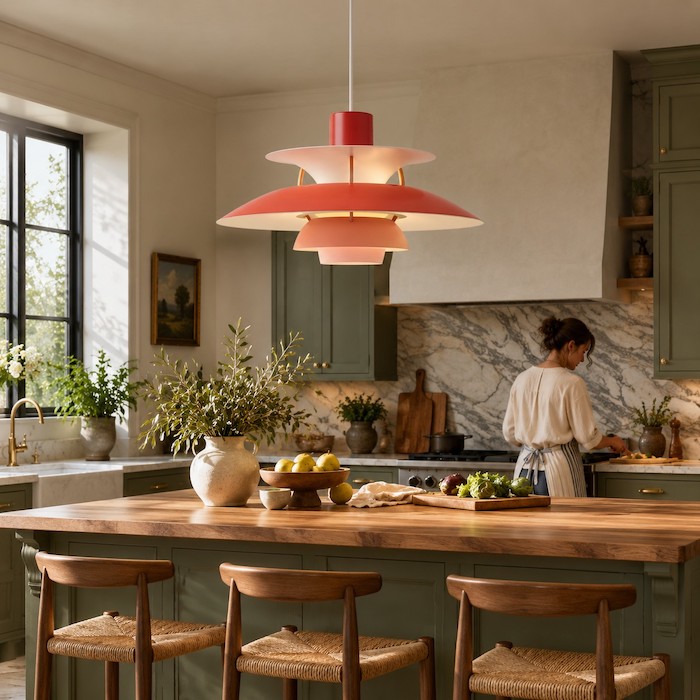
3. Low light for the evening
When the cooking is finished, turn down the task layer and keep a gentle glow near the island, dining table, or adjacent wall. This is the layer that removes the clinical feeling. It also means the main pendant does not have to light every corner at full brightness.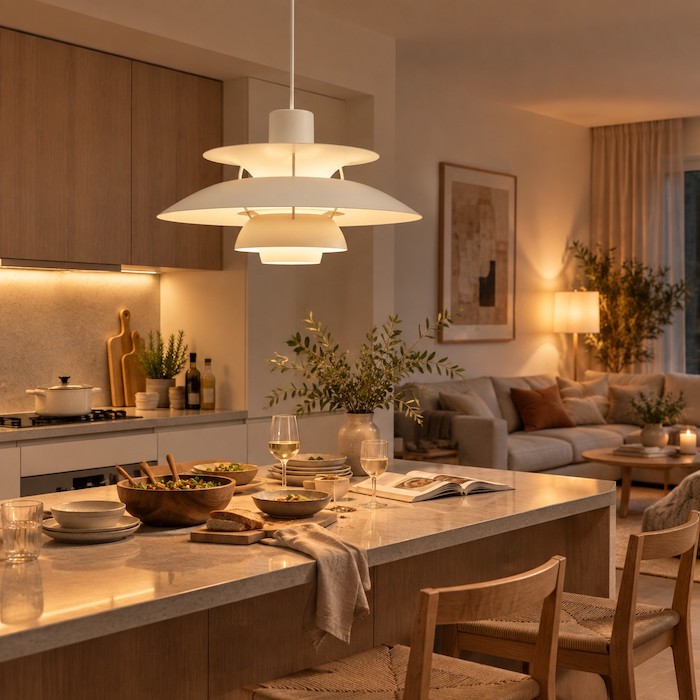
Choose color appearance with the whole room in mind
Modern kitchens often combine white cabinets, gray stone, stainless steel, timber, and a living room with warmer fabrics. A very cool white can make the stone and metal feel blue and can create a visual break between the kitchen and the adjoining room. A very warm light can make food and pale worktops look muddy.
Lower Kelvin numbers appear warmer and higher numbers appear cooler. ENERGY STAR's color-appearance guidance explains this relationship and notes that some LEDs can shift warmer as they dim. Use the same general family across the kitchen, then let brightness and direction create the layers.
Make one pendant feel warm through shape and placement
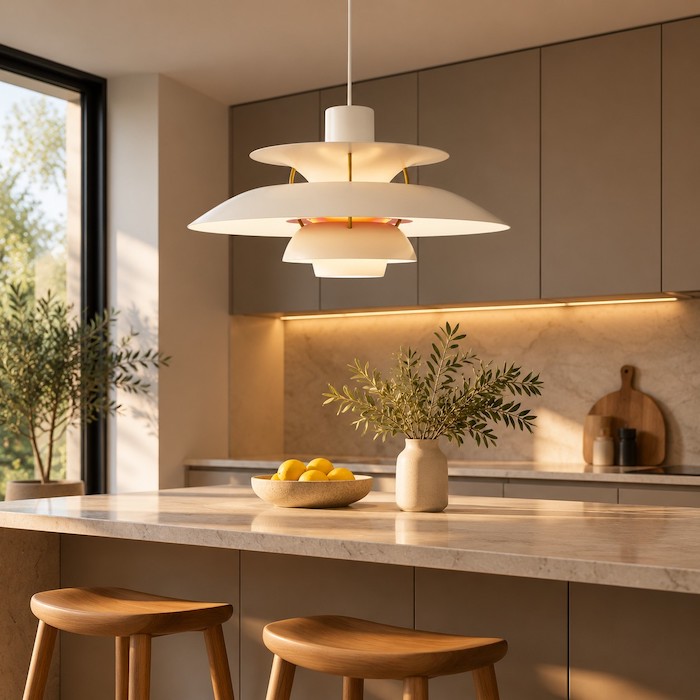
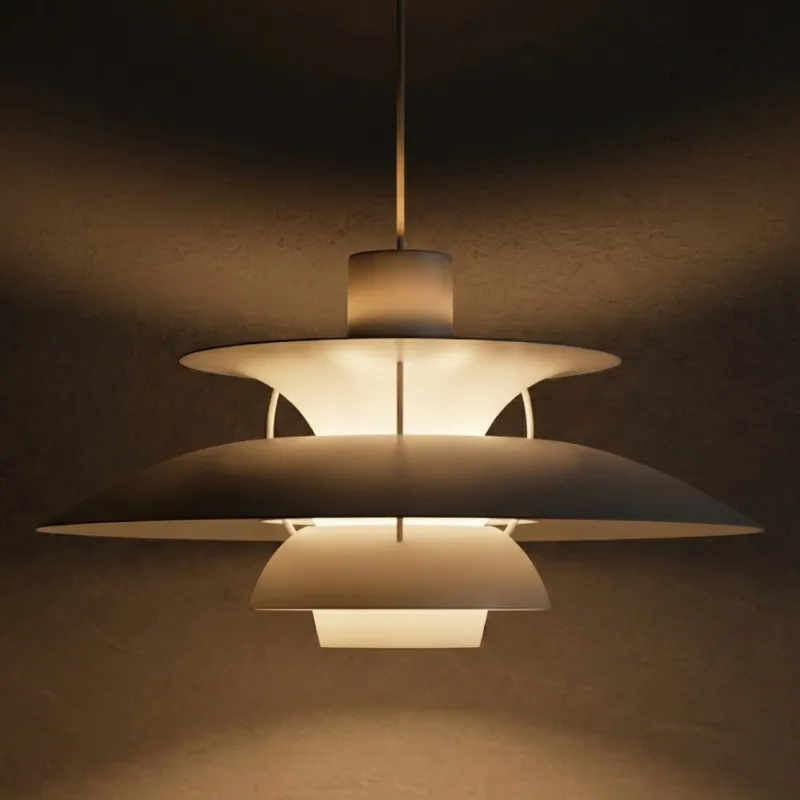
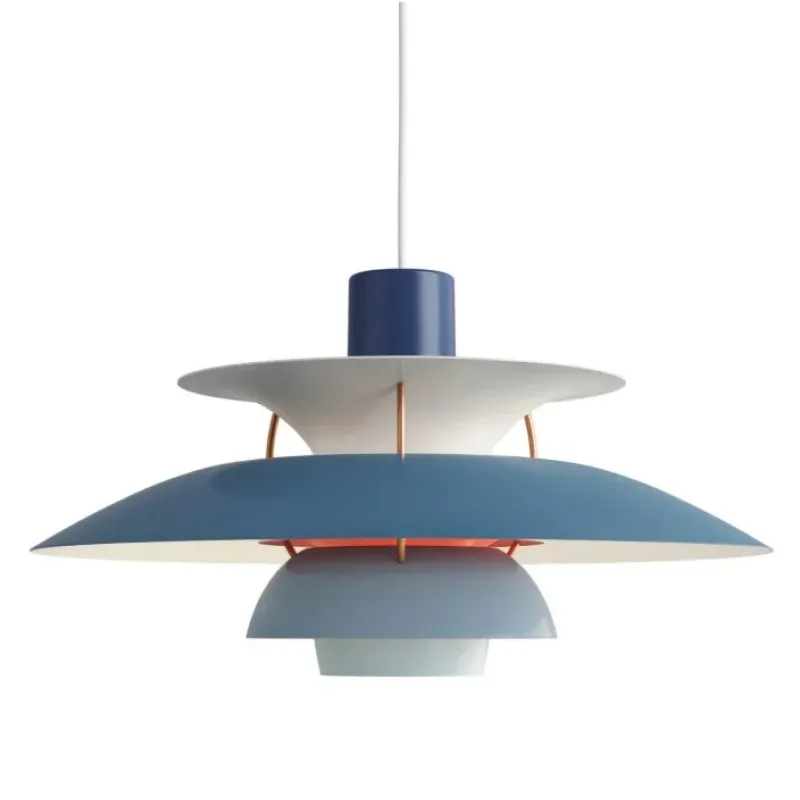
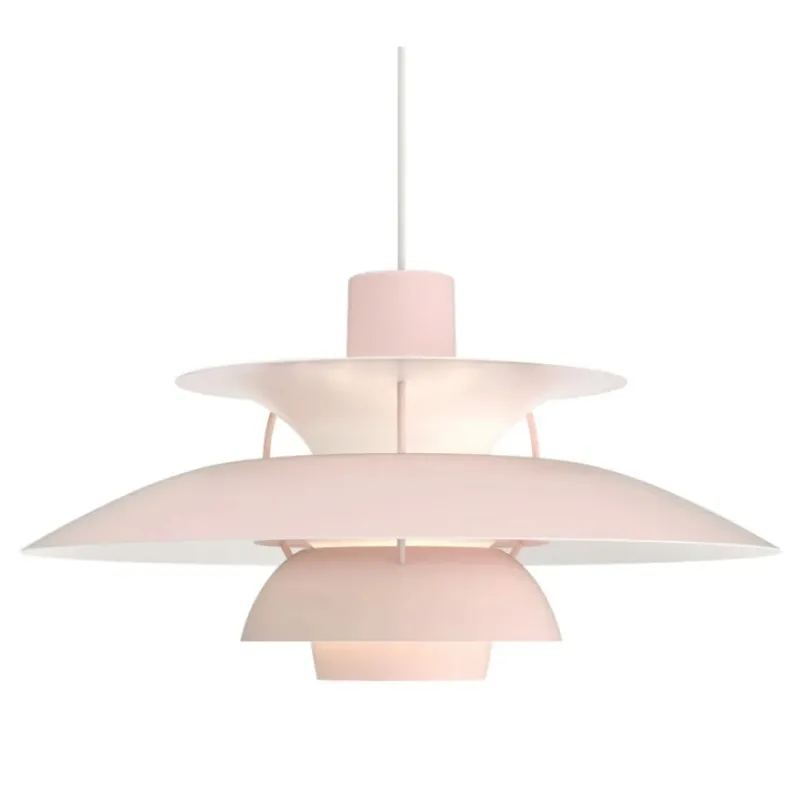
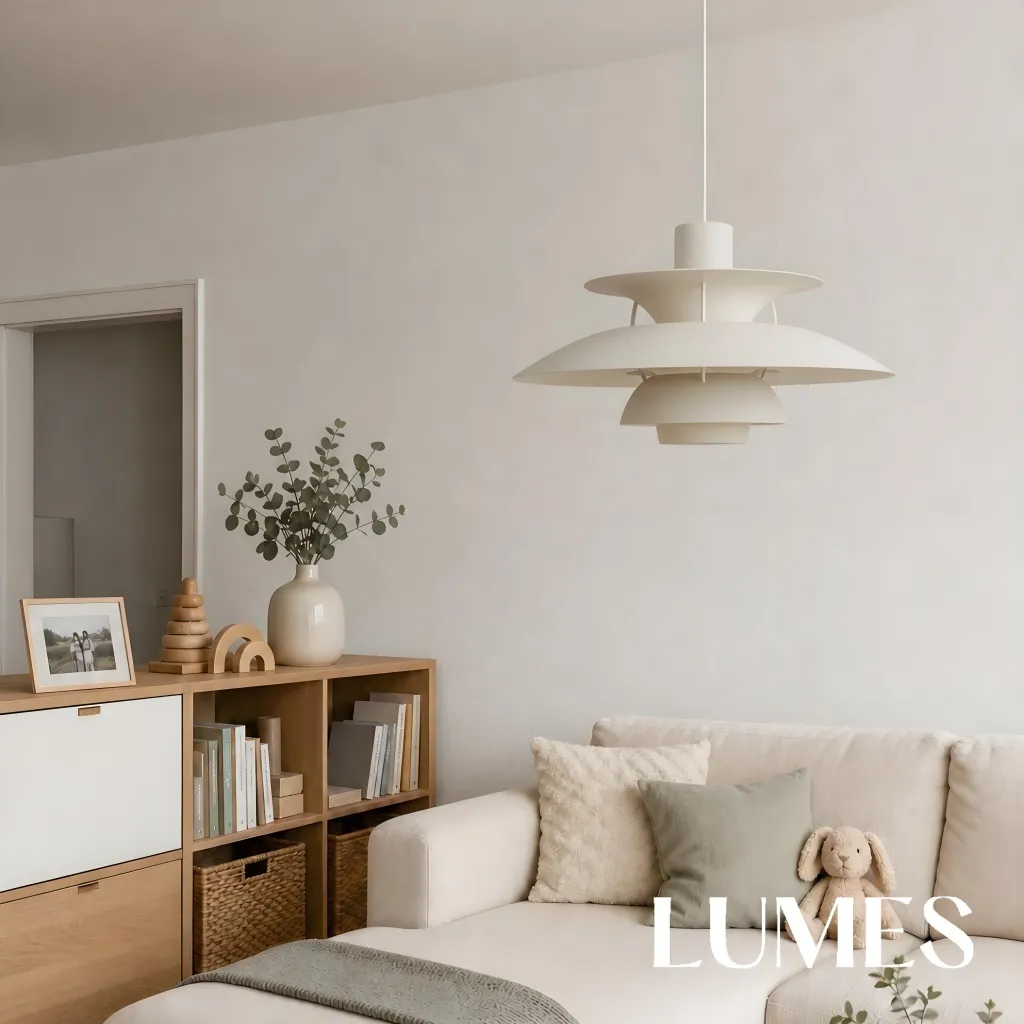
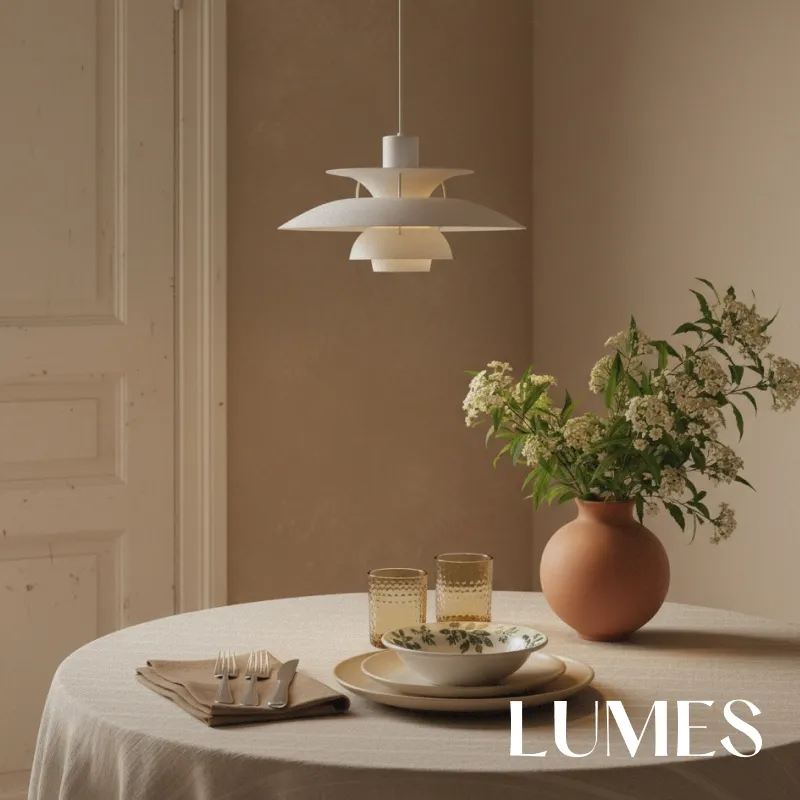
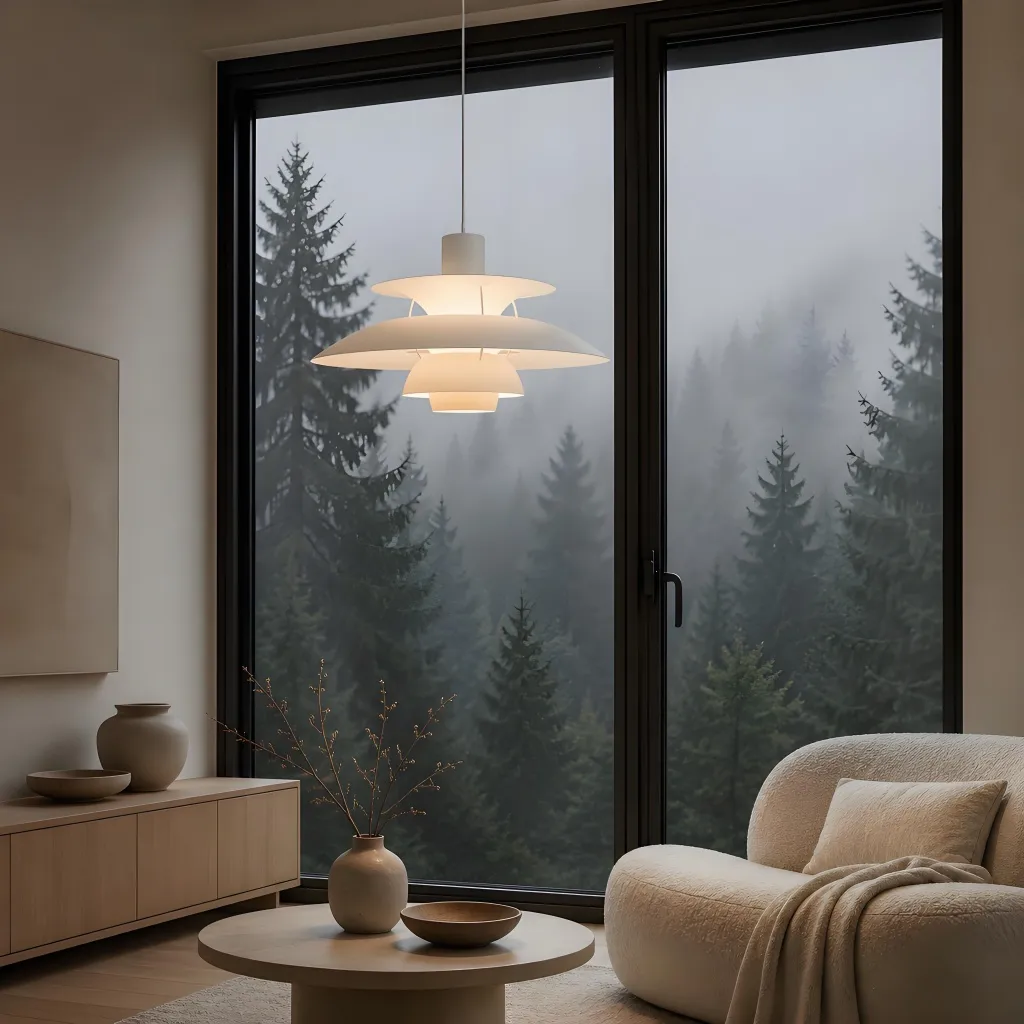
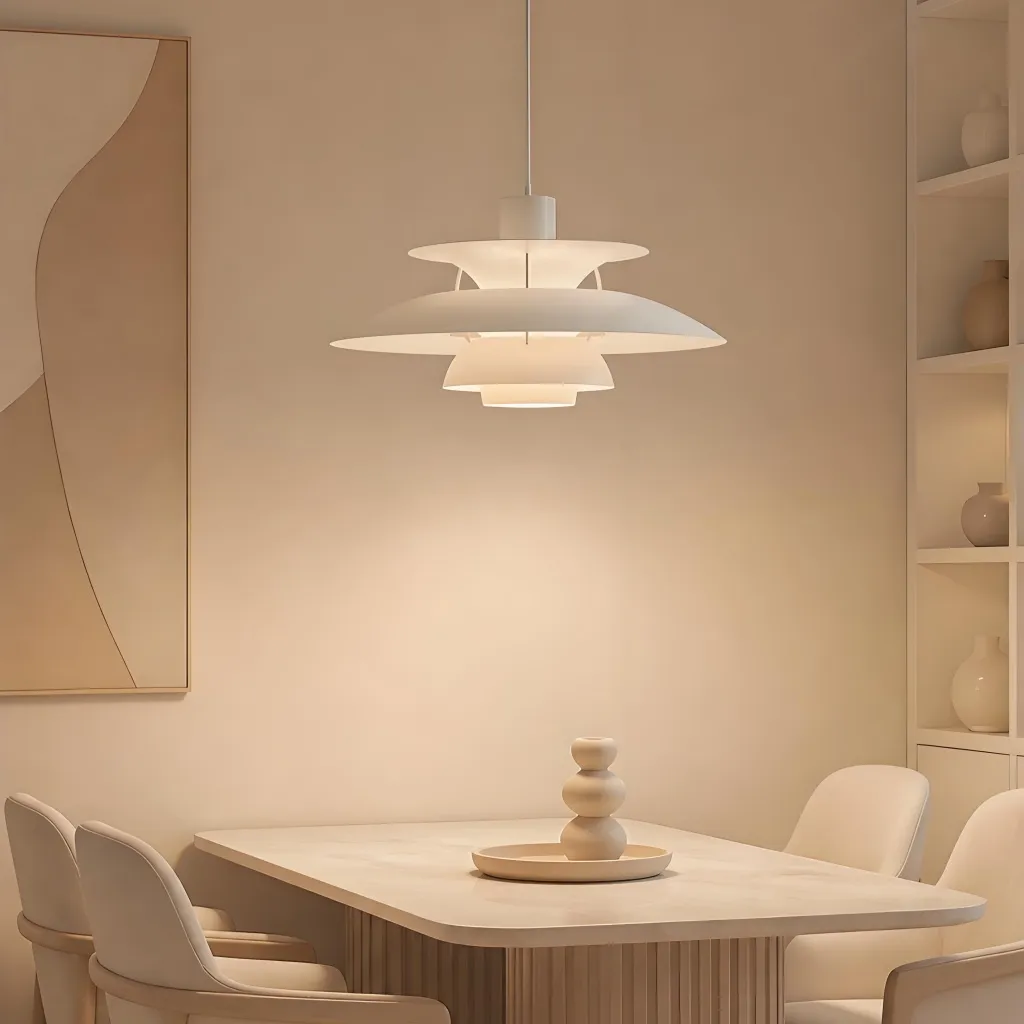
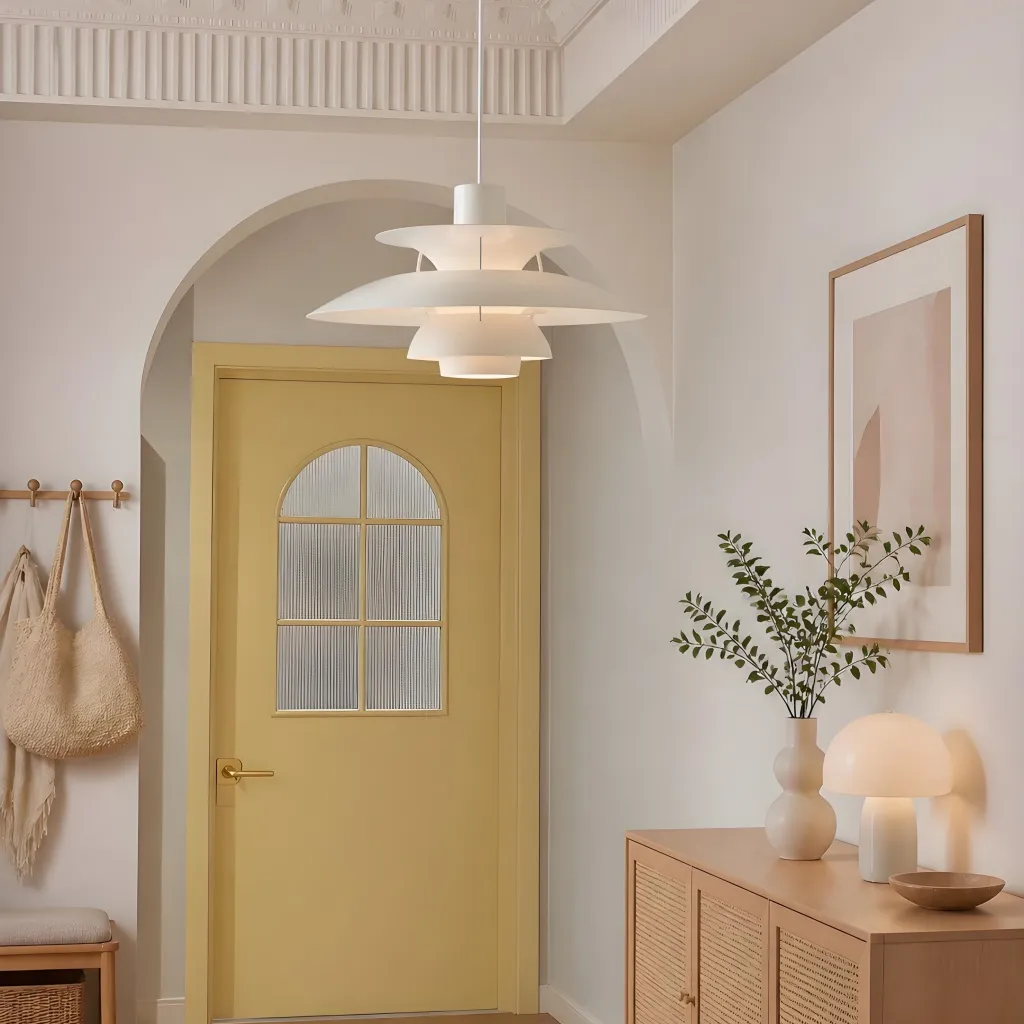
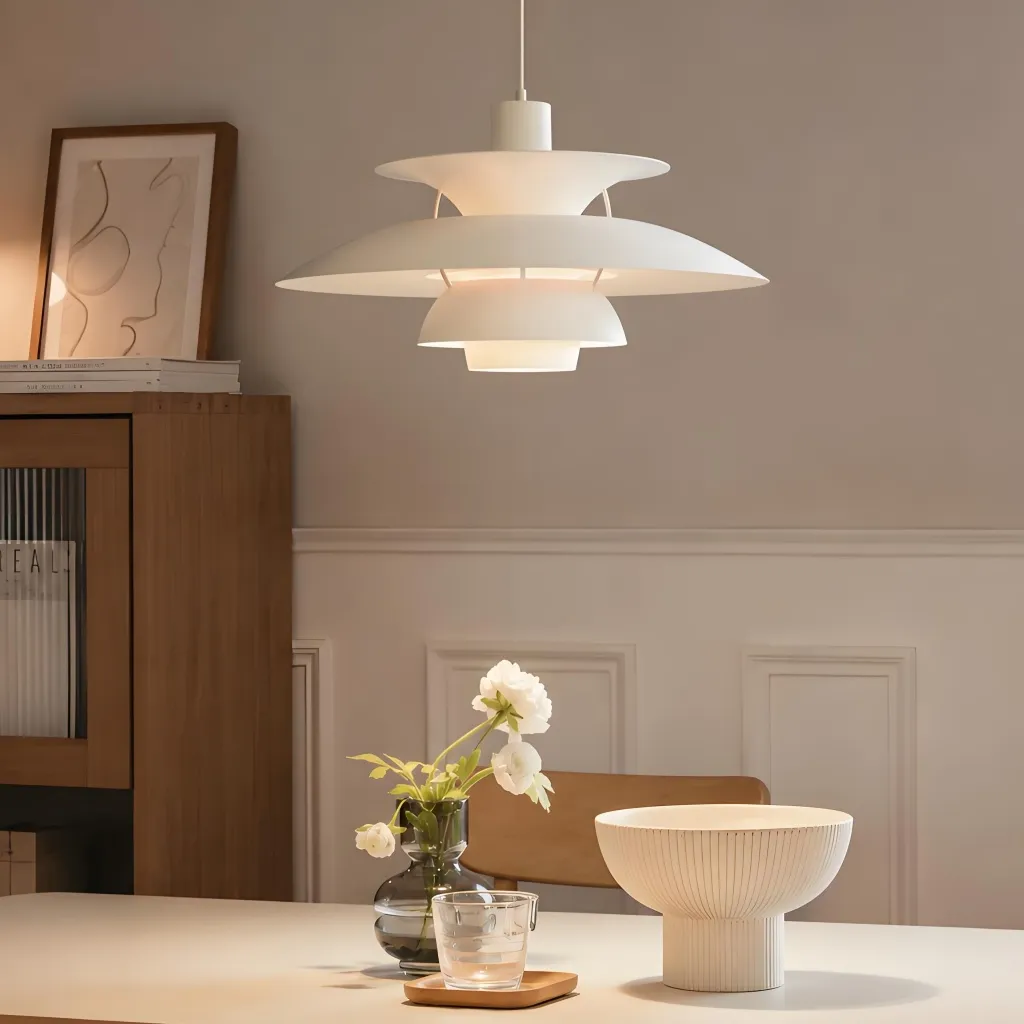
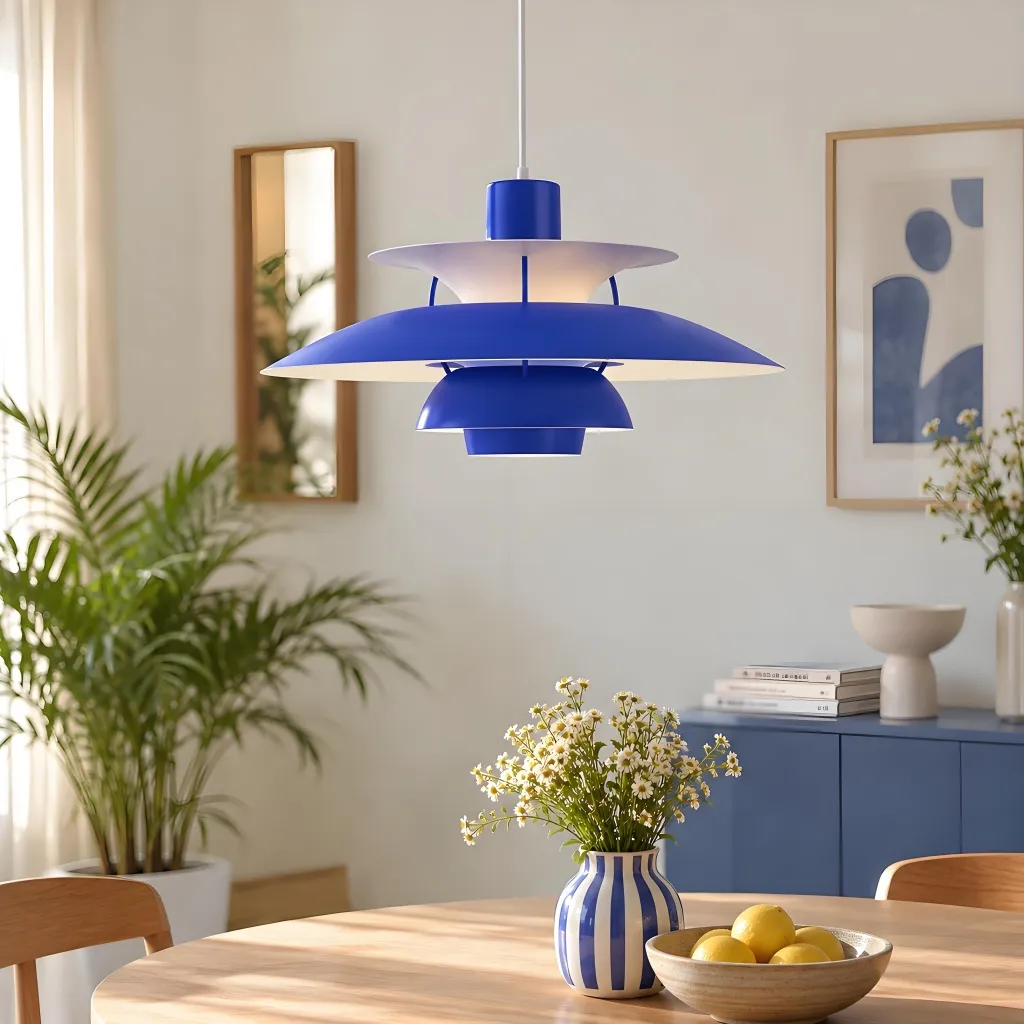
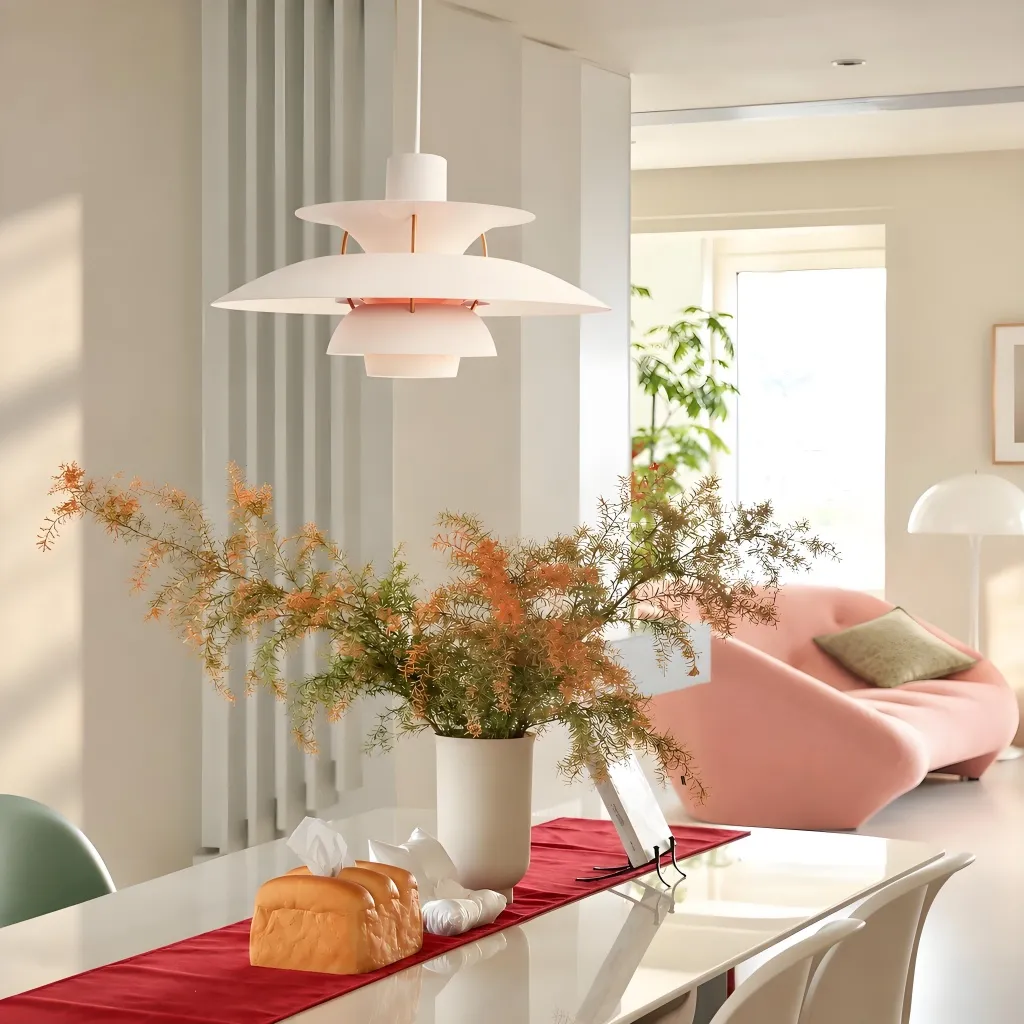
A bare point of light above an island can feel sharp even when its color is warm. A rounded or layered shade gives the source an edge and creates a softer transition between the bright center and the darker room. Keep the bottom of the fixture high enough for comfortable sightlines, then check the light while standing at the sink and sitting at the table.
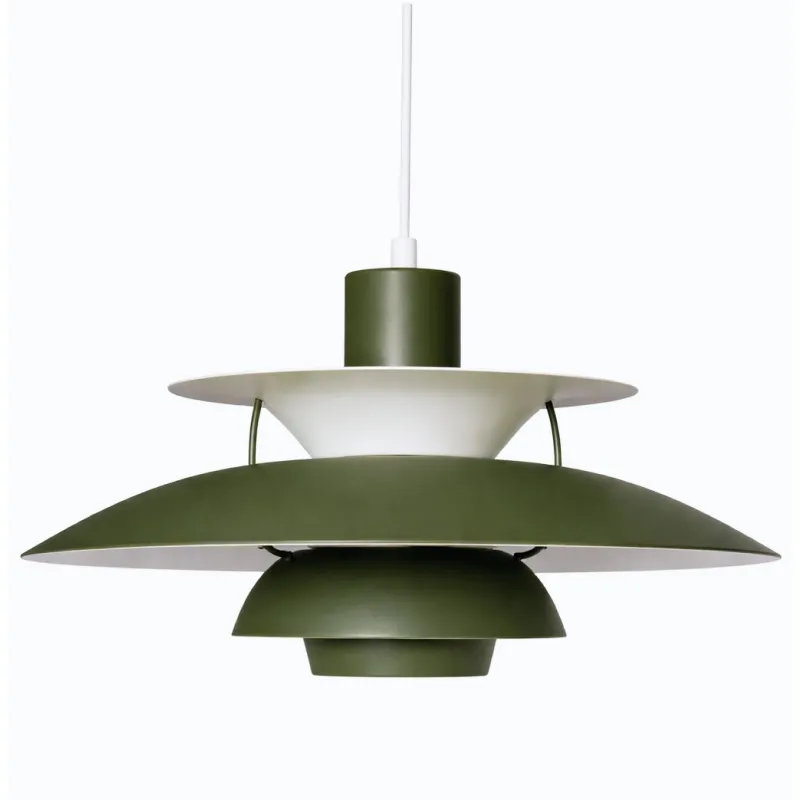
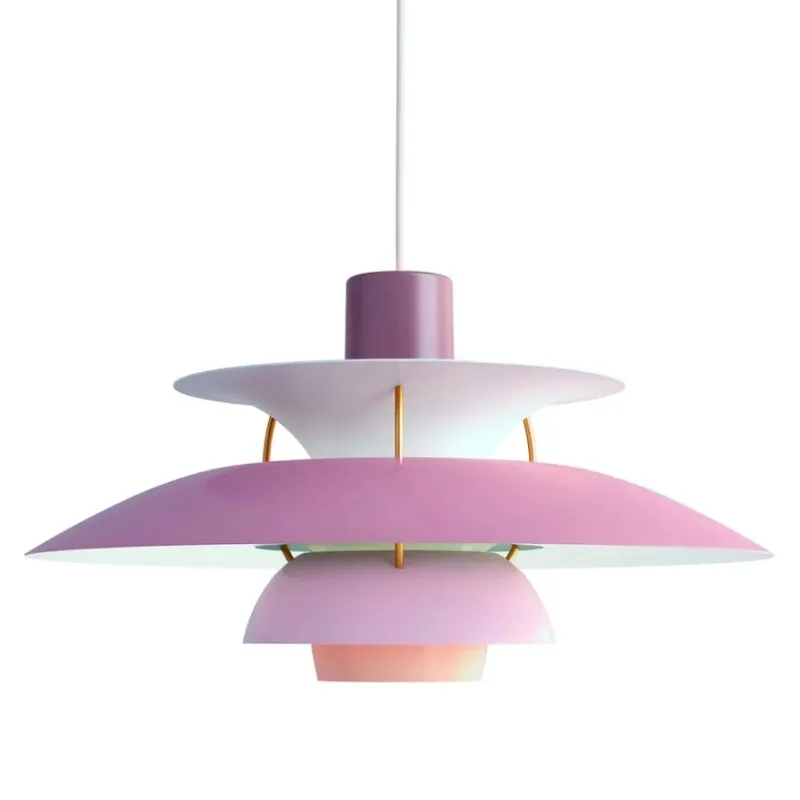
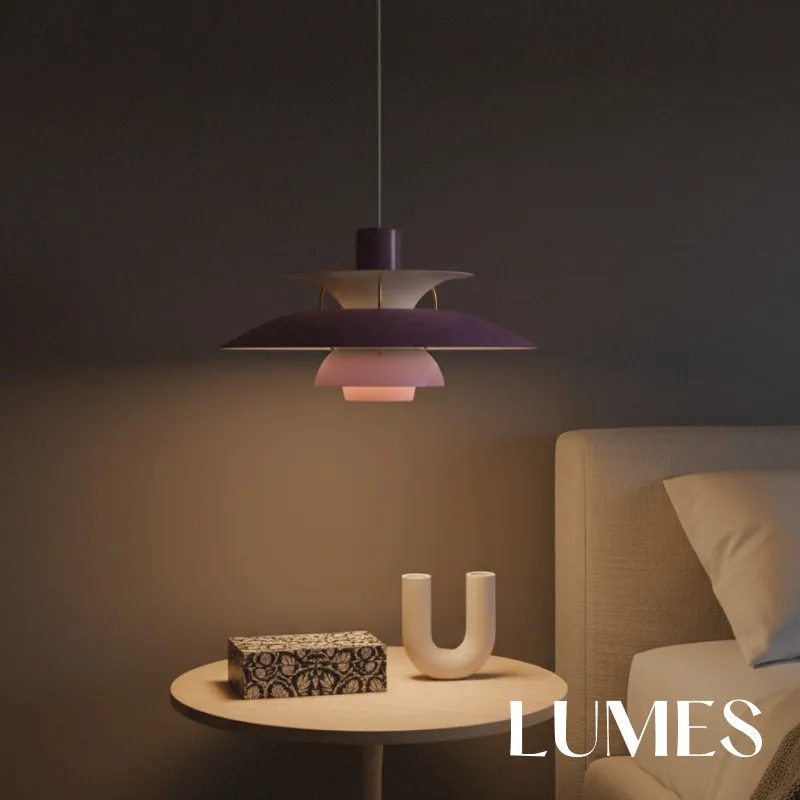
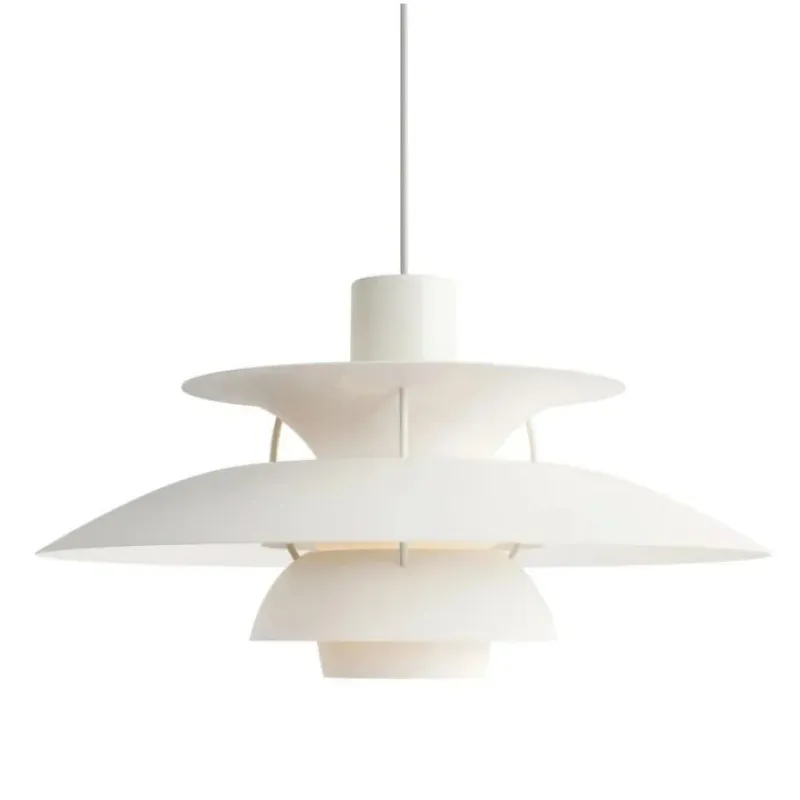
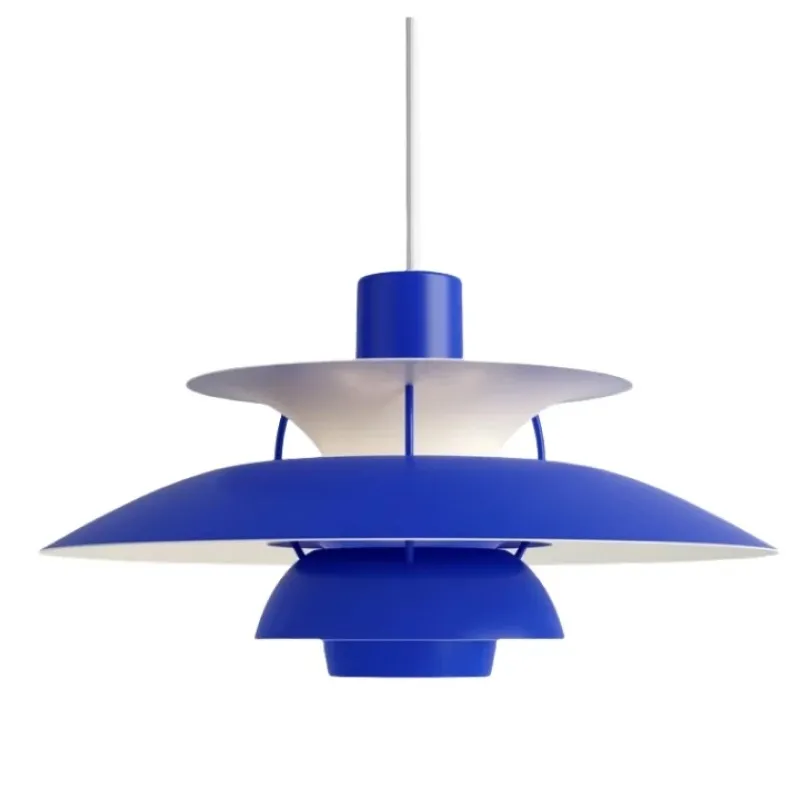
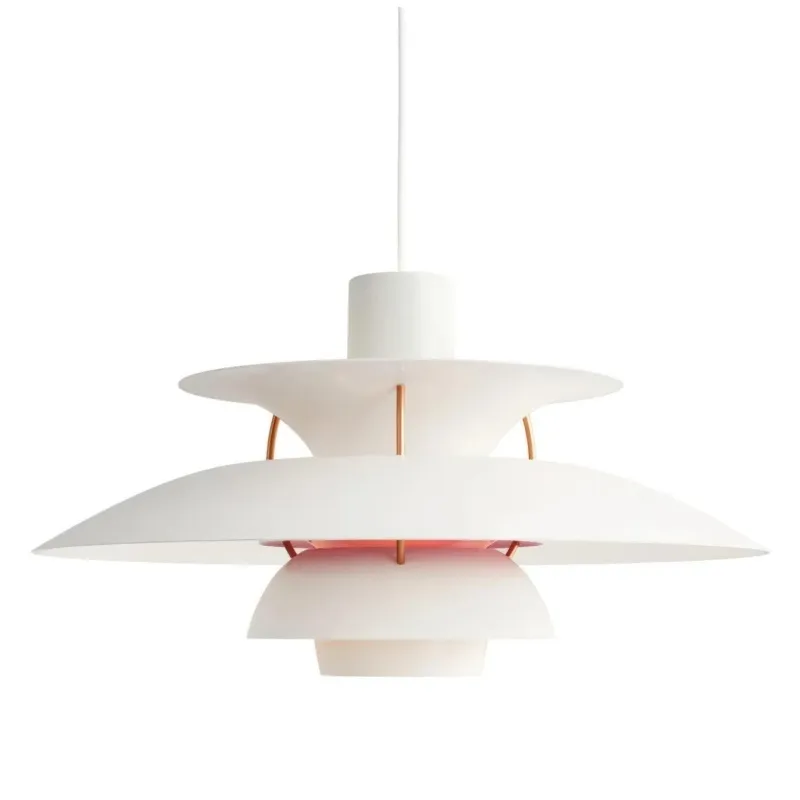
The Scandinavian LED pendant light is designed around this idea. The page lists a metal-and-acrylic body, an integrated LED, two diameters, a 150 cm adjustable cable, and warm-light or remote-dimmer variants. The smaller 25 cm version can suit a compact island or breakfast table. The 40 cm version gives a wider island more presence without relying on a cluster of small exposed bulbs.
Choose the warm-light option when the kitchen connects directly to a living or dining room. Choose the remote-dimmer variant when the island needs to work for preparation, homework, and evening drinks. Confirm the selected configuration and current specifications before ordering.
Use lumens to prevent the warm layer from becoming weak
“Warm” describes appearance, not how much light the fixture produces. ENERGY STAR explains that brightness is measured in lumens, while watts describe energy use. Compare lumens when you decide whether a pendant is decorative support or a real part of the work lighting.
The product page lists a 24W, 2640-lumen specification for one larger configuration. Treat that as a configuration detail, not a promise that every size or color has the same output. Match the selected variant to your island length, ceiling height, and other kitchen layers.
Avoid the four clinical-kitchen mistakes
- One flat ceiling source: it makes the room bright but gives no hierarchy. Add a lower, softer layer.
- Cool white everywhere: it can separate the kitchen from an otherwise warm home. Coordinate color appearance across connected rooms.
- Exposed bulbs at eye level: move the shade, cover the source, or add a dimmer so the brightest point is not in the normal sightline.
- Ignoring installation: a hardwired pendant needs a suitable ceiling point and careful preparation. ENERGY STAR's installation guidance stresses following manufacturer instructions and checking power before electrical work.
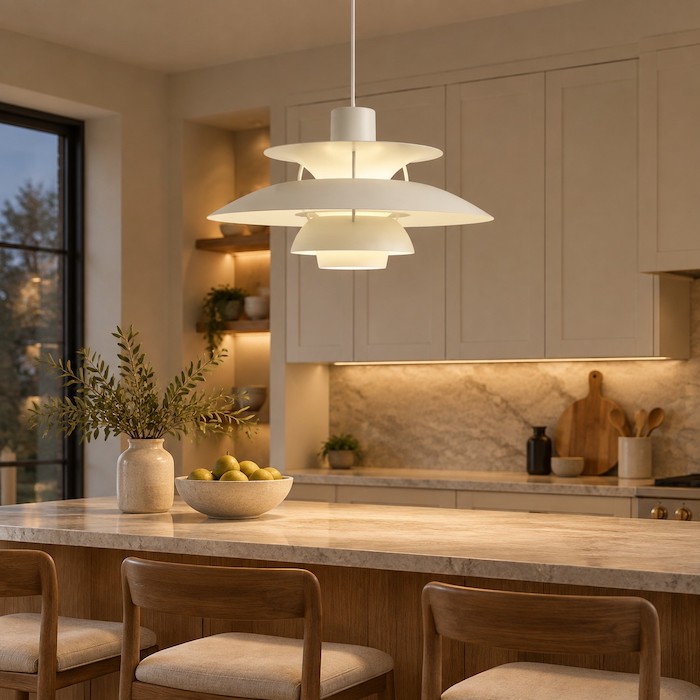
A warm-kitchen setup that is easy to live with
Use the pendant over the island or dining end, keep task lighting aimed at the counter, and dim the pendant after cooking. Pair a metal-and-acrylic shade with timber stools, linen, or matte cabinet fronts so the room feels residential rather than technical. The Scandinavian LED pendant is a strong fit when you want a clear focal point, warm light, and an option to change the mood without replacing the fixture.
Review the current size, color, and control choices, then plan the ceiling connection before purchase.
FAQ: warm modern kitchen lighting
What color temperature feels warm but still works in a kitchen?
Start with a warm or neutral-warm appearance and keep task areas bright enough for food preparation. The exact Kelvin choice should coordinate with adjacent rooms and finishes.
Can warm kitchen lighting still be bright?
Yes. Warm appearance and brightness are separate decisions. Compare lumens, then adjust the mood with dimming.
Should a pendant over an island be centered?
Usually, yes. Center it over the work or seating zone, then check the view from the sink, the cooking position, and the room entrance.
Is an integrated LED pendant a good kitchen choice?
It can be. Confirm the light output, control method, color option, warranty, and installation details for the exact variant you select.
How do I reduce glare from a kitchen pendant?
Use a shade that hides the brightest source from normal eye lines, set the hanging height carefully, and choose a compatible dimmer when available.